View methods side by side.
Choose up to four methods. Add them using the search and share the comparison by copying its link.
| Criterion |  Product Discovery Experiment Canvas | 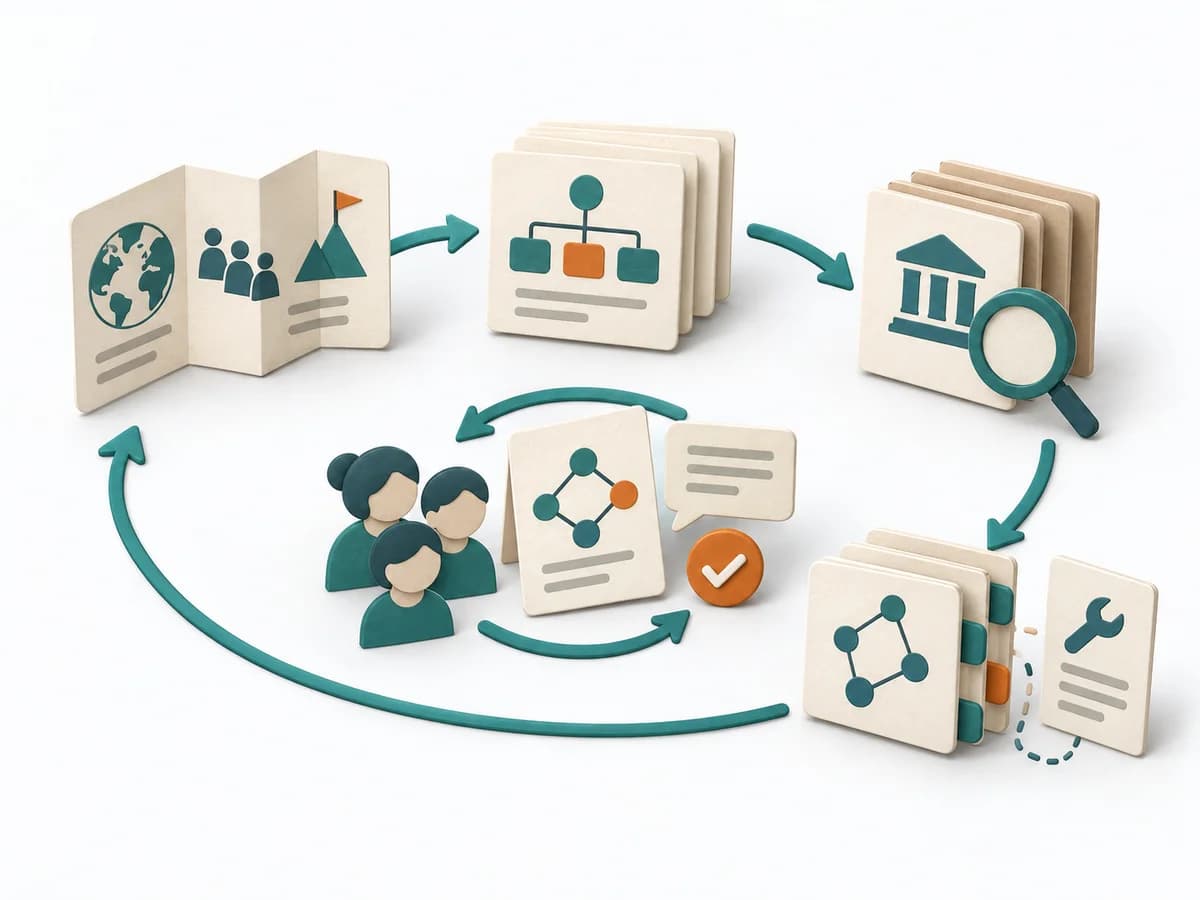 Knowledge Modeling NeOn Methodology |  Knowledge Modeling Linked Open Terms | 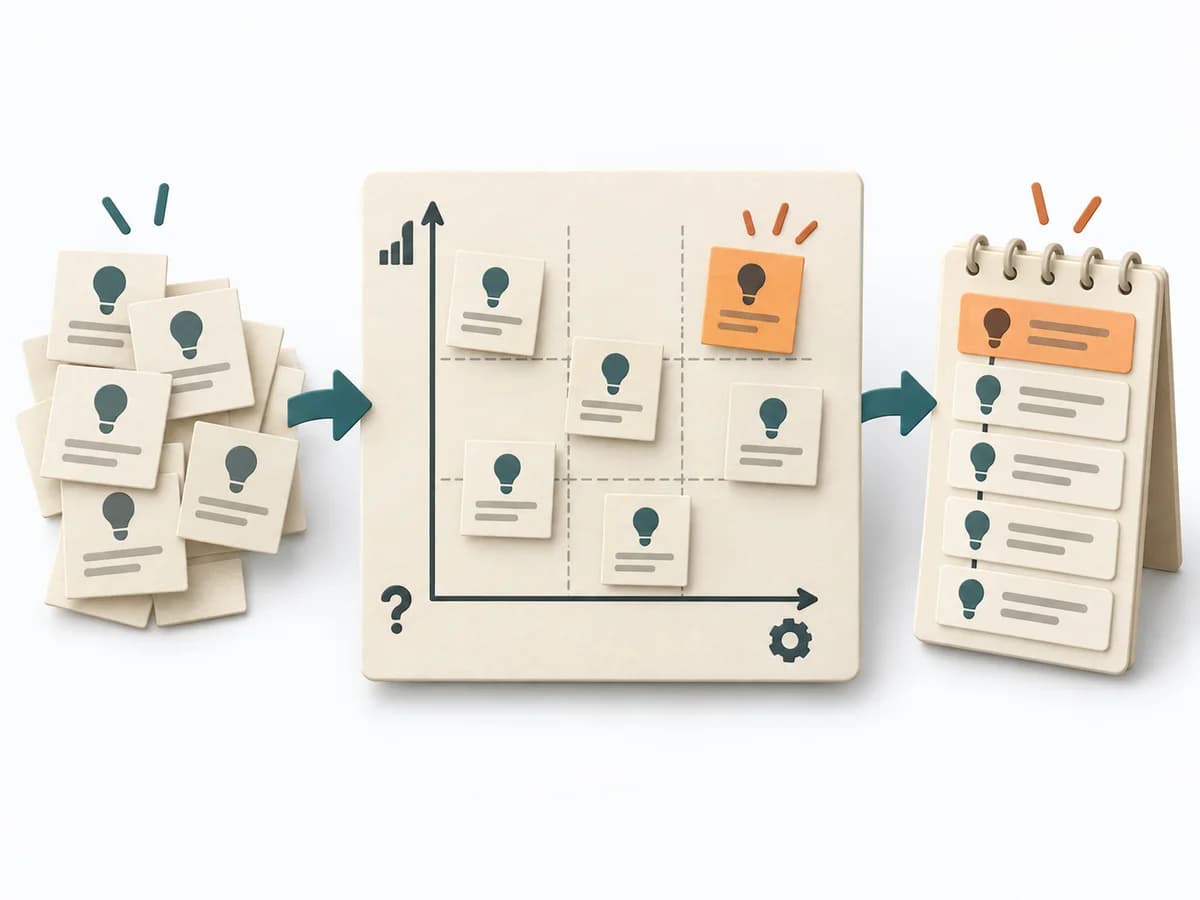 Product Discovery Hypothesis Prioritization Canvas |
|---|---|---|---|---|
Purposedifferent | When experiments become unreadable after the fact, it arranges hypothesis, signal, and learning goal on a single canvas. It separates problem, assumption, solution, and evidence. The result is captured as a Completed Experiment Canvas and a Success Metric. | The NeOn Methodology structures ontology work as a controlled process with reuse, scenarios, and reviews. It is useful when ontologies should not emerge ad hoc but modularly and reusably. | Linked Open Terms connects terminology work with linked-data thinking and makes terminology technically connectable. Vocabulary, meanings, and references can thereby be maintained consistently. | When many hypotheses compete for attention, it brings order to their learning sequence and importance. It separates problem, assumption, solution, and evidence. The result is captured as a prioritization canvas and a hypothesis backlog. |
Complexitydifferent | Low | High | Medium | Medium |
Timedifferent | 30-60 min | Mehrere Wochen bis Monate | Wochen bis Monate | 60-90 min |
Participantsdifferent | 1-5 | 2-10 | 2-8 | 3-8 |
Formatdifferent | Workshop + async | Workshop + async | Workshop + async | Workshop |
Outputdifferent | Completed Experiment Canvas, Success Metric | Ontology Requirements Specification, Reuse Plan, Ontology Modules, Evaluation Report | Ontology Requirements, Conceptual Model, Published Ontology, Documentation, Maintenance Plan | Prioritization Canvas, Hypothesis Backlog |
Tagsno overlap | ExperimentsValidationDiscoveryHypothesis | OntologyMethodologyReuseSemanticEngineering | OntologyMethodologyAgileSemantic | ExperimentsPrioritizationDiscoveryHypothesis |