View methods side by side.
Choose up to four methods. Add them using the search and share the comparison by copying its link.
| Criterion |  Product Discovery Experiment Canvas | 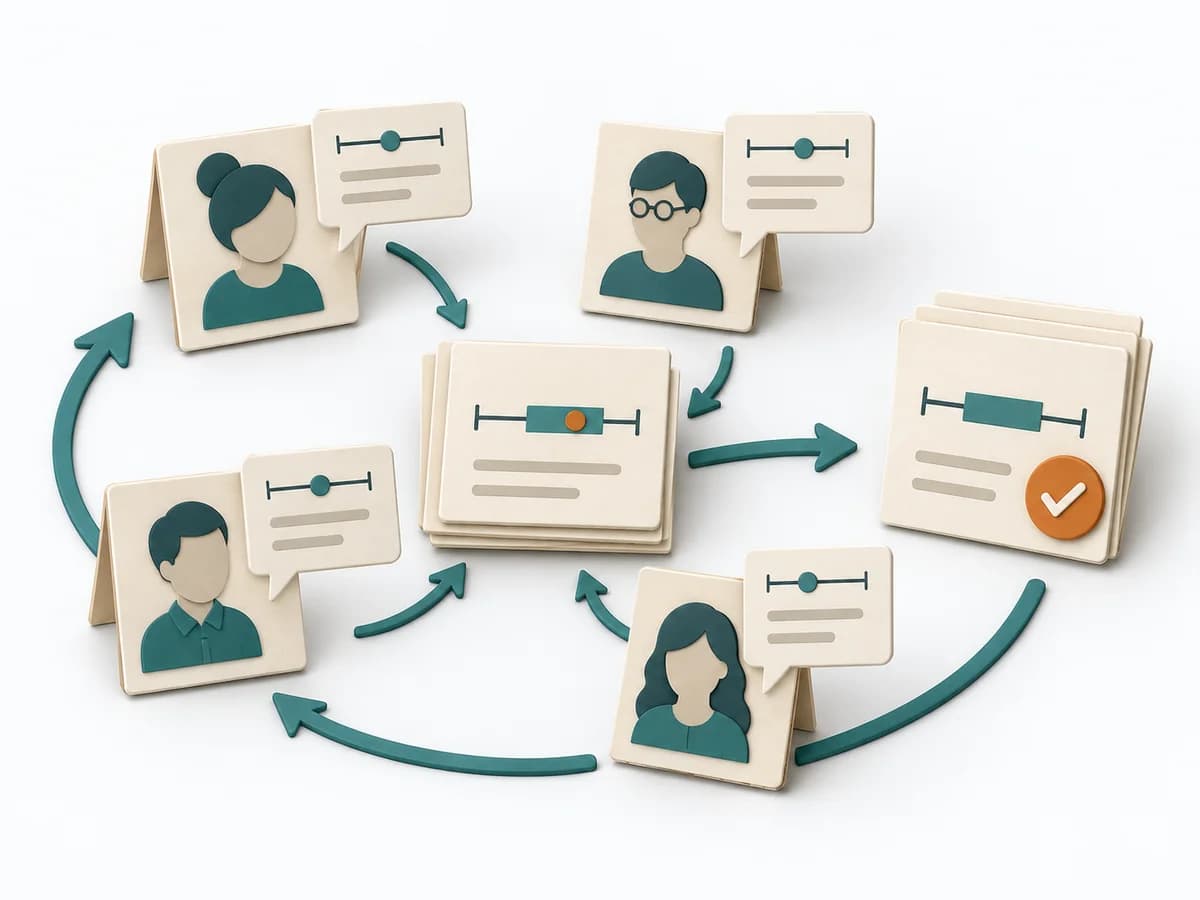 Decision Making Delphi Method | 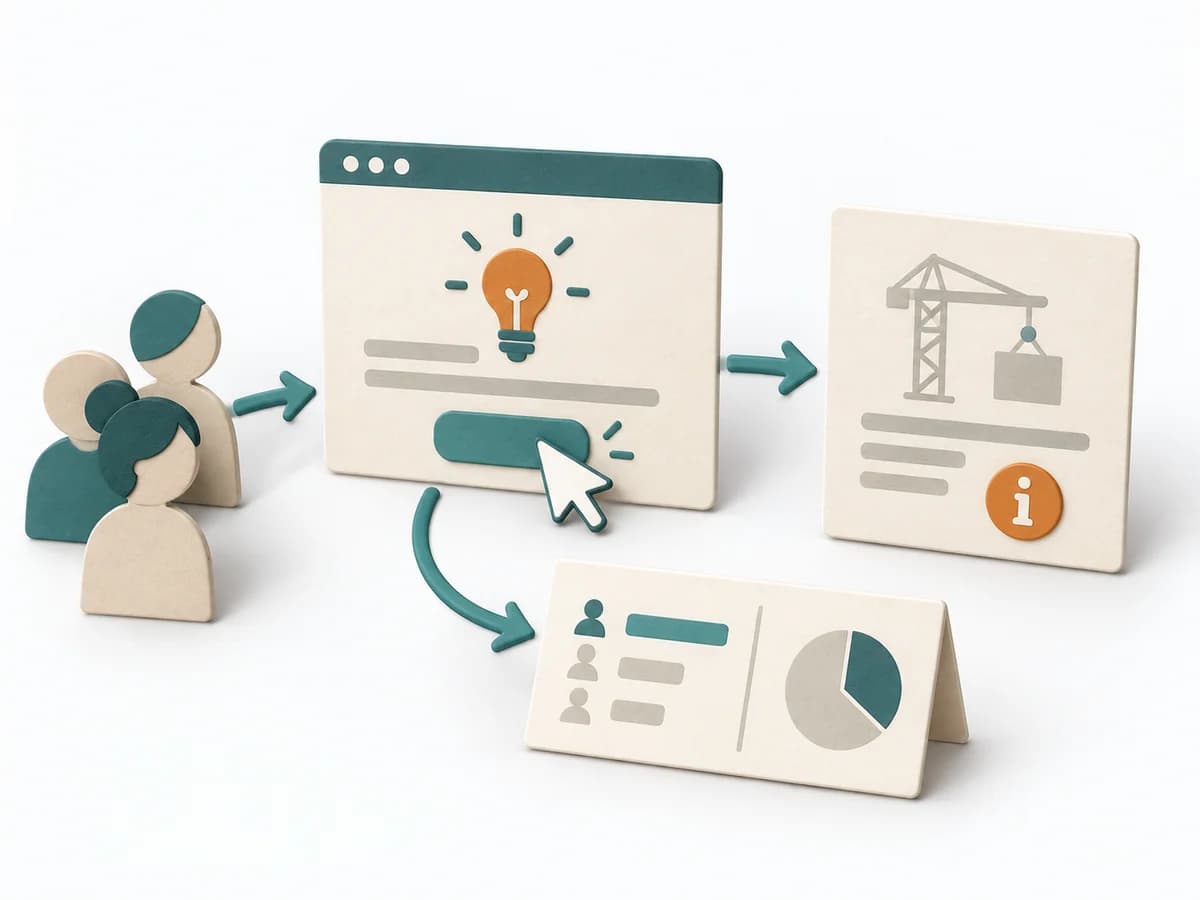 Product Discovery Fake Door Test | 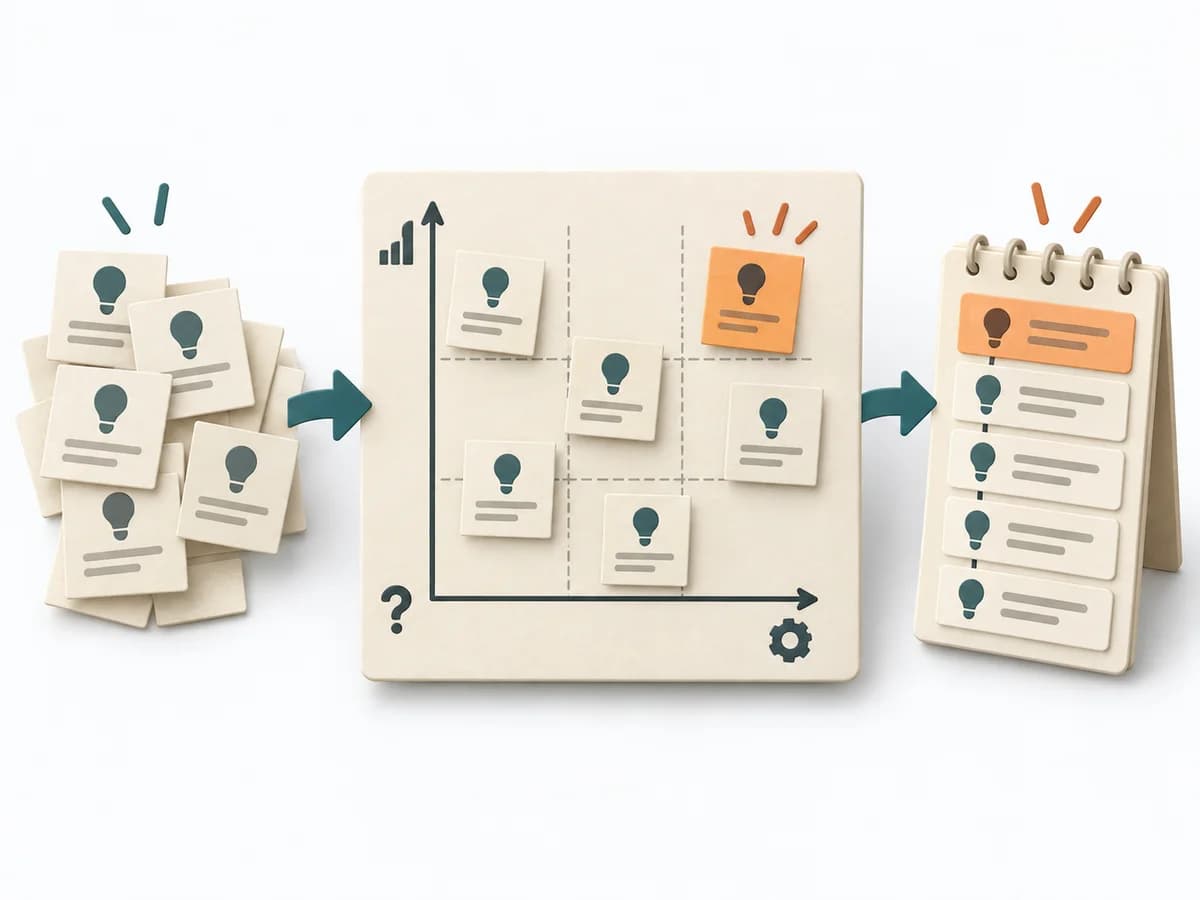 Product Discovery Hypothesis Prioritization Canvas |
|---|---|---|---|---|
Purposedifferent | When experiments become unreadable after the fact, it arranges hypothesis, signal, and learning goal on a single canvas. It separates problem, assumption, solution, and evidence. The result is captured as a Completed Experiment Canvas and a Success Metric. | When knowledge is distributed and direct dominance should be avoided, groups quickly fall under the sway of their opinion leaders. The Delphi Method gathers assessments iteratively and gradually brings expert judgments closer together. | When demand is still unclear, it measures interest in a feature before it is built. It separates real behavior from polite agreement and deliberately keeps build effort small. | When many hypotheses compete for attention, it brings order to their learning sequence and importance. It separates problem, assumption, solution, and evidence. The result is captured as a prioritization canvas and a hypothesis backlog. |
Complexitydifferent | Low | High | Medium | Medium |
Timedifferent | 30-60 min | 1-4 Wochen | 1-5 Tage | 60-90 min |
Participantsdifferent | 1-5 | 6-30 Experten | Nutzertraffic | 3-8 |
Formatdifferent | Workshop + async | Async | Async | Workshop |
Outputdifferent | Completed Experiment Canvas, Success Metric | Expert Forecast, Consensus Range, Assumption Notes | Click Data, Interest Signal, Learning Decision | Prioritization Canvas, Hypothesis Backlog |
Tagsno overlap | ExperimentsValidationDiscoveryHypothesis | ForecastingExpertsDecisionStrategy | ValidationExperimentsDemandDiscovery | ExperimentsPrioritizationDiscoveryHypothesis |