View methods side by side.
Choose up to four methods. Add them using the search and share the comparison by copying its link.
| Criterion |  Facilitation Expectation Mapping | 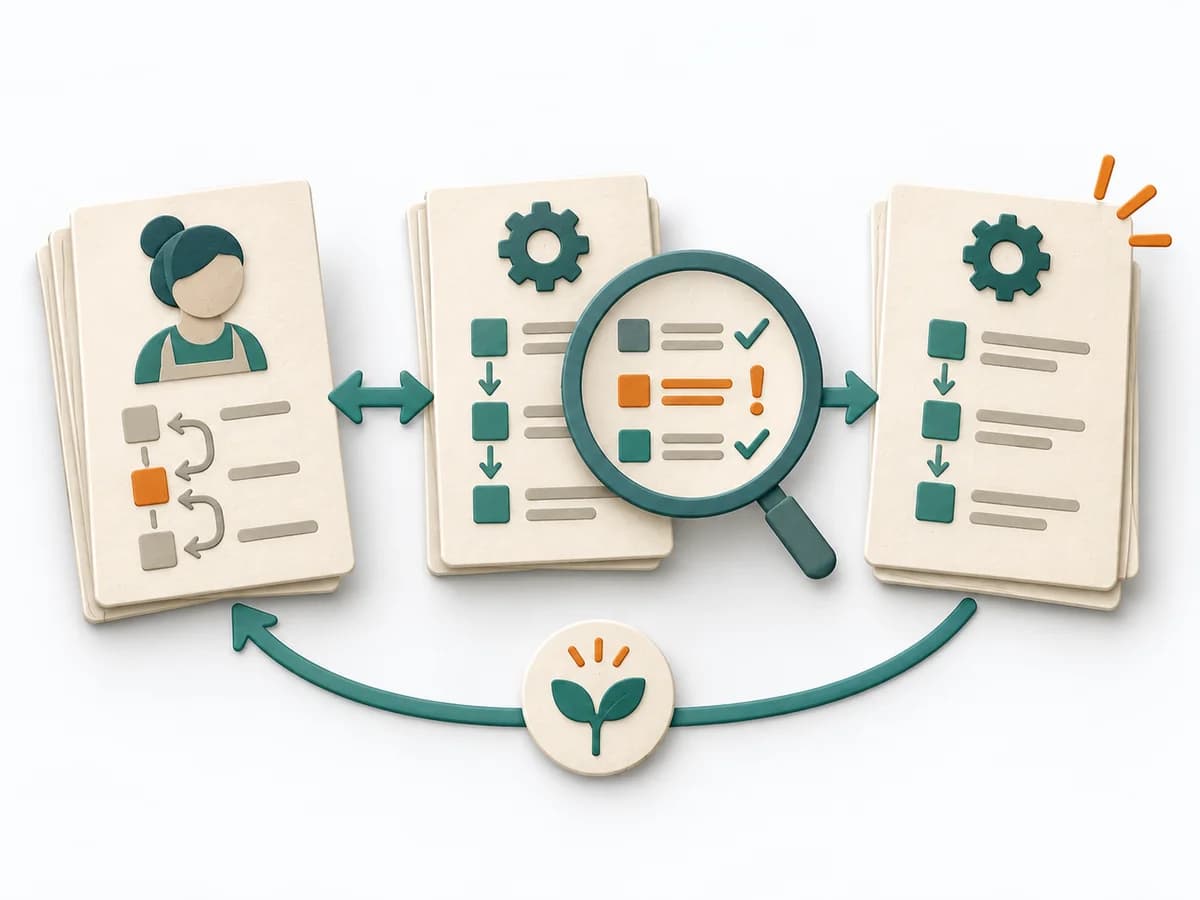 Operations Standard Work Analysis |  Operations Gemba Walk |  Facilitation Alignment Mapping |
|---|---|---|---|---|
Purposedifferent | When roles, interfaces, or projects fail because of differing expectations, Expectation Mapping surfaces these differences. It shows what each side takes for granted and where the pictures diverge. | When the same task is done differently depending on the person, the method exposes the reliable core. It creates comparability without unnecessarily choking off needed latitude. | When there is uncertainty about the real course of a process, the method brings observation to the place where work happens. It combines perception, follow-up questions, and process knowledge so decisions rest on actual workflows instead of assumptions. | When several people work toward one goal but hold different mental maps, Alignment Mapping makes the discrepancies visible. It arranges goals, assumptions, and priorities so shared direction becomes verifiable. |
Complexitydifferent | Low | Medium | Low | Medium |
Timedifferent | 45-90 min | 1-3 h | 30-120 min | 1-2 h |
Participantsdifferent | 3-12 | 2-6 | 2-6 | 4-12 |
Formatsame | Workshop | Workshop | Workshop | Workshop |
Outputdifferent | Expectation Map, Alignment Notes, Agreements | Standard Work Sheet, Deviation List, Improved Standard, Training Needs | Observation Notes, Improvement Ideas | Alignment Map, Open Issues, Decision Questions |
Tagsno overlap | AlignmentStakeholdersTeam | LeanProcessQuality | LeanObservationProcessOperations | AlignmentStakeholdersStrategyFacilitation |