View methods side by side.
Choose up to four methods. Add them using the search and share the comparison by copying its link.
| Criterion |  Facilitation Expectation Mapping |  Agile ROAM Board | 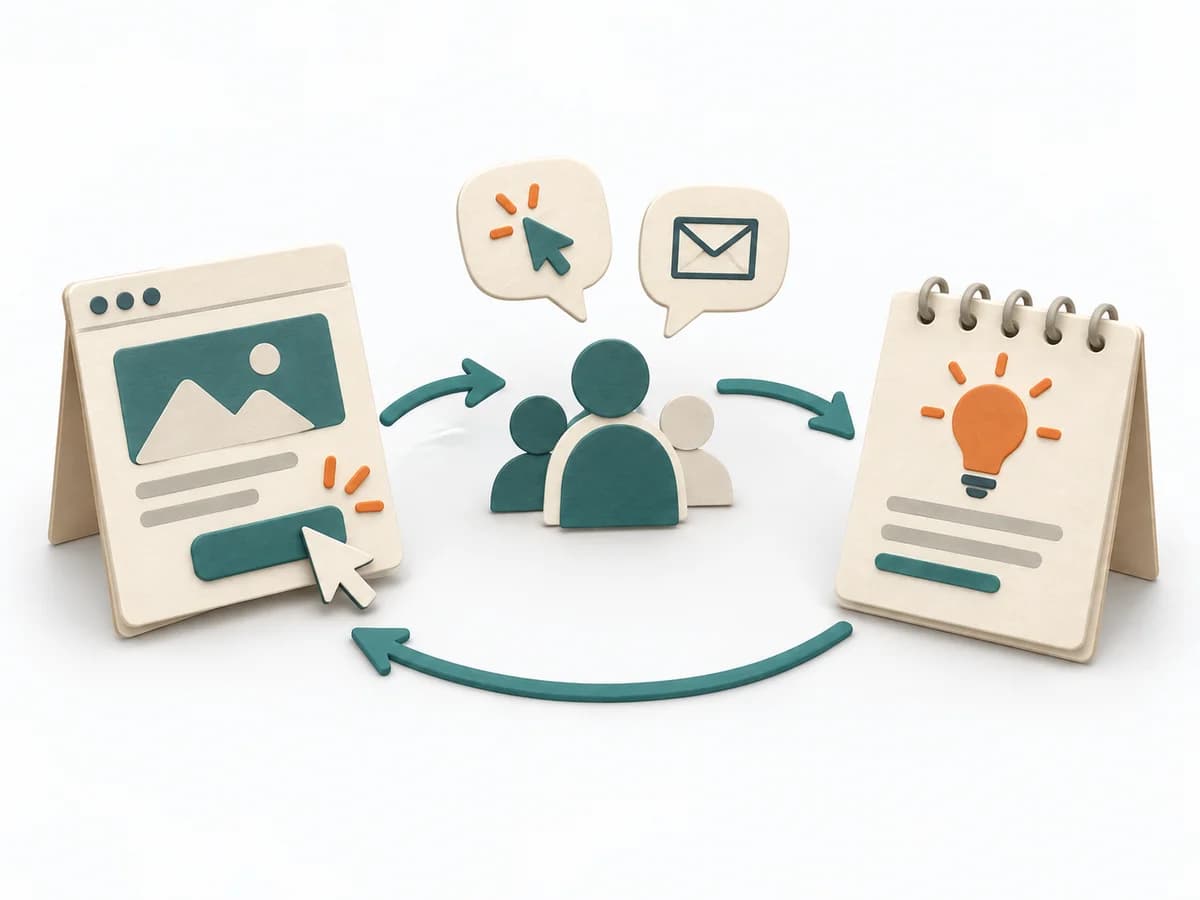 Product Discovery Smoke Test |  Growth A/B Testing |
|---|---|---|---|---|
Purposedifferent | When roles, interfaces, or projects fail because of differing expectations, Expectation Mapping surfaces these differences. It shows what each side takes for granted and where the pictures diverge. | When work needs to move between different states or columns, it makes that movement and its handoffs legible. It sorts work by value, risk, and delivery ability. The result is captured as a ROAM Board and an Owner List. | When demand only needs to be roughly verified, it tests interest with minimal effort. It measures whether people would take a next step at all. | When two variants compete, discussions quickly decide by taste rather than effect. A/B Testing checks behavior under controlled conditions and separates real improvement from chance or expectation effects. |
Complexitydifferent | Low | Low | Low | High |
Timedifferent | 45-90 min | 20-40 min initial, dann laufend | 1-5 Tage | 1-4 Wochen |
Participantsdifferent | 3-12 | 3-15 | Nutzertraffic | 1-6 |
Formatdifferent | Workshop | Workshop + async | Async | Async |
Outputdifferent | Expectation Map, Alignment Notes, Agreements | ROAM Board, Owner List | Interest Metrics, Conversion Signal, Learning Note | Experiment results, Decision log, Learning summary |
Tagsno overlap | AlignmentStakeholdersTeam | RiskAgileTrackingAlignment | ValidationExperimentsDemandGrowth | ExperimentsGrowthAnalyticsValidation |