View methods side by side.
Choose up to four methods. Add them using the search and share the comparison by copying its link.
| Criterion |  Facilitation Expectation Mapping | 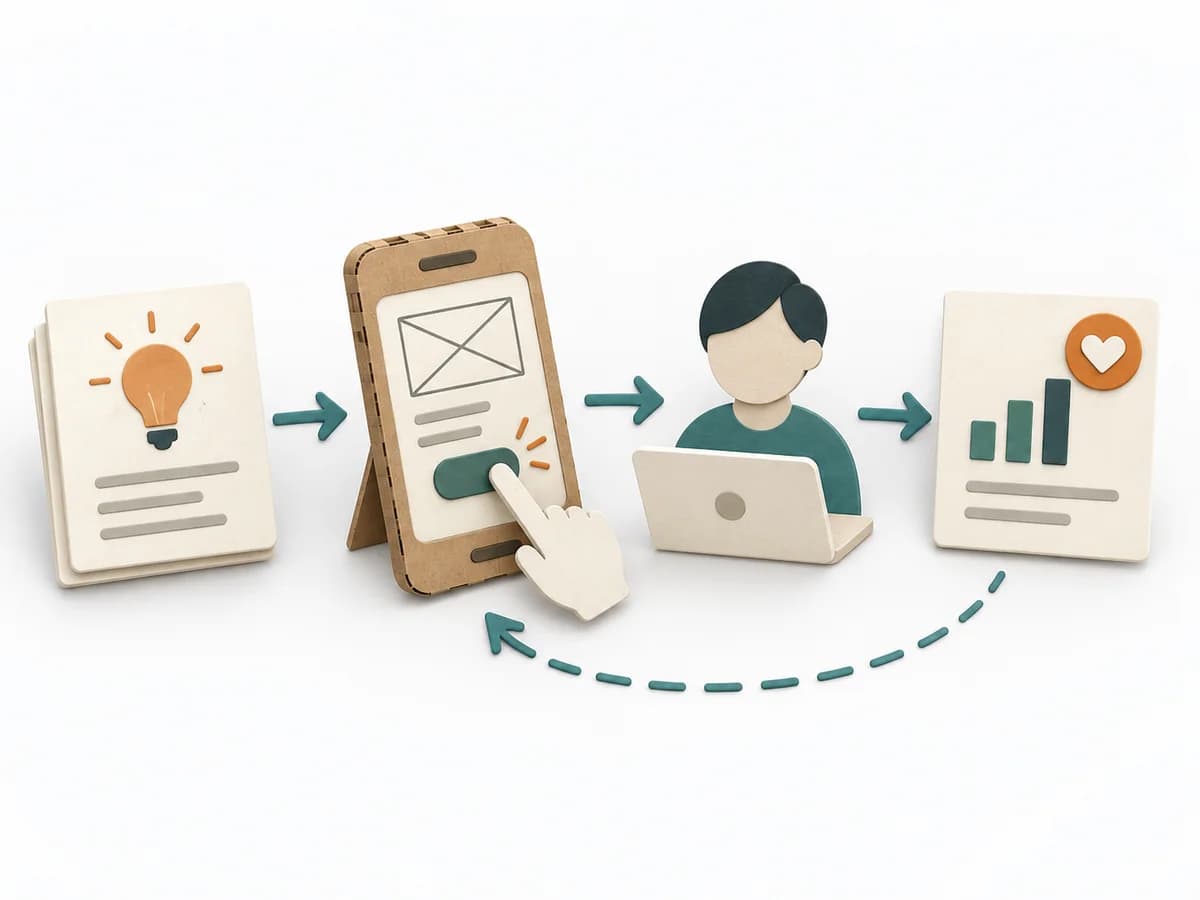 Product Discovery Pretotyping | 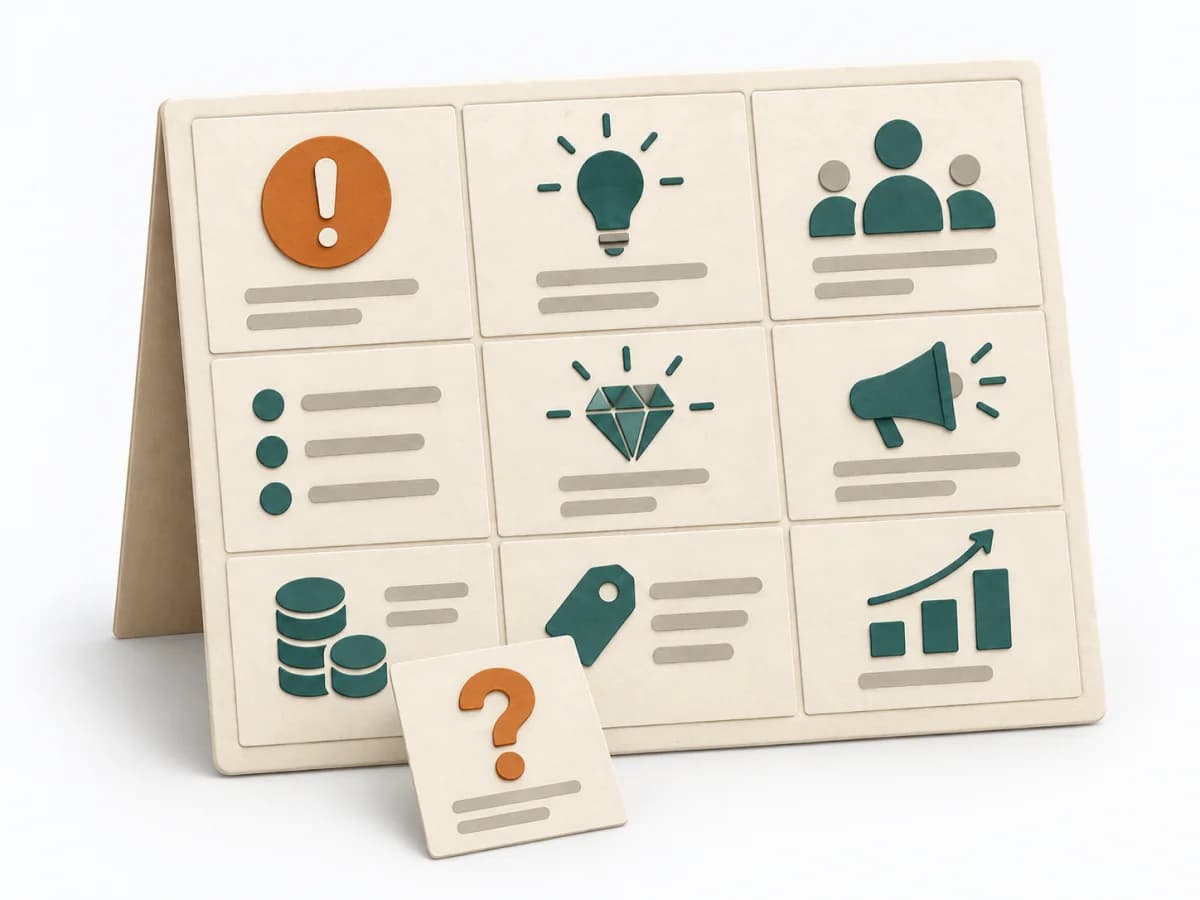 Product Strategy Lean Canvas |  Facilitation Alignment Mapping |
|---|---|---|---|---|
Purposedifferent | When roles, interfaces, or projects fail because of differing expectations, Expectation Mapping surfaces these differences. It shows what each side takes for granted and where the pictures diverge. | Pretotyping clarifies whether a customer problem and solution idea create enough real demand. It separates problem, assumption, solution, and evidence, and captures the result as a pretotyping sketch, test setup, and conversion data. | When an early product bet still has too many open points, it brings target group, problem, and assumptions into a single view. It condenses the idea so core risks become nameable. | When several people work toward one goal but hold different mental maps, Alignment Mapping makes the discrepancies visible. It arranges goals, assumptions, and priorities so shared direction becomes verifiable. |
Complexitydifferent | Low | Low | Medium | Medium |
Timedifferent | 45-90 min | Stunden bis wenige Tage | 45-90 min | 1-2 h |
Participantsdifferent | 3-12 | 1-4 | 1-6 | 4-12 |
Formatdifferent | Workshop | Workshop + async | Workshop + async | Workshop |
Outputdifferent | Expectation Map, Alignment Notes, Agreements | Pretotyping sketch, Test setup, Conversion data, Go or no-go decision | Lean Canvas, Core Assumptions, Experiment Backlog | Alignment Map, Open Issues, Decision Questions |
Tagsno overlap | AlignmentStakeholdersTeam | ValidationDemandMVP | StartupLeanAssumptionsBusiness model | AlignmentStakeholdersStrategyFacilitation |