View methods side by side.
Choose up to four methods. Add them using the search and share the comparison by copying its link.
Selected:Expectation MappingCustomer Journey MappingTeam Topologies Interaction ModesAlignment Mapping
| Criterion |  Facilitation Expectation Mapping |  UX Research Customer Journey Mapping | 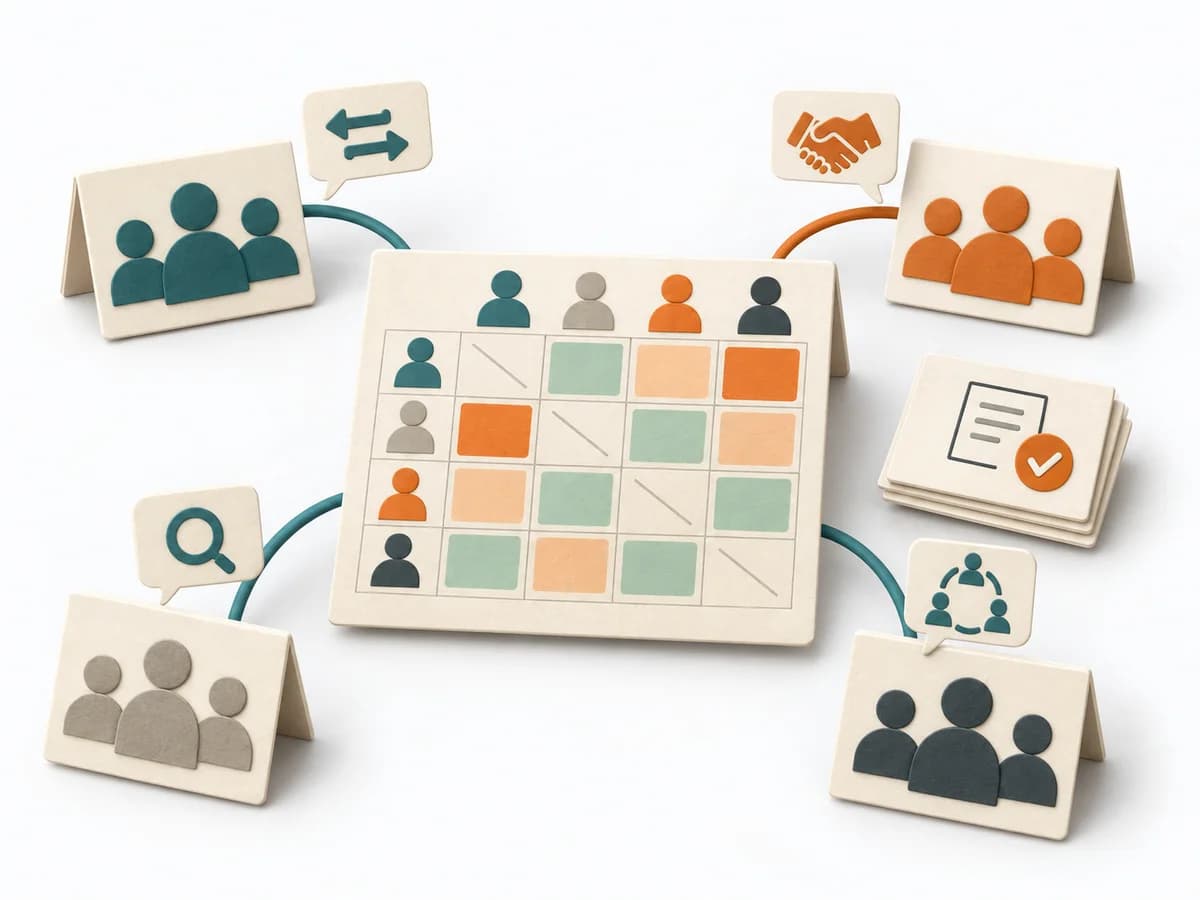 Team Design Team Topologies Interaction Modes |  Facilitation Alignment Mapping |
|---|---|---|---|---|
Purposedifferent | When roles, interfaces, or projects fail because of differing expectations, Expectation Mapping surfaces these differences. It shows what each side takes for granted and where the pictures diverge. | When a user journey falls apart across many touchpoints, customer journey mapping makes the experience visible as a coherent arc. Phases, emotions, and breaks become legible enough to prioritize critical moments deliberately. | When several teams collaborate repeatedly, it describes the right interaction mode for each interface between them. It clarifies responsibility, interaction, and load between teams. The result is captured as an interaction heat map and pairwise agreements. | When several people work toward one goal but hold different mental maps, Alignment Mapping makes the discrepancies visible. It arranges goals, assumptions, and priorities so shared direction becomes verifiable. |
Complexitydifferent | Low | Medium | Medium | Medium |
Timedifferent | 45-90 min | 2-4 h | Half day | 1-2 h |
Participantsdifferent | 3-12 | 4-10 | Team-Leads plus Architecture | 4-12 |
Formatsame | Workshop | Workshop | Workshop | Workshop |
Outputdifferent | Expectation Map, Alignment Notes, Agreements | Journey Map, Pain-point List, Opportunity Backlog | Interaction Heat Map, Agreements per Pair | Alignment Map, Open Issues, Decision Questions |
Tagsno overlap | AlignmentStakeholdersTeam | JourneyServiceService design | TeamAlignmentCollaborationOrganization | AlignmentStakeholdersStrategyFacilitation |