View methods side by side.
Choose up to four methods. Add them using the search and share the comparison by copying its link.
| Criterion | 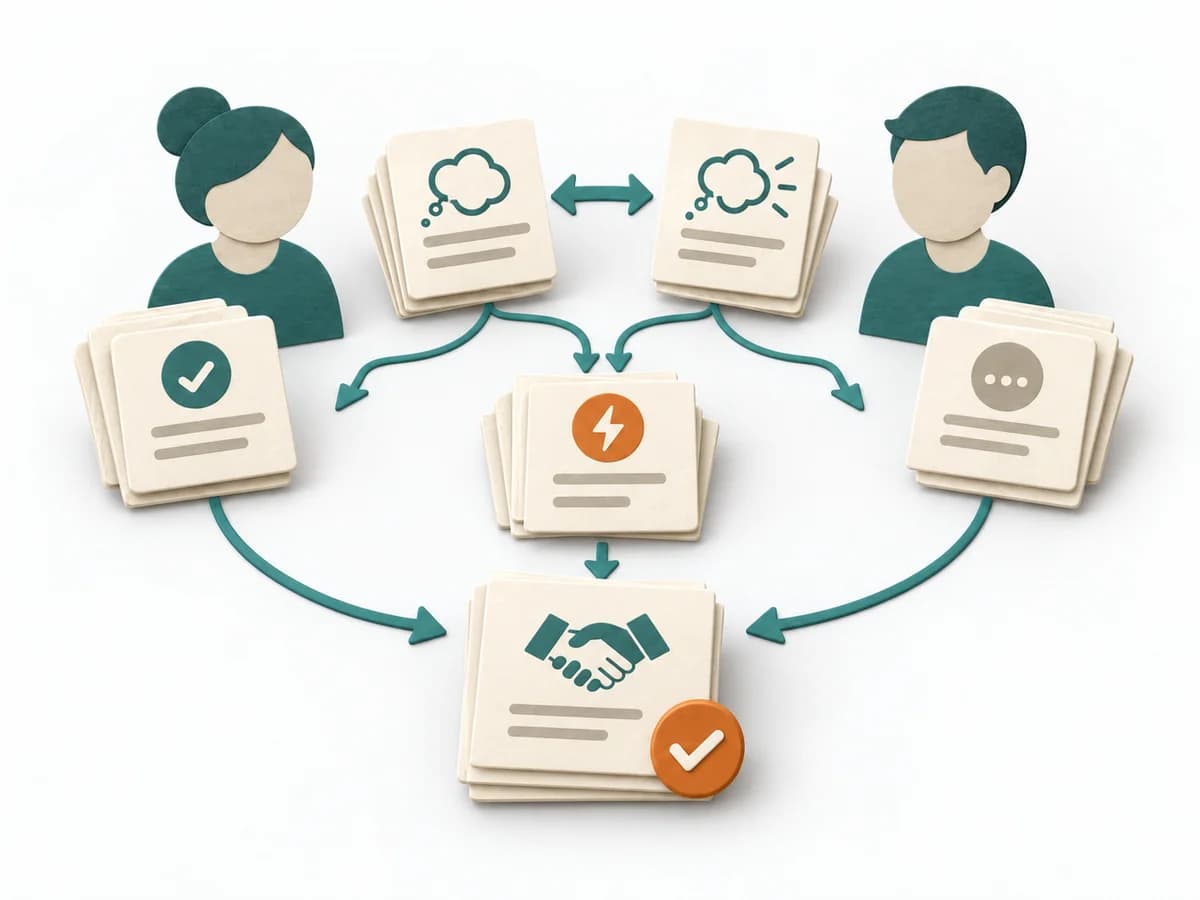 Facilitation Expectation Mapping | 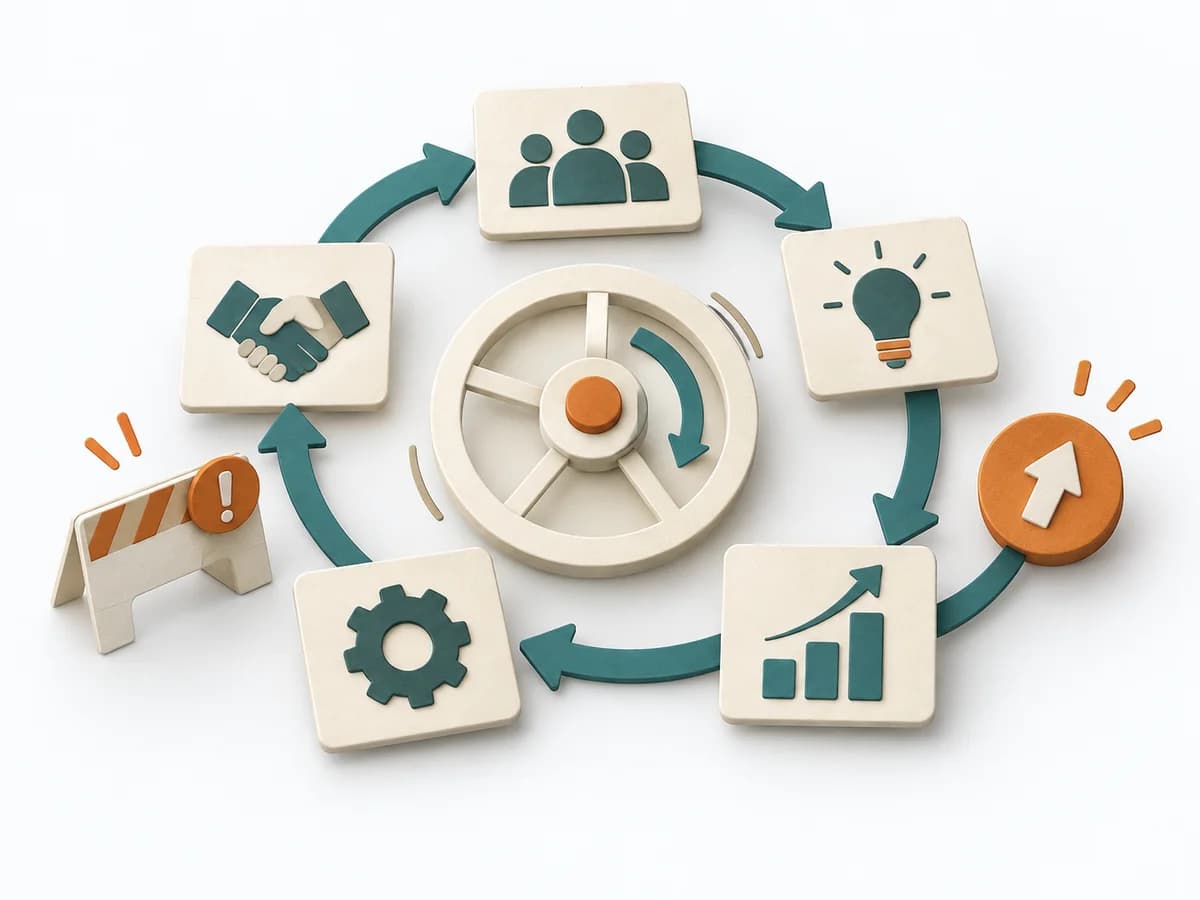 Growth Flywheel |  Growth Hooked Model |  Facilitation Alignment Mapping |
|---|---|---|---|---|
Purposedifferent | When roles, interfaces, or projects fail because of differing expectations, Expectation Mapping surfaces these differences. It shows what each side takes for granted and where the pictures diverge. | Growth often breaks down where a reinforcing mechanism builds up too much friction. A Flywheel shows the cycle of value, repetition, and reinforcement meant to sustain growth. | The Hooked Model helps clarify engagement loops, user behavior, and experiments. It makes repeat behavior measurable and captures the result as a hooked loop, trigger map, and reward design. | When several people work toward one goal but hold different mental maps, Alignment Mapping makes the discrepancies visible. It arranges goals, assumptions, and priorities so shared direction becomes verifiable. |
Complexitydifferent | Low | Medium | Medium | Medium |
Timedifferent | 45-90 min | 60-120 min | Multiple workshops over several weeks | 1-2 h |
Participantsdifferent | 3-12 | 3-8 | 2-8 | 4-12 |
Formatdifferent | Workshop | Workshop | Workshop + async | Workshop |
Outputdifferent | Expectation Map, Alignment Notes, Agreements | Flywheel Map, Friction Points, Growth Levers, Experiment Backlog | Hooked loop, Trigger map, Reward design, Ethics check | Alignment Map, Open Issues, Decision Questions |
Tagsno overlap | AlignmentStakeholdersTeam | GrowthRetentionConversion | GrowthBehaviorRetention | AlignmentStakeholdersStrategyFacilitation |