View methods side by side.
Choose up to four methods. Add them using the search and share the comparison by copying its link.
| Criterion |  Facilitation Expectation Mapping |  Operations Fault Tree Analysis | 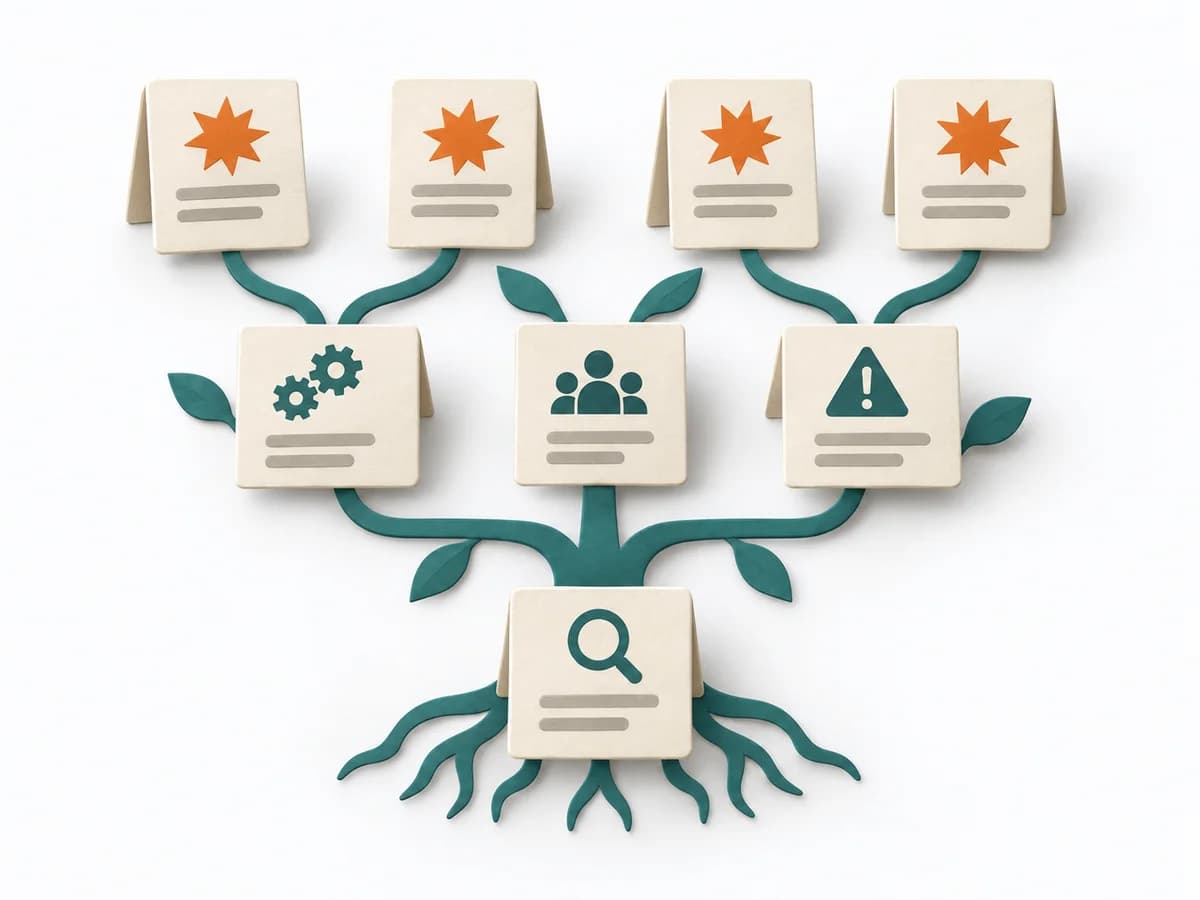 Operations Family Tree Analysis |  Facilitation Alignment Mapping |
|---|---|---|---|---|
Purposedifferent | When roles, interfaces, or projects fail because of differing expectations, Expectation Mapping surfaces these differences. It shows what each side takes for granted and where the pictures diverge. | For a critical top event with several possible triggers, the method logically models failure paths. It makes visible which combinations of conditions can lead to damage. | For a series of incidents with a similar pattern, the method arranges individual events as branches of a common origin. It makes visible which conditions keep recurring. | When several people work toward one goal but hold different mental maps, Alignment Mapping makes the discrepancies visible. It arranges goals, assumptions, and priorities so shared direction becomes verifiable. |
Complexitydifferent | Low | High | Medium | Medium |
Timedifferent | 45-90 min | 2-6 h | 2-4 h | 1-2 h |
Participantsdifferent | 3-12 | 3-8 | 2-6 | 4-12 |
Formatdifferent | Workshop | Workshop + async | Workshop + async | Workshop |
Outputdifferent | Expectation Map, Alignment Notes, Agreements | Fault Tree, Critical Paths, Cause Hypotheses, Control Actions | Family Tree Diagram, Pattern Notes, Systemic Measures | Alignment Map, Open Issues, Decision Questions |
Tagsno overlap | AlignmentStakeholdersTeam | RiskRoot causeSafety | Root causePatternsIncidentSystemic | AlignmentStakeholdersStrategyFacilitation |