View methods side by side.
Choose up to four methods. Add them using the search and share the comparison by copying its link.
| Criterion |  Facilitation Expectation Mapping |  Systems Thinking CATWOE Analysis | 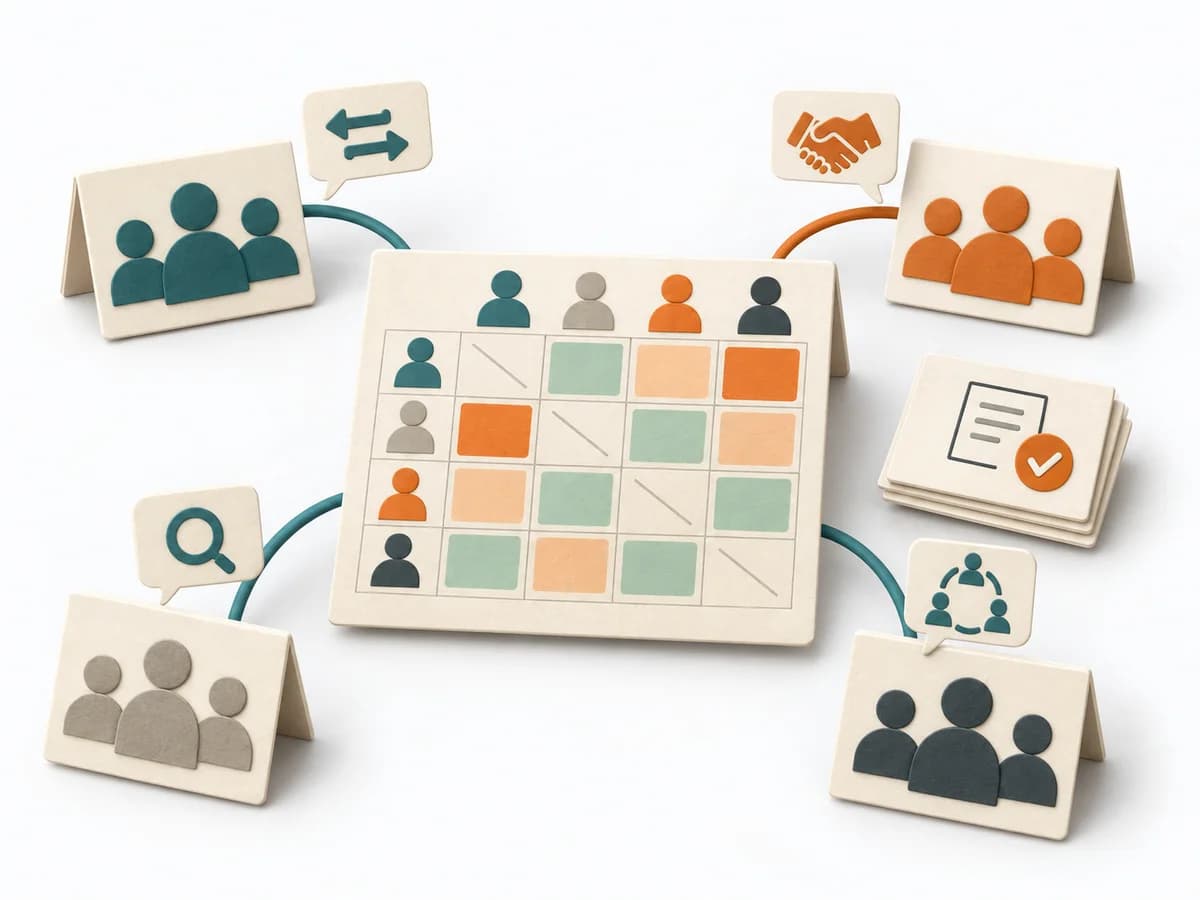 Team Design Team Topologies Interaction Modes |  Business Strategy McKinsey 7S |
|---|---|---|---|---|
Purposedifferent | When roles, interfaces, or projects fail because of differing expectations, Expectation Mapping surfaces these differences. It shows what each side takes for granted and where the pictures diverge. | CATWOE structures a problem from six viewpoints and prevents too narrow a view of the situation. Different experiences of the system become comparably discussable this way. | When several teams collaborate repeatedly, it describes the right interaction mode for each interface between them. It clarifies responsibility, interaction, and load between teams. The result is captured as an interaction heat map and pairwise agreements. | McKinsey 7S checks whether Strategy, Structure, Systems, Shared Values, Skills, Style, and Staff fit together. Organizational misalignments become visible across multiple levers as a result. |
Complexitydifferent | Low | Medium | Medium | Medium |
Timedifferent | 45-90 min | 45-90 min | Half day | 2-4 h |
Participantsdifferent | 3-12 | 3-8 | Team-Leads plus Architecture | 3-12 |
Formatdifferent | Workshop | Workshop + async | Workshop | Workshop |
Outputdifferent | Expectation Map, Alignment Notes, Agreements | CATWOE Canvas, Root Definition, Stakeholder Perspectives, Constraints | Interaction Heat Map, Agreements per Pair | 7S Assessment, Alignment Gaps, Change Actions |
Tagsno overlap | AlignmentStakeholdersTeam | Systems thinkingFramingStakeholders | TeamAlignmentCollaborationOrganization | OrganizationStrategyAlignmentChange |