View methods side by side.
Choose up to four methods. Add them using the search and share the comparison by copying its link.
| Criterion | 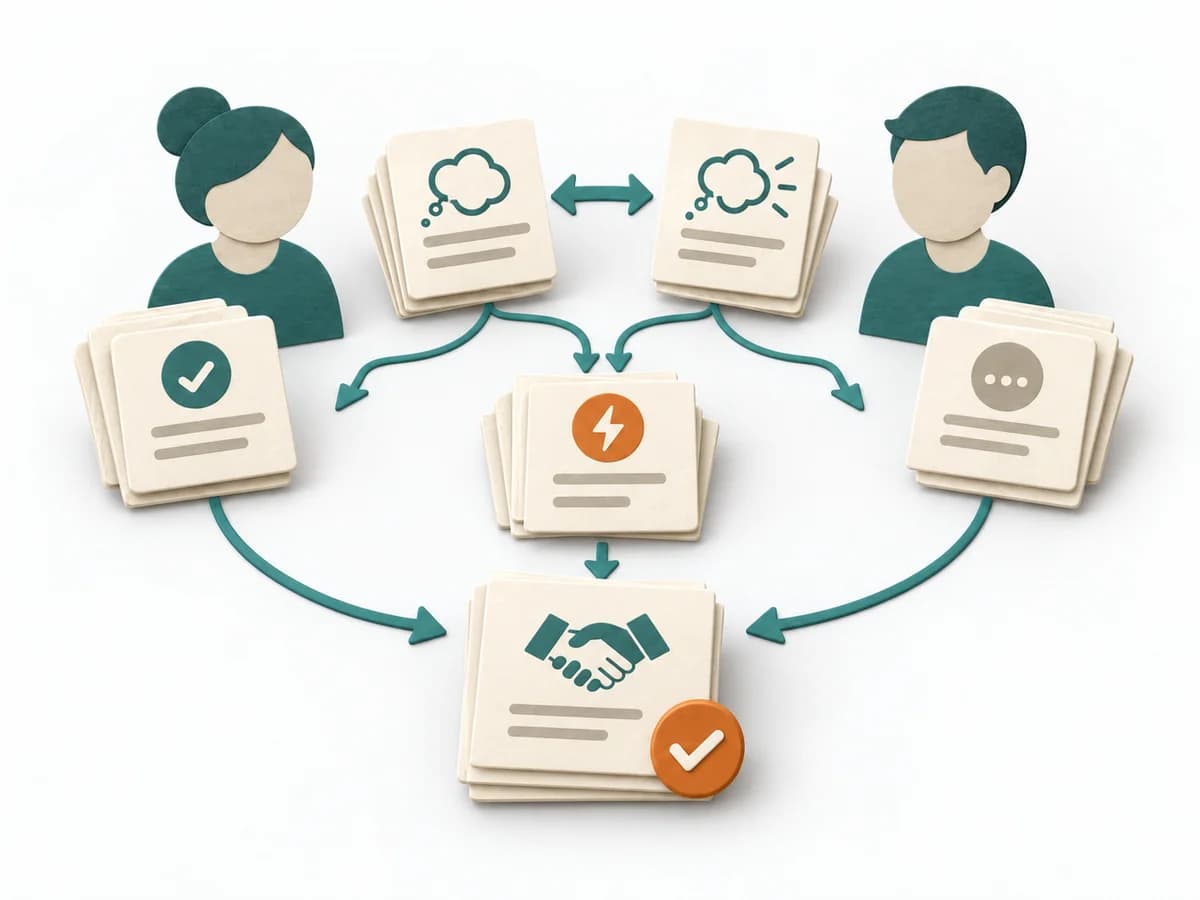 Facilitation Expectation Mapping | 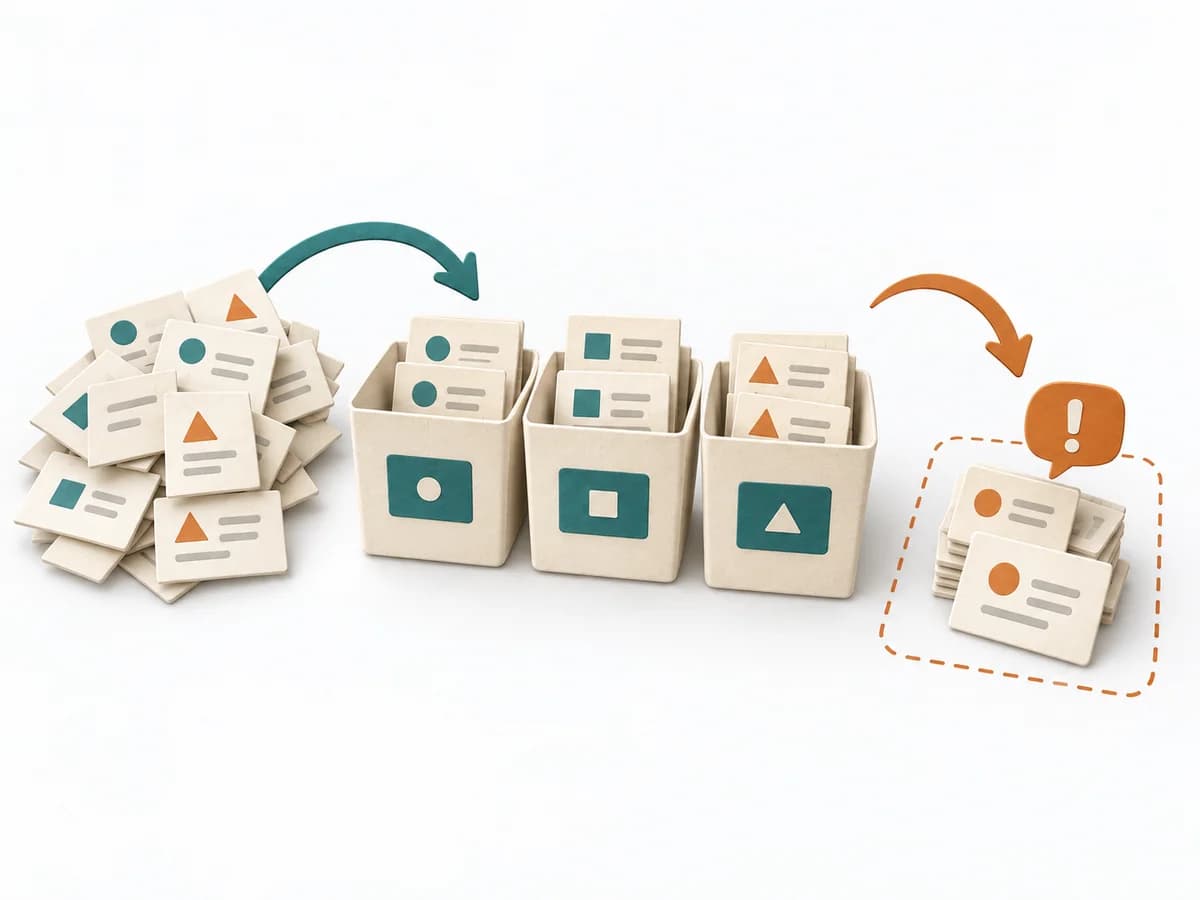 Agile Bucket System | 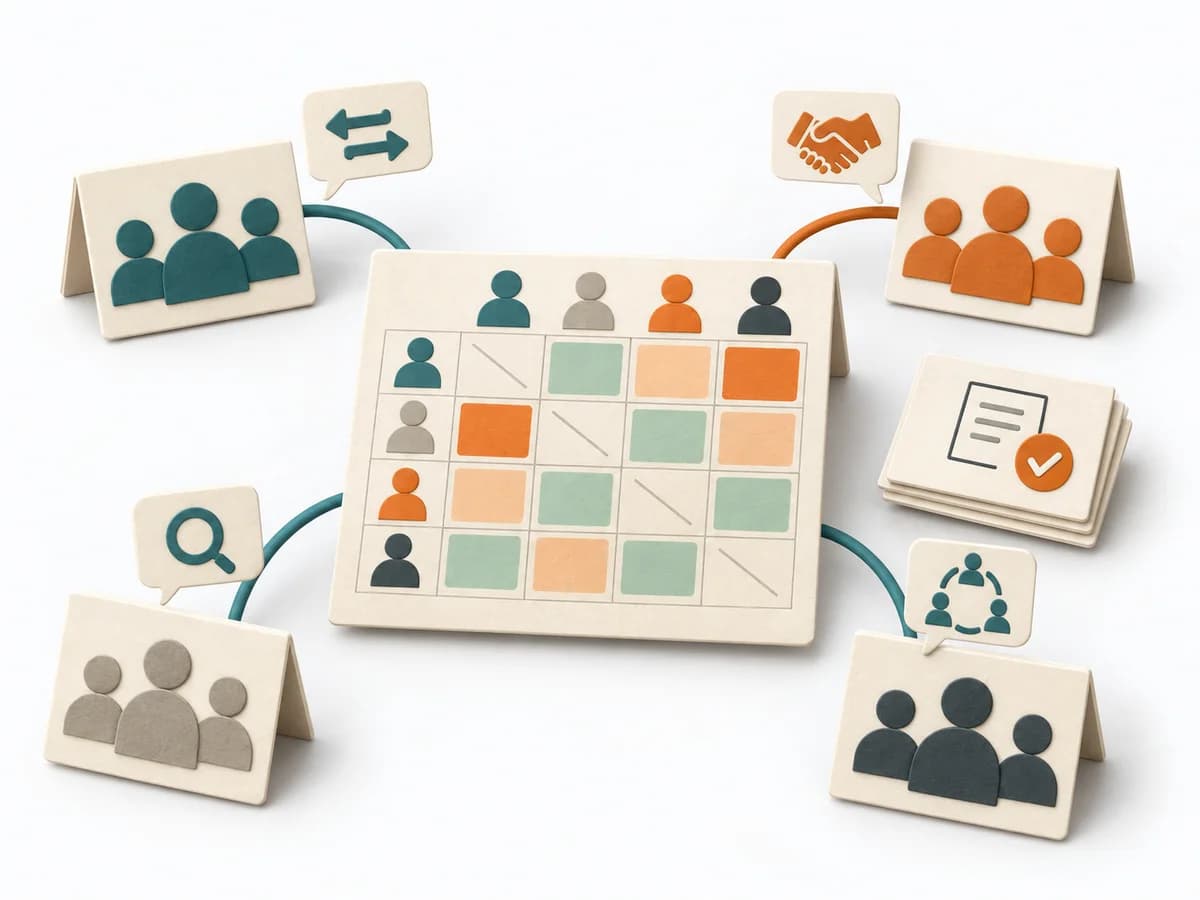 Team Design Team Topologies Interaction Modes | 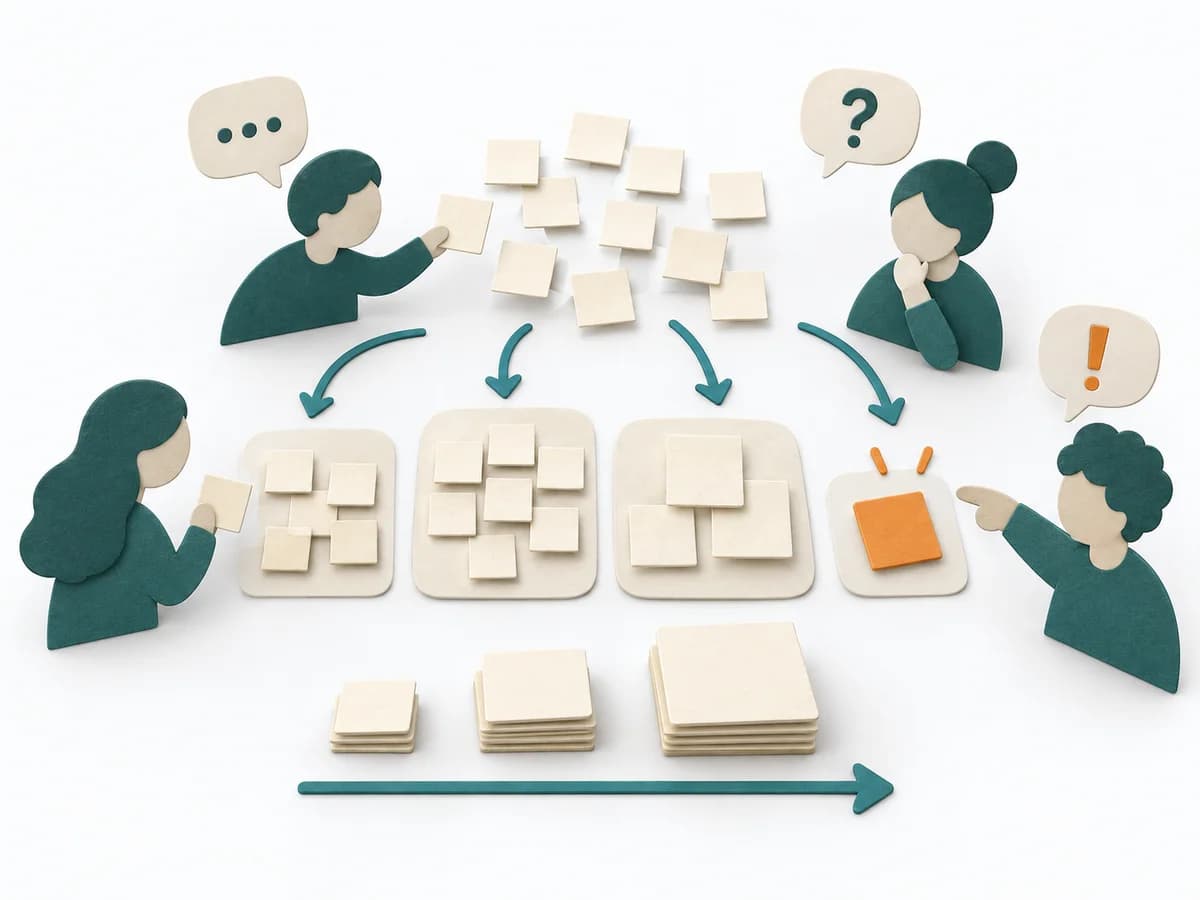 Agile Affinity Estimation |
|---|---|---|---|---|
Purposedifferent | When roles, interfaces, or projects fail because of differing expectations, Expectation Mapping surfaces these differences. It shows what each side takes for granted and where the pictures diverge. | When a large batch of work needs a fast, rough estimate, it sorts items into predefined size buckets. It sorts work by value, risk, and delivery ability. The result is captured as a Bucketed Backlog, Relative Estimates, and Split Candidates. | When several teams collaborate repeatedly, it describes the right interaction mode for each interface between them. It clarifies responsibility, interaction, and load between teams. The result is captured as an interaction heat map and pairwise agreements. | When many tasks need to be classified quickly, it sorts them by perceived effort and similarity. It reduces the effort of fine-grained estimation for large volumes. |
Complexitydifferent | Low | Medium | Medium | Medium |
Timedifferent | 45-90 min | 30-90 min | Half day | 30-90 min |
Participantsdifferent | 3-12 | 3-12 | Team-Leads plus Architecture | 3-12 |
Formatsame | Workshop | Workshop | Workshop | Workshop |
Outputdifferent | Expectation Map, Alignment Notes, Agreements | Bucketed Backlog, Relative Estimates, Split Candidates | Interaction Heat Map, Agreements per Pair | Affinity Size Map, Grouped Estimates, Unclear Items |
Tagsno overlap | AlignmentStakeholdersTeam | EstimationBacklogRelative sizing | TeamAlignmentCollaborationOrganization | EstimationBacklogRelative sizing |