View methods side by side.
Choose up to four methods. Add them using the search and share the comparison by copying its link.
| Criterion | 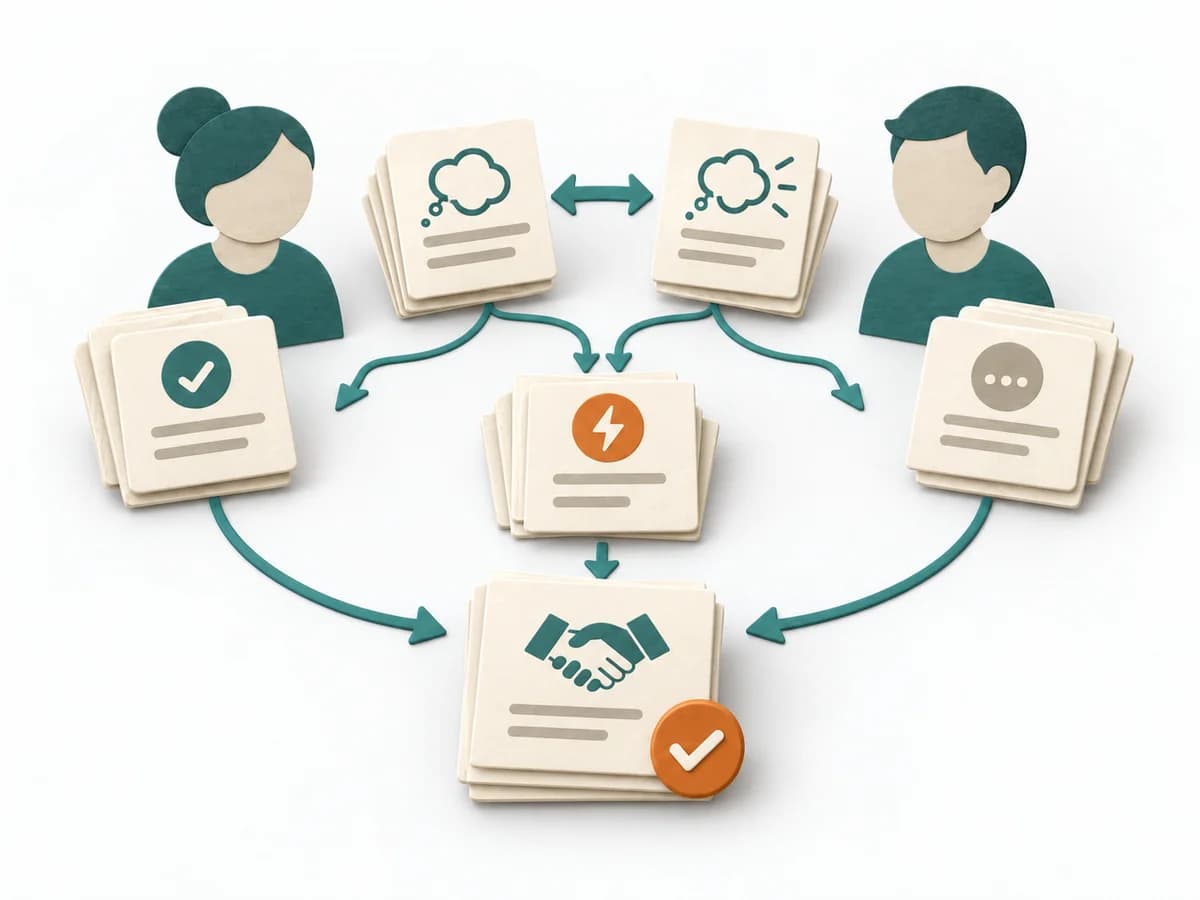 Facilitation Expectation Mapping |  Facilitation Alignment Mapping |  Facilitation Consensus Workshop | 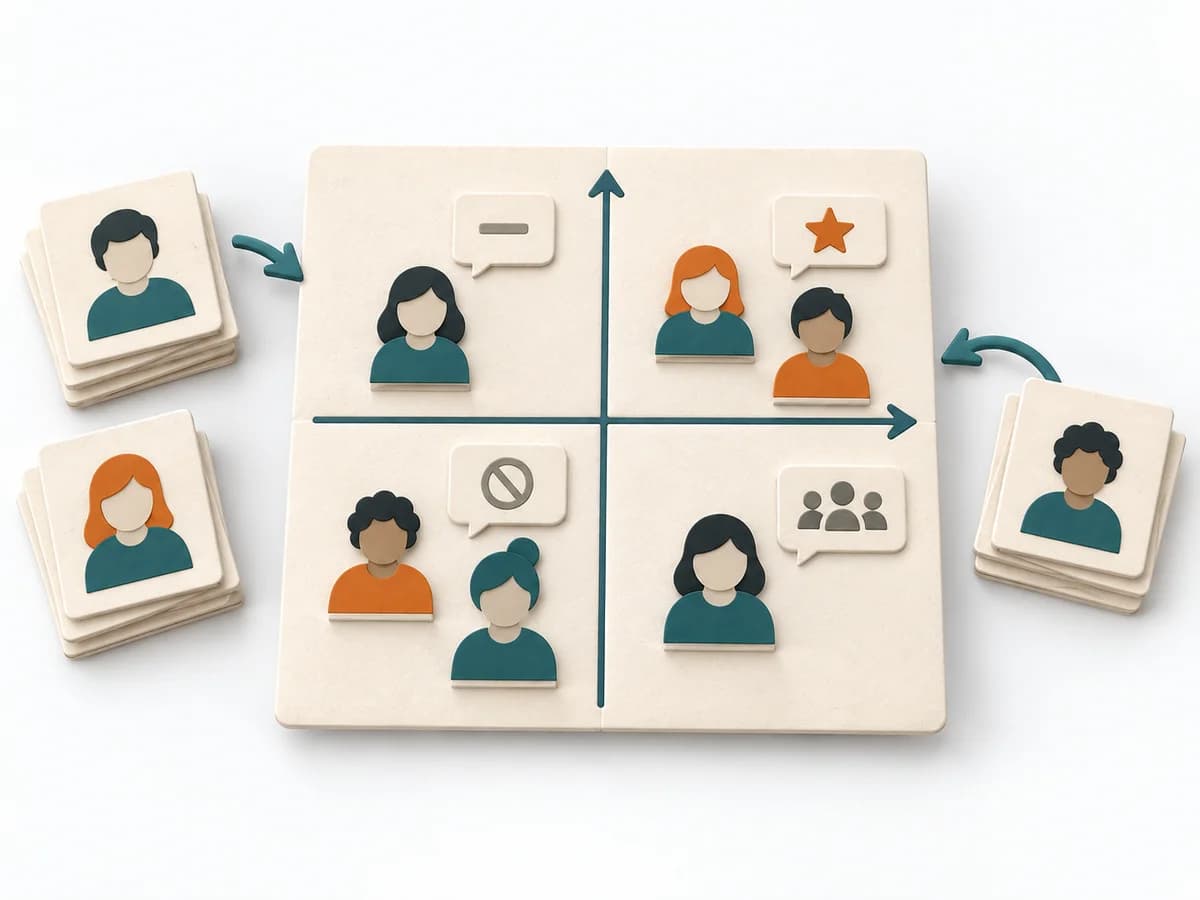 Facilitation Power Interest Grid |
|---|---|---|---|---|
Purposedifferent | When roles, interfaces, or projects fail because of differing expectations, Expectation Mapping surfaces these differences. It shows what each side takes for granted and where the pictures diverge. | When several people work toward one goal but hold different mental maps, Alignment Mapping makes the discrepancies visible. It arranges goals, assumptions, and priorities so shared direction becomes verifiable. | When a group needs a solid decision without outvoting individual factions, a Consensus Workshop creates a negotiable common ground. It makes agreement, reservations, and open tensions discussable at the same time. | When many stakeholders compete for attention at once, the Power Interest Grid sorts them by influence and stake. It turns individual contributions into a visible selection. The result is captured as a Power Interest Grid and a stakeholder-specific strategy. |
Complexitydifferent | Low | Medium | Medium | Low |
Timedifferent | 45-90 min | 1-2 h | 1-3 h | 30-60 min |
Participantsdifferent | 3-12 | 4-12 | 5-30 | 2-8 |
Formatsame | Workshop | Workshop | Workshop | Workshop |
Outputdifferent | Expectation Map, Alignment Notes, Agreements | Alignment Map, Open Issues, Decision Questions | Consensus Clusters, Theme Titles, Priority Areas | Power Interest Grid, Strategy per Stakeholder |
Tags1 shared | AlignmentStakeholdersTeam | AlignmentStakeholdersStrategyFacilitation | FacilitationConsensusWorkshopAlignment | StakeholdersFacilitationAlignmentPlanning |