View methods side by side.
Choose up to four methods. Add them using the search and share the comparison by copying its link.
| Criterion | 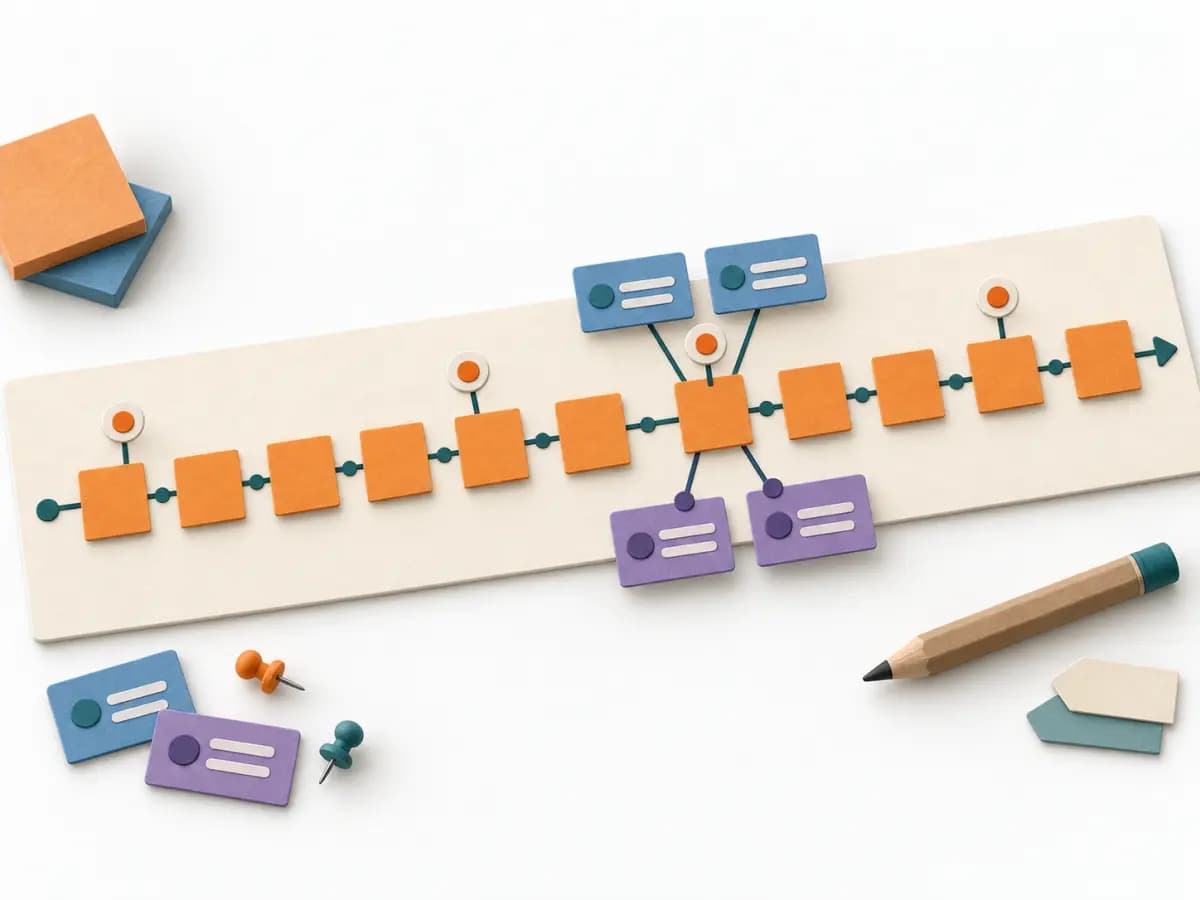 Domain Modeling EventStorming | 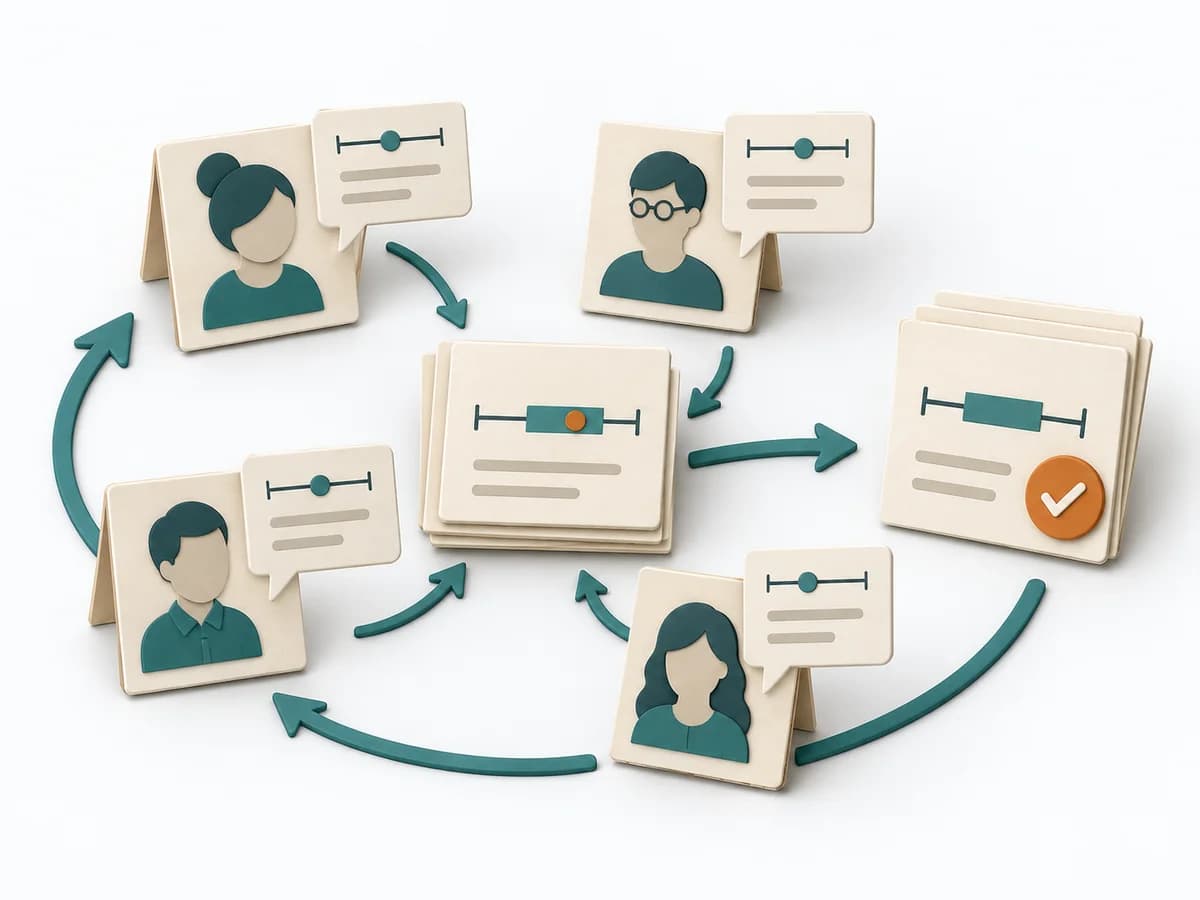 Decision Making Delphi Method |  Product Discovery Experiment Canvas |  Product Strategy DIBB |
|---|---|---|---|---|
Purposedifferent | When a domain consists of many events, rules, and states, it creates a shared modeling space for the team. It bundles language, flows, and boundaries before domain knowledge fragments into siloed views. | When knowledge is distributed and direct dominance should be avoided, groups quickly fall under the sway of their opinion leaders. The Delphi Method gathers assessments iteratively and gradually brings expert judgments closer together. | When experiments become unreadable after the fact, it arranges hypothesis, signal, and learning goal on a single canvas. It separates problem, assumption, solution, and evidence. The result is captured as a Completed Experiment Canvas and a Success Metric. | DIBB helps clarify target groups, value, goals, and priorities by making the logic behind a decision explicit. It captures results as a DIBB document, belief list, bet list, and learning report. |
Complexitydifferent | Medium | High | Low | Low |
Timedifferent | 2-8 h | 1-4 Wochen | 30-60 min | 1-2 h |
Participantsdifferent | 5-12 | 6-30 Experten | 1-5 | 2-8 |
Formatdifferent | Workshop | Async | Workshop + async | Workshop + async |
Outputdifferent | Event Timeline, Ubiquitous Language, Boundaries, Open Questions | Expert Forecast, Consensus Range, Assumption Notes | Completed Experiment Canvas, Success Metric | DIBB document, Belief list, Bet list, Learning report |
Tagsno overlap | Domain-Driven DesignEventsDiscoveryWorkshop | ForecastingExpertsDecisionStrategy | ExperimentsValidationDiscoveryHypothesis | StrategyDecisionAssumptionsHypothesis |