View methods side by side.
Choose up to four methods. Add them using the search and share the comparison by copying its link.
| Criterion |  Domain Modeling EventStorming |  Systems Thinking Current Reality Tree | 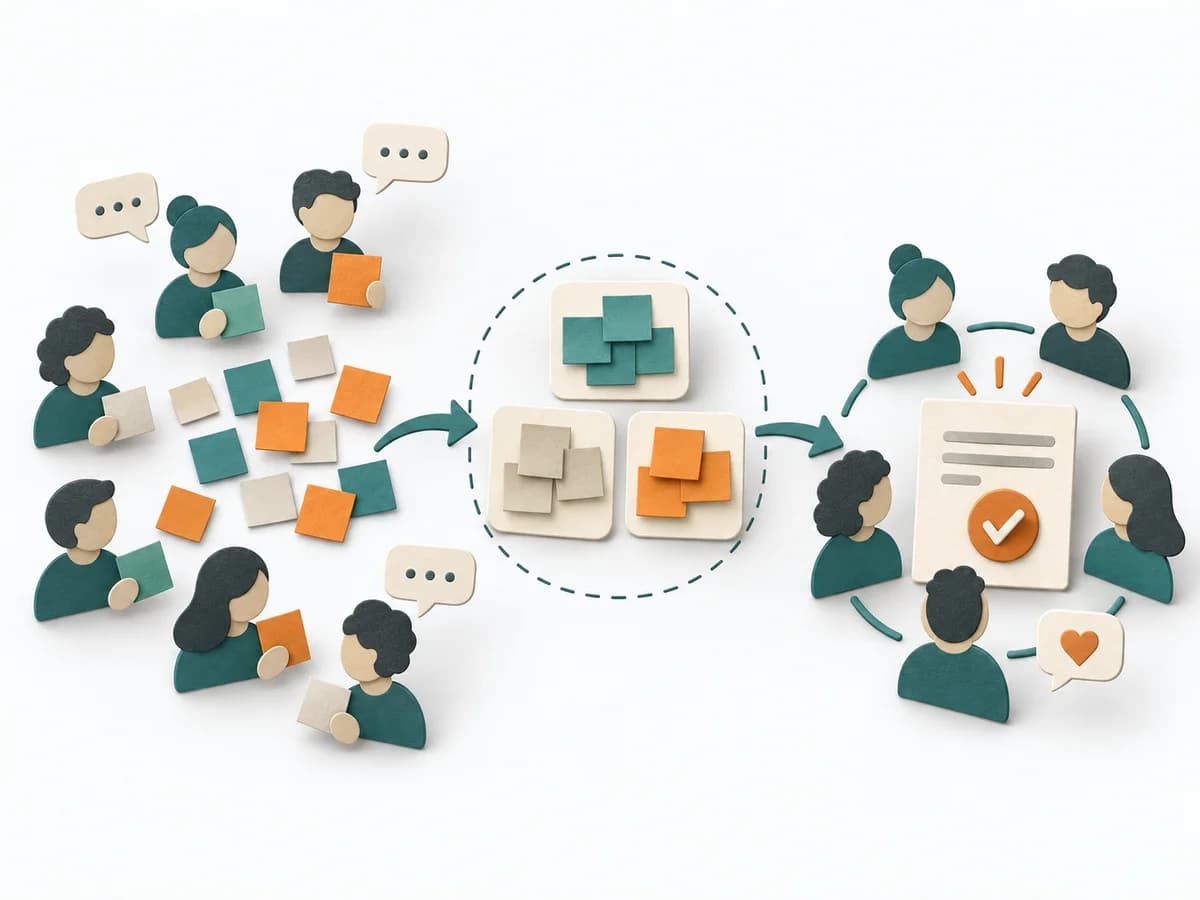 Facilitation Consensus Workshop |  Facilitation Alignment Mapping |
|---|---|---|---|---|
Purposedifferent | When a domain consists of many events, rules, and states, it creates a shared modeling space for the team. It bundles language, flows, and boundaries before domain knowledge fragments into siloed views. | A Current Reality Tree condenses many symptoms into a few causal chains. The method makes visible which core problems drive several negative effects at once. | When a group needs a solid decision without outvoting individual factions, a Consensus Workshop creates a negotiable common ground. It makes agreement, reservations, and open tensions discussable at the same time. | When several people work toward one goal but hold different mental maps, Alignment Mapping makes the discrepancies visible. It arranges goals, assumptions, and priorities so shared direction becomes verifiable. |
Complexitydifferent | Medium | High | Medium | Medium |
Timedifferent | 2-8 h | 2-6 h | 1-3 h | 1-2 h |
Participantsdifferent | 5-12 | 3-8 | 5-30 | 4-12 |
Formatsame | Workshop | Workshop | Workshop | Workshop |
Outputdifferent | Event Timeline, Ubiquitous Language, Boundaries, Open Questions | Current Reality Tree, Core Problems, Intervention Ideas | Consensus Clusters, Theme Titles, Priority Areas | Alignment Map, Open Issues, Decision Questions |
Tagsno overlap | Domain-Driven DesignEventsDiscoveryWorkshop | Systems thinkingRoot causeConstraintsCausality | FacilitationConsensusWorkshopAlignment | AlignmentStakeholdersStrategyFacilitation |