View methods side by side.
Choose up to four methods. Add them using the search and share the comparison by copying its link.
| Criterion |  Domain Modeling EventStorming |  Decision Making Assumption Surfacing | 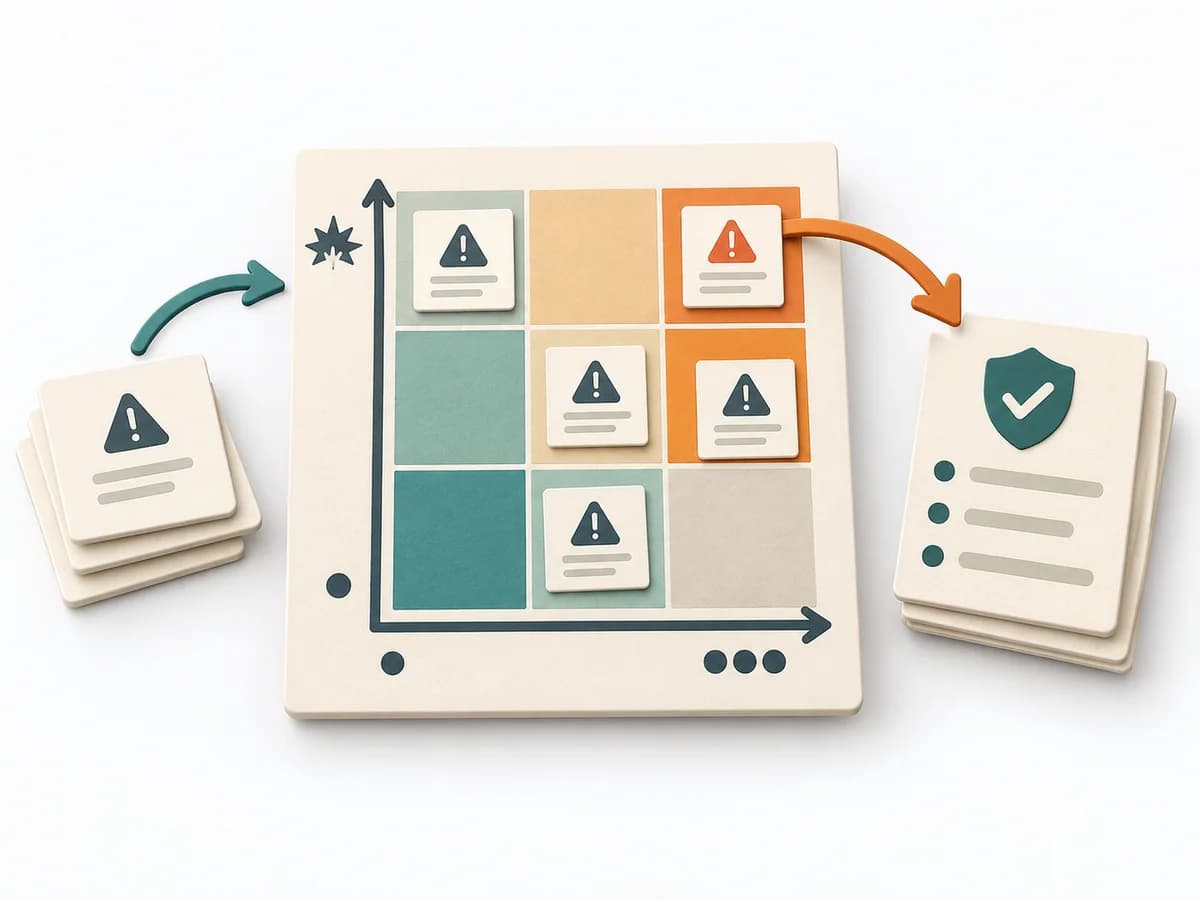 Decision Making Risk Matrix | 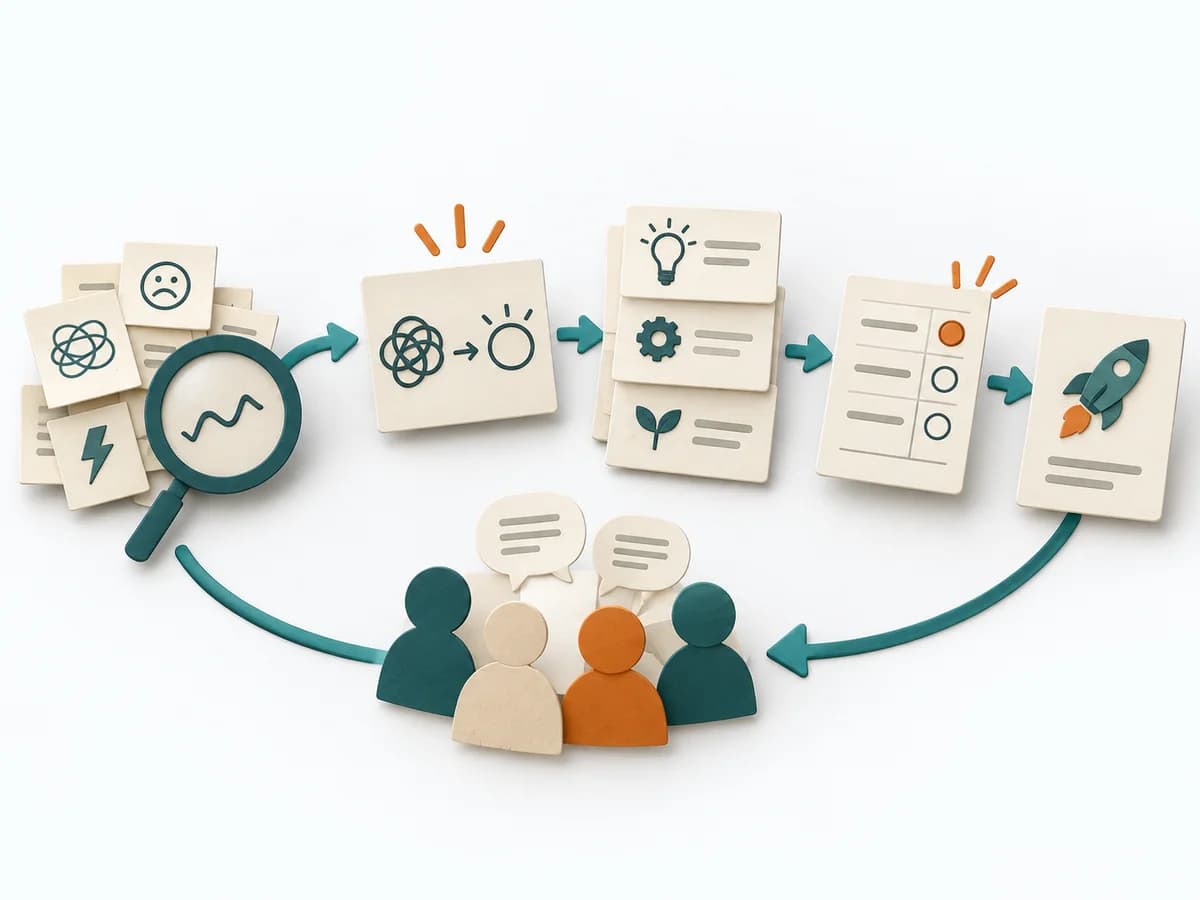 Facilitation Decision Jam |
|---|---|---|---|---|
Purposedifferent | When a domain consists of many events, rules, and states, it creates a shared modeling space for the team. It bundles language, flows, and boundaries before domain knowledge fragments into siloed views. | Plans often contain assumptions that were never openly stated and remain dangerous precisely because of that. Assumption Surfacing makes these silent premises visible and prioritizes which of them carry the initiative or could sink it. | When a project faces many possible disruptions, it quickly becomes unclear which risks deserve attention first. It separates options, evaluation criteria, and open risks. The result is captured as a Risk Matrix and a Top Risk List. | When a decision is stuck, Decision Jam loosens the knot through structured separation of problem, idea, and selection. The format creates movement without jumping prematurely at the first seemingly elegant answer. |
Complexitydifferent | Medium | Low | Low | Low |
Timedifferent | 2-8 h | 45-90 min | 30-60 min | 60-90 min |
Participantsdifferent | 5-12 | 2-8 | 3-10 | 4-10 |
Formatdifferent | Workshop | Workshop + async | Workshop + async | Workshop |
Outputdifferent | Event Timeline, Ubiquitous Language, Boundaries, Open Questions | Assumption List, Critical Assumptions, Learning Plan | Risk Matrix, Top Risk List | Problem Cluster, Prioritized Challenge, Experiment |
Tagsno overlap | Domain-Driven DesignEventsDiscoveryWorkshop | AssumptionsRiskDecisionDiscovery | RiskDecisionPrioritizationAssessment | FacilitationDecisionProblem solvingWorkshop |