View methods side by side.
Choose up to four methods. Add them using the search and share the comparison by copying its link.
| Criterion | 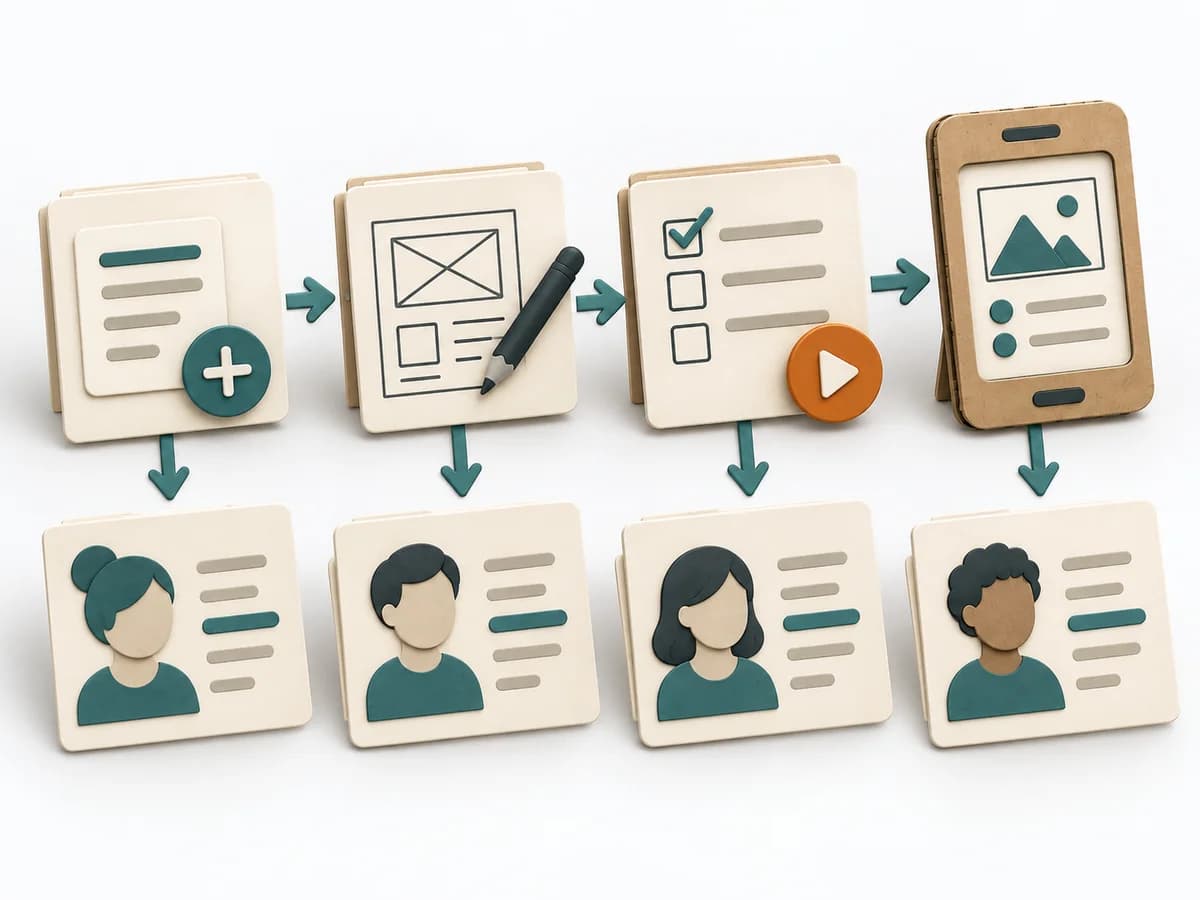 Knowledge Modeling Event Modeling | 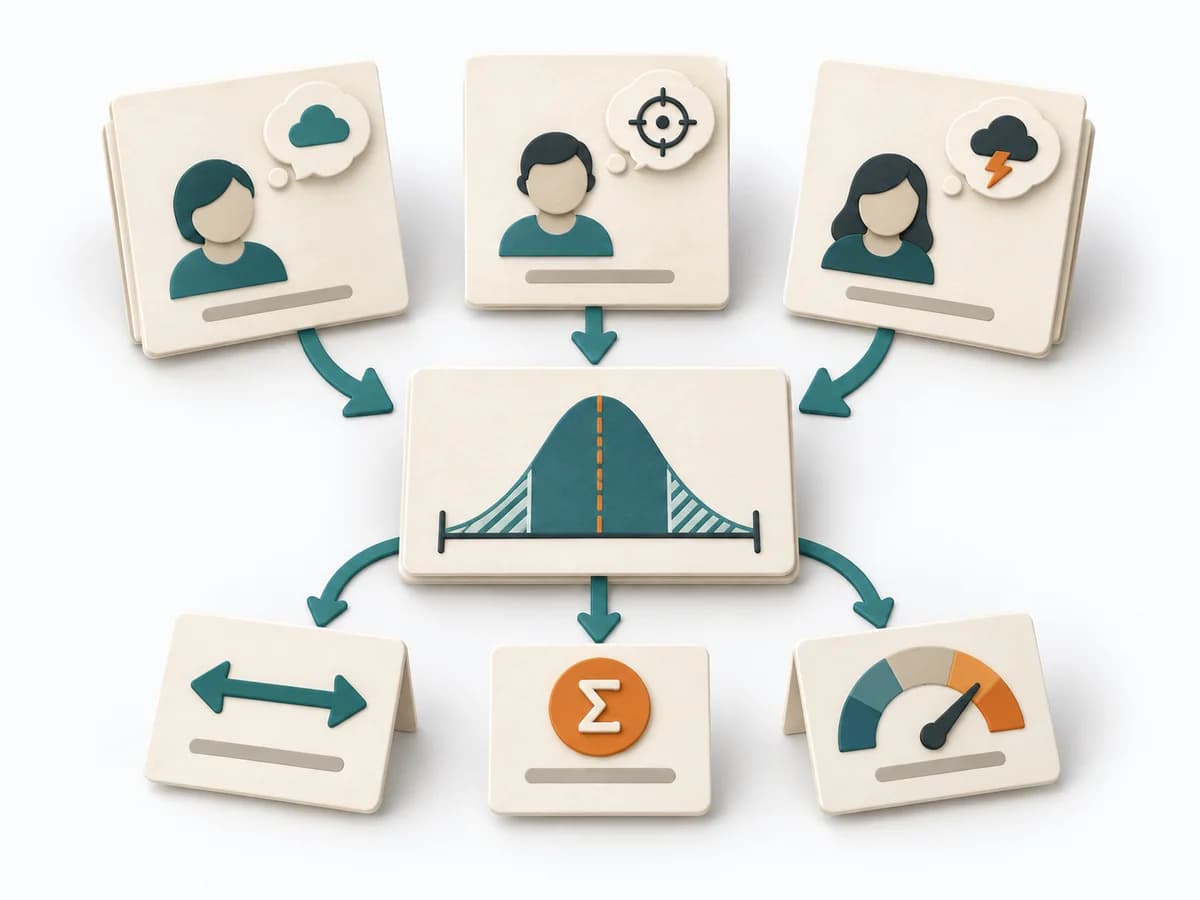 Decision Making Three-Point Estimation | 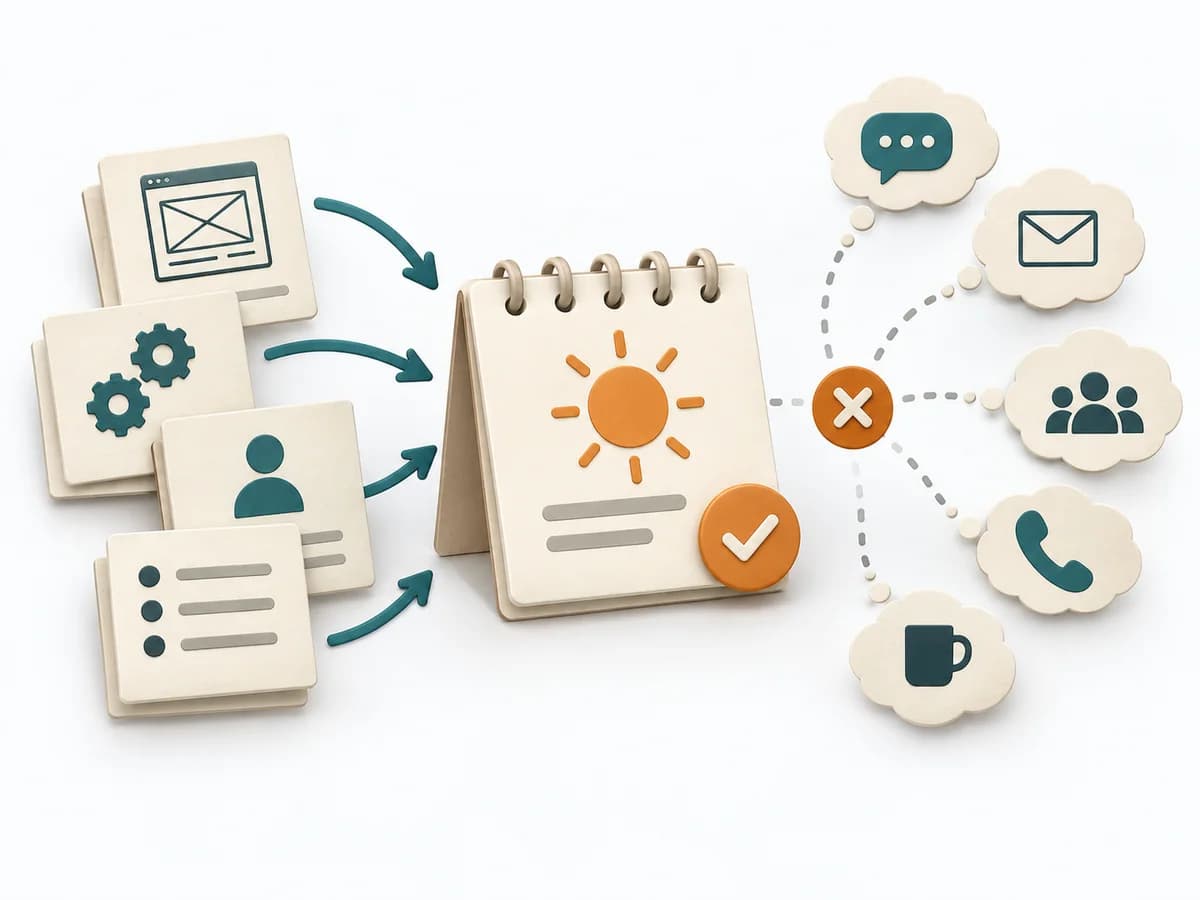 Agile Ideal Days | 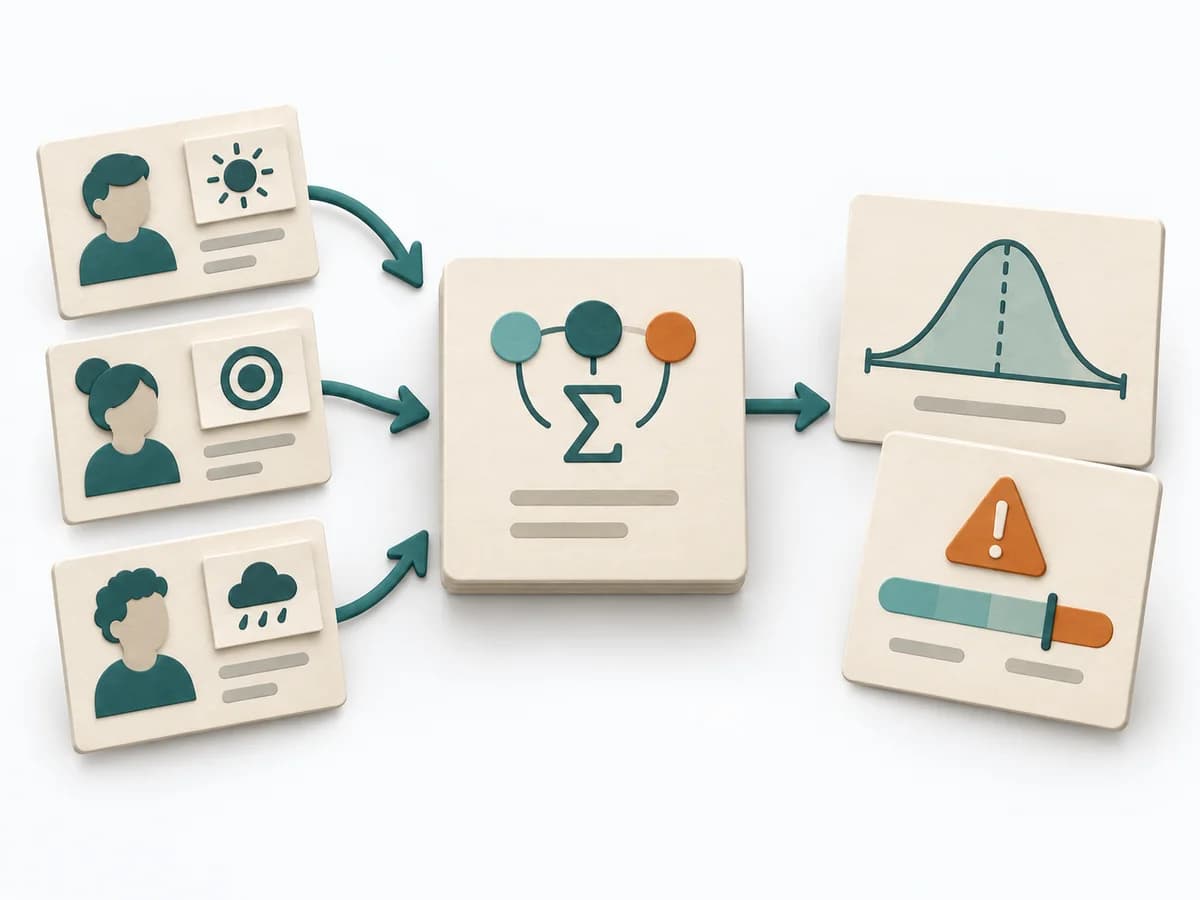 Decision Making PERT Estimation |
|---|---|---|---|---|
Purposedifferent | Event Modeling connects business workflows with commands, events, and views into one coherent mental model. It helps design behavior, UI, and technical slices from the same underlying logic. | A single estimate for effort, time, or risk often looks too smooth for the real uncertainty behind it. It separates options, evaluation criteria, and open risks. The result is captured as a Three-Point Estimate, Risk Range, and Assumption Notes. | When effort needs to be thought of as real working time, it offers a simple common denominator for comparison. It sorts work by value, risk, and delivery ability. The result is captured as Ideal Day Estimates, Assumption Notes, and Capacity Caveats. | On complex initiatives, a plain average tends to understate just how uncertain the outcome really is. It separates options, evaluation criteria, and open risks. The result is captured as a PERT Estimate, Expected Value, and Risk Notes. |
Complexitydifferent | Medium | Medium | Low | Medium |
Timedifferent | 2-6 h | 10-30 min je Item | 15-60 min | 15-45 min |
Participantsdifferent | 2-8 | 1-8 | 2-9 | 1-8 |
Formatsame | Workshop + async | Workshop + async | Workshop + async | Workshop + async |
Outputdifferent | Event Model, UI Flow, Commands, Read Models | Three-Point Estimate, Risk Range, Assumption Notes | Ideal Day Estimates, Assumption Notes, Capacity Caveats | PERT Estimate, Expected Value, Risk Notes |
Tagsno overlap | EventsBlueprintDomain-Driven DesignBehavior | EstimationUncertaintyForecasting | EstimationEffortAgile | EstimationUncertaintyRisk |