View methods side by side.
Choose up to four methods. Add them using the search and share the comparison by copying its link.
| Criterion | 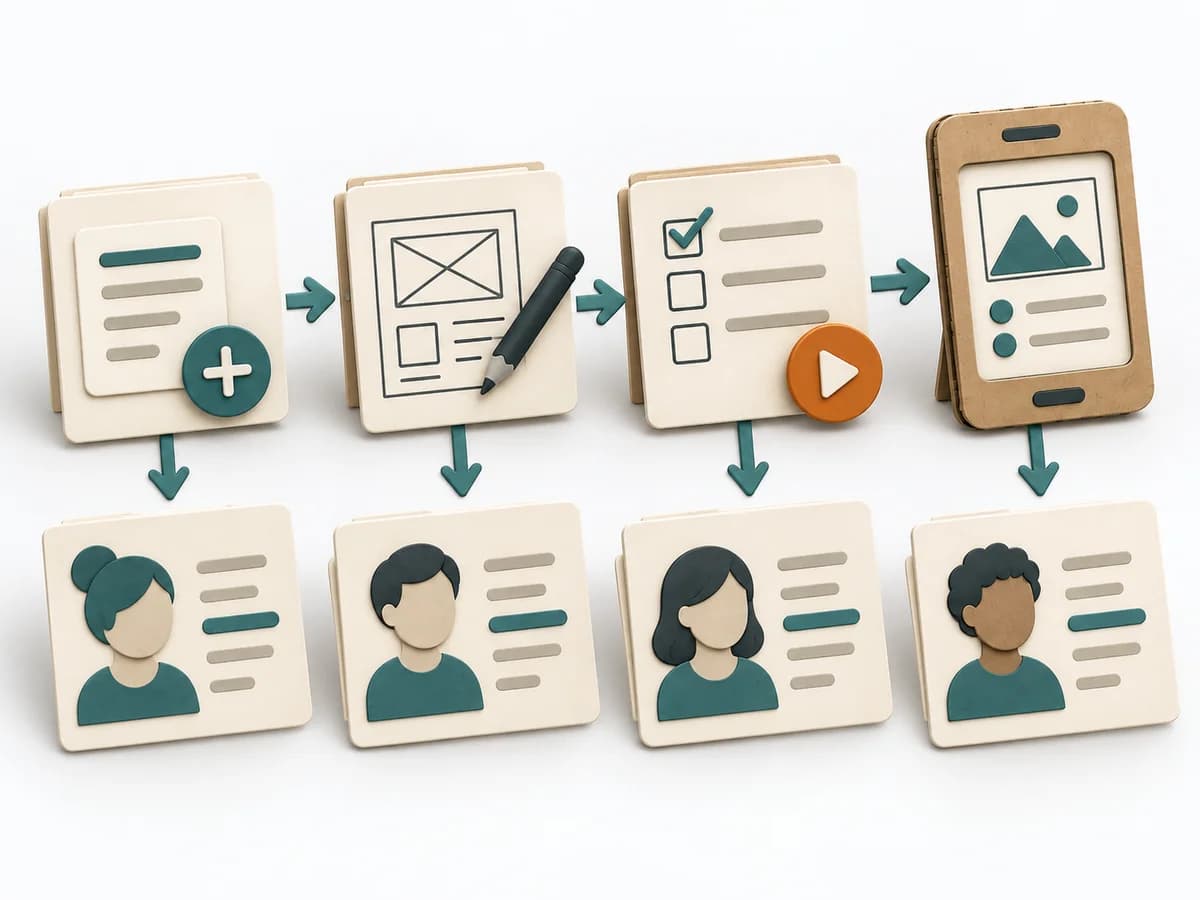 Knowledge Modeling Event Modeling | 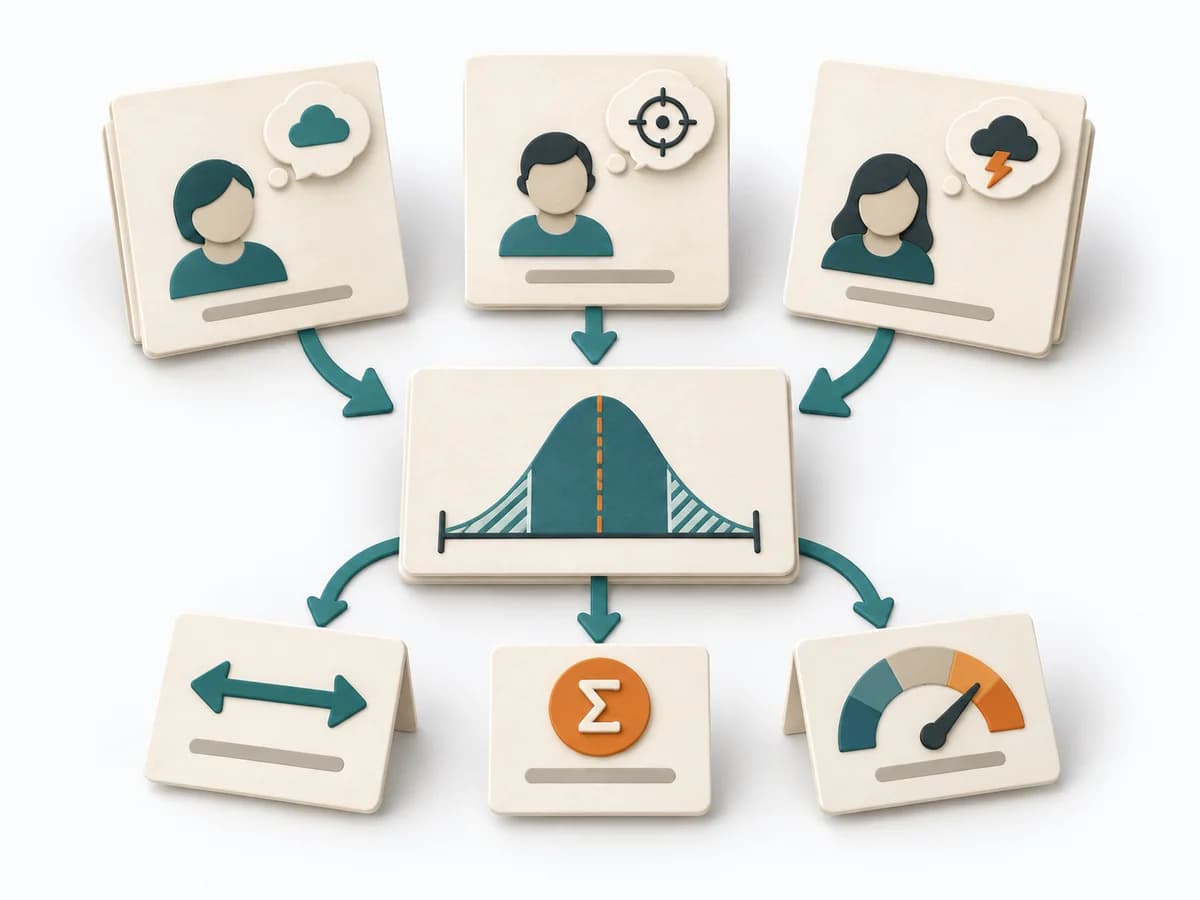 Decision Making Three-Point Estimation | 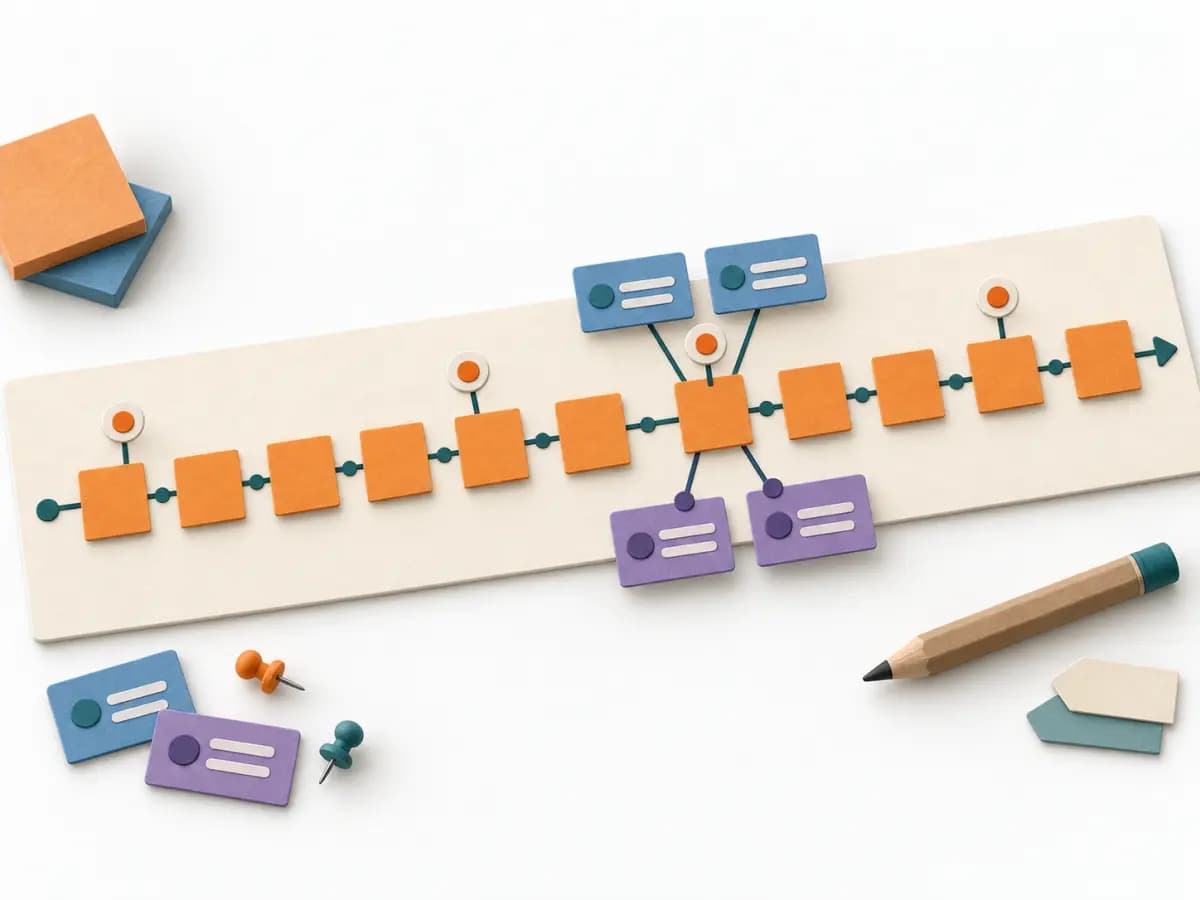 Domain Modeling EventStorming | 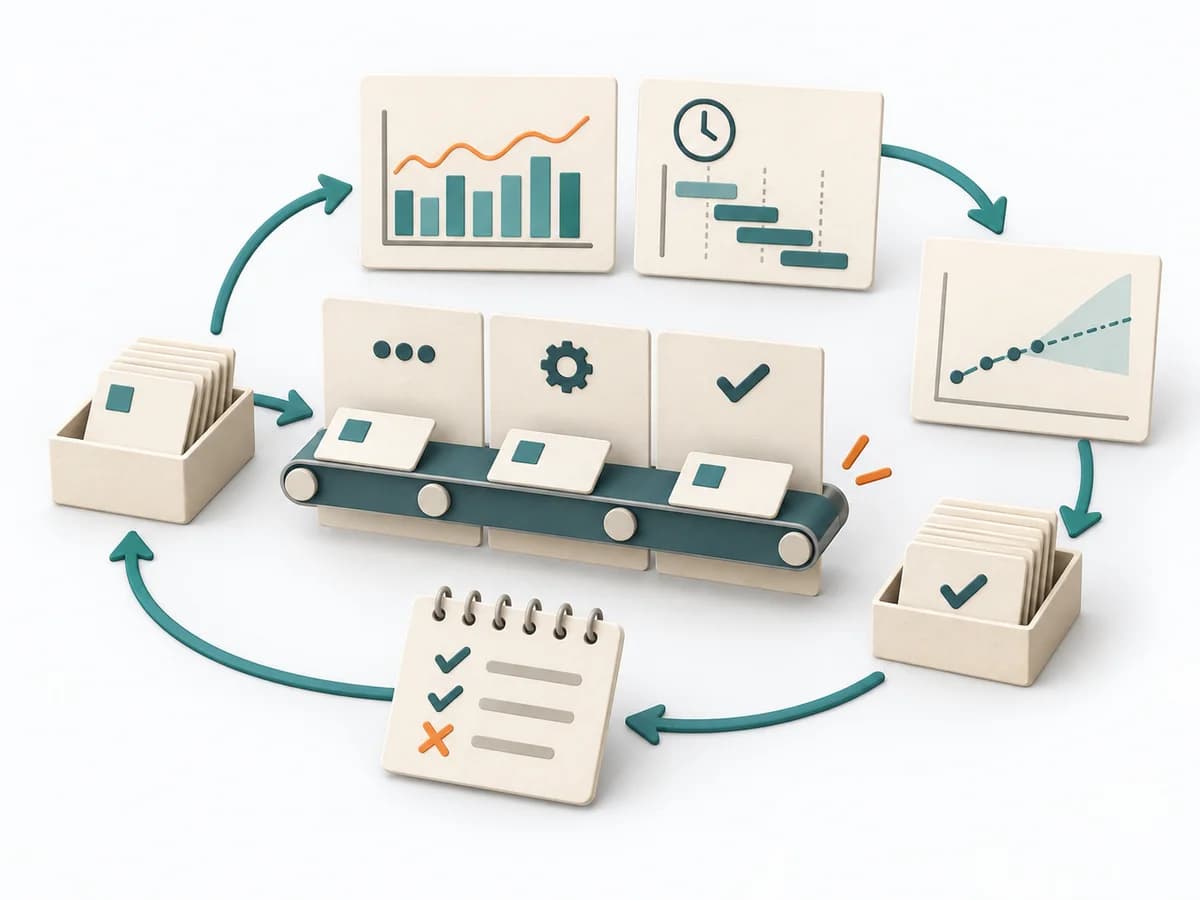 Agile NoEstimates |
|---|---|---|---|---|
Purposedifferent | Event Modeling connects business workflows with commands, events, and views into one coherent mental model. It helps design behavior, UI, and technical slices from the same underlying logic. | A single estimate for effort, time, or risk often looks too smooth for the real uncertainty behind it. It separates options, evaluation criteria, and open risks. The result is captured as a Three-Point Estimate, Risk Range, and Assumption Notes. | When a domain consists of many events, rules, and states, it creates a shared modeling space for the team. It bundles language, flows, and boundaries before domain knowledge fragments into siloed views. | When estimating slows a team down more than it helps, it shifts the focus to flow, small slices, and real lead time. It sorts work by value, risk, and delivery ability. The result is captured as Throughput Data, Flow Forecast, and Slicing Rules. |
Complexitysame | Medium | Medium | Medium | Medium |
Timedifferent | 2-6 h | 10-30 min je Item | 2-8 h | laufend |
Participantsdifferent | 2-8 | 1-8 | 5-12 | 2-12 |
Formatdifferent | Workshop + async | Workshop + async | Workshop | Workshop + async |
Outputdifferent | Event Model, UI Flow, Commands, Read Models | Three-Point Estimate, Risk Range, Assumption Notes | Event Timeline, Ubiquitous Language, Boundaries, Open Questions | Throughput Data, Flow Forecast, Slicing Rules |
Tagsno overlap | EventsBlueprintDomain-Driven DesignBehavior | EstimationUncertaintyForecasting | Domain-Driven DesignEventsDiscoveryWorkshop | EstimationForecastingFlow |