View methods side by side.
Choose up to four methods. Add them using the search and share the comparison by copying its link.
| Criterion | 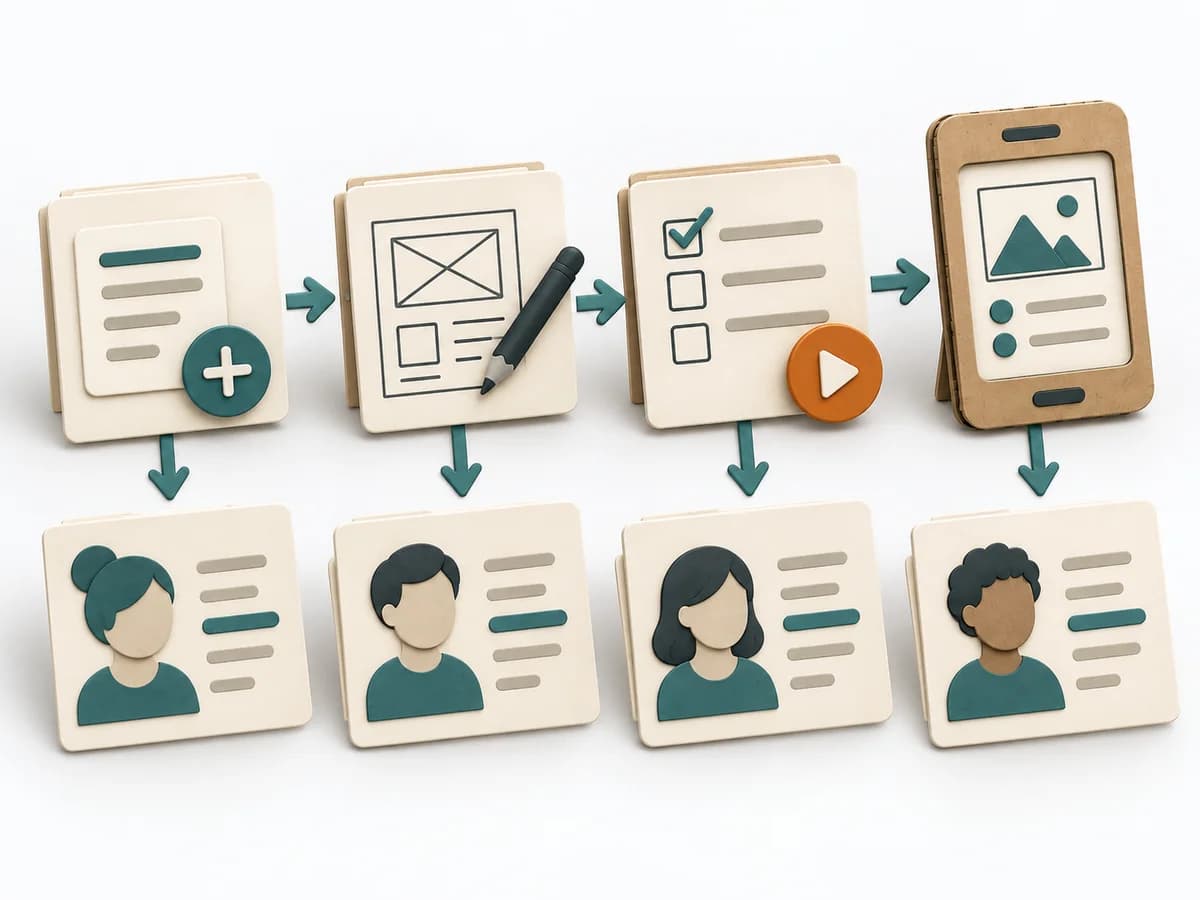 Knowledge Modeling Event Modeling | 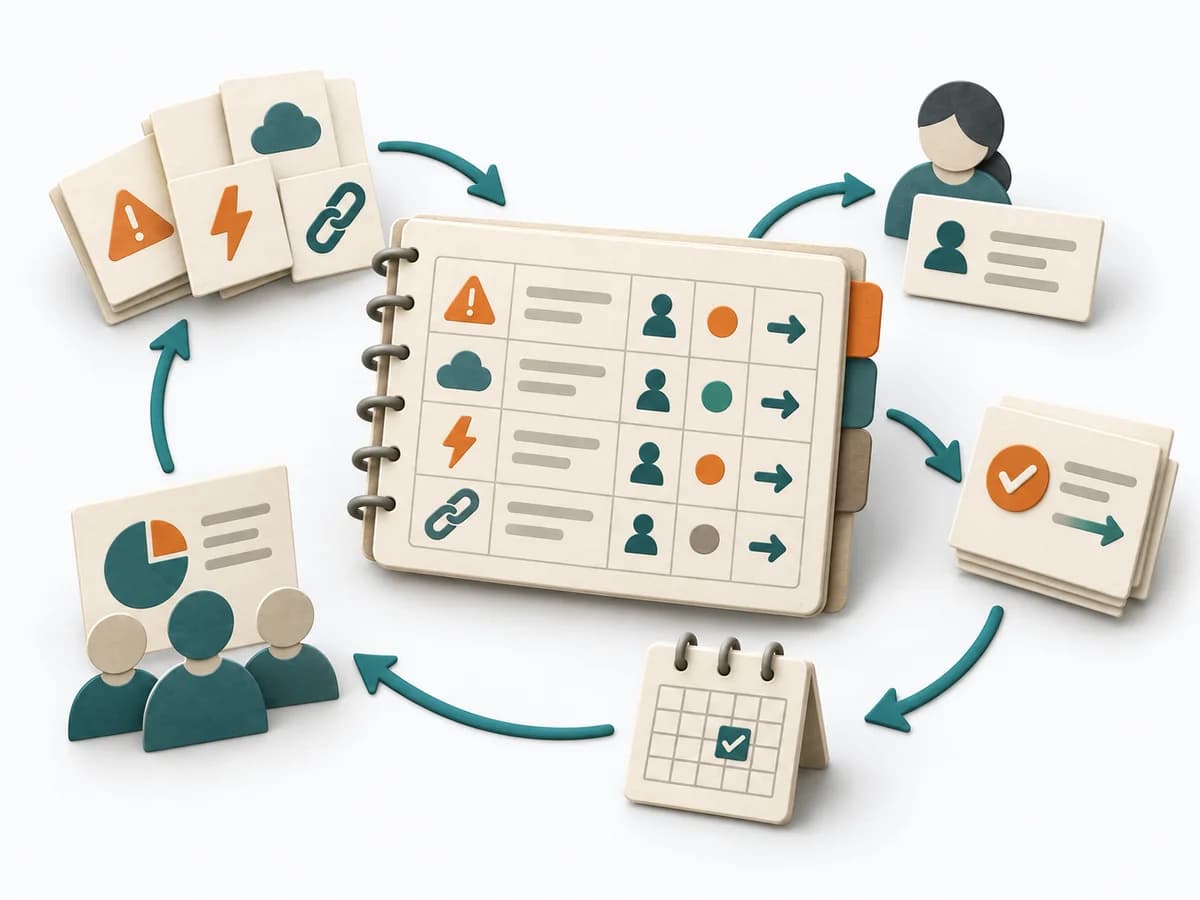 Delivery RAID Log | 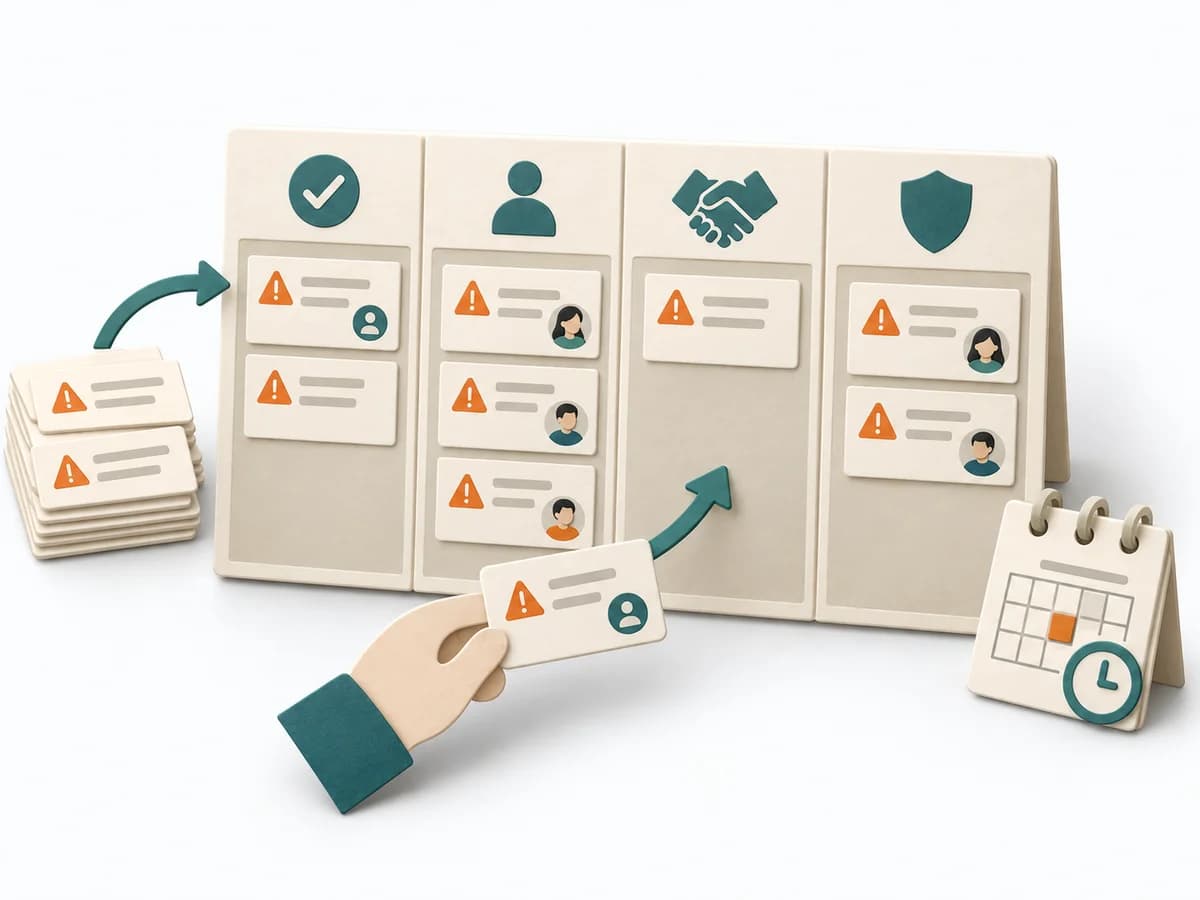 Agile ROAM Board |  Facilitation Alignment Mapping |
|---|---|---|---|---|
Purposedifferent | Event Modeling connects business workflows with commands, events, and views into one coherent mental model. It helps design behavior, UI, and technical slices from the same underlying logic. | Helps clarify scope, sequence, and delivery flow in concrete terms. It makes work, boundaries, and order steerable. The result is captured as a RAID Log and a source for status reporting. | When work needs to move between different states or columns, it makes that movement and its handoffs legible. It sorts work by value, risk, and delivery ability. The result is captured as a ROAM Board and an Owner List. | When several people work toward one goal but hold different mental maps, Alignment Mapping makes the discrepancies visible. It arranges goals, assumptions, and priorities so shared direction becomes verifiable. |
Complexitydifferent | Medium | Low | Low | Medium |
Timedifferent | 2-6 h | 30 min Setup, dann laufend | 20-40 min initial, dann laufend | 1-2 h |
Participantsdifferent | 2-8 | 1-3 maintaining, briefing for everyone | 3-15 | 4-12 |
Formatdifferent | Workshop + async | Async | Workshop + async | Workshop |
Outputdifferent | Event Model, UI Flow, Commands, Read Models | RAID Log, Status Report Source | ROAM Board, Owner List | Alignment Map, Open Issues, Decision Questions |
Tagsno overlap | EventsBlueprintDomain-Driven DesignBehavior | RiskTrackingStakeholdersGovernance | RiskAgileTrackingAlignment | AlignmentStakeholdersStrategyFacilitation |