View methods side by side.
Choose up to four methods. Add them using the search and share the comparison by copying its link.
| Criterion |  Knowledge Modeling Event Modeling | 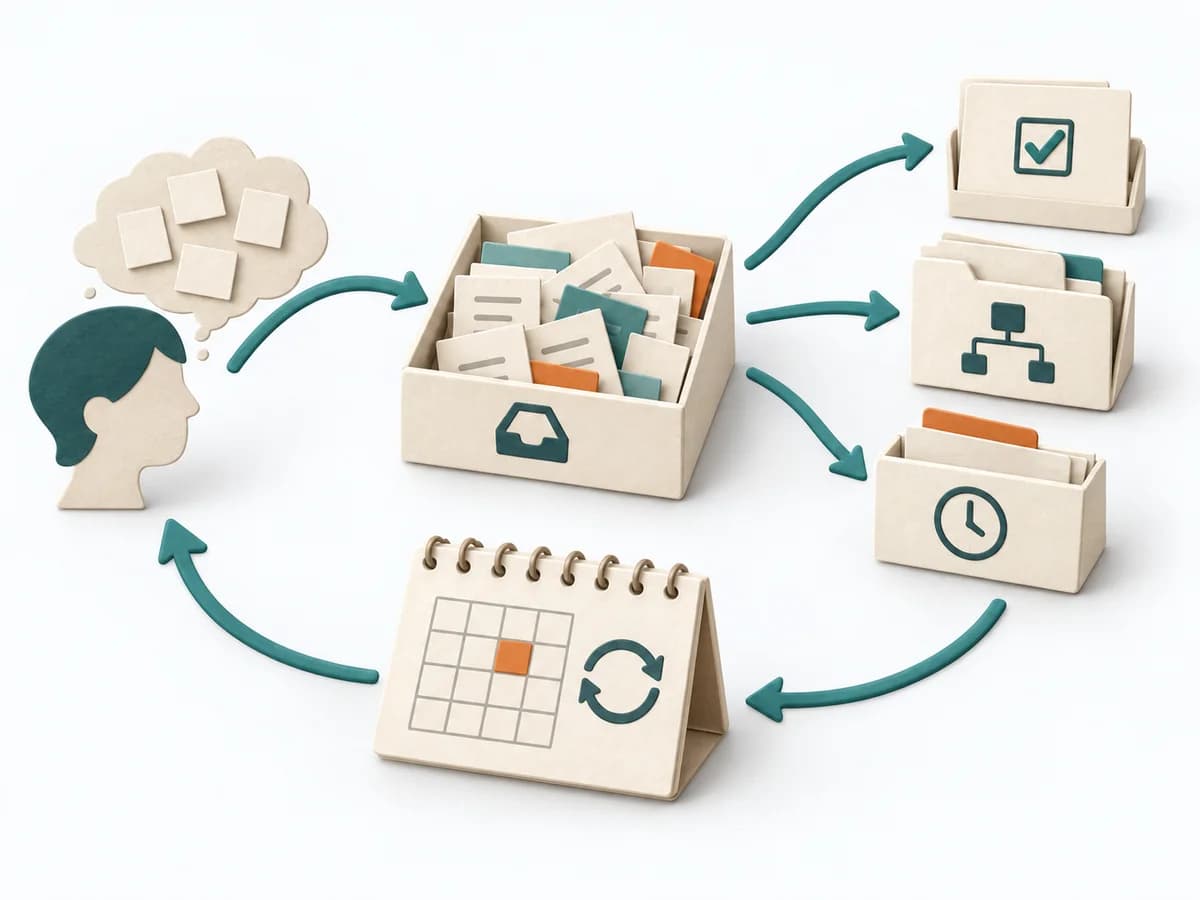 Operations Getting Things Done | 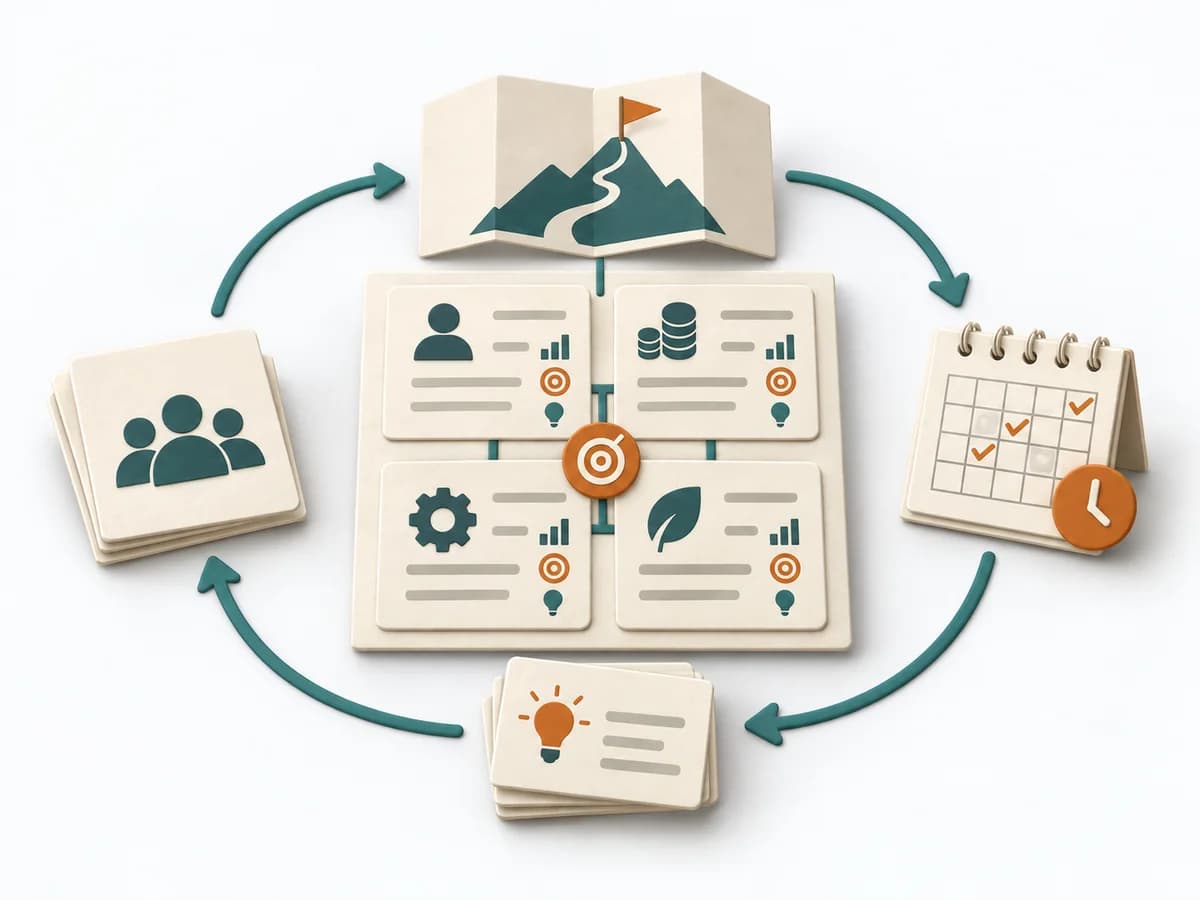 Business Strategy Balanced Scorecard |  Domain Modeling Context Map |
|---|---|---|---|---|
Purposedifferent | Event Modeling connects business workflows with commands, events, and views into one coherent mental model. It helps design behavior, UI, and technical slices from the same underlying logic. | With many open commitments and ideas in daily life, a reliable external storage system emerges. The method relieves the mind so priority and context don't have to compete in memory. | Balanced Scorecard translates strategy into a few interconnected perspectives and metrics. It holds impact, steering, and learning together in daily work instead of narrowing strategy down to financial figures. | When several contexts need to talk to each other, it makes their relationships and dependencies legible. It helps sort integration pressure and responsibilities across system boundaries. |
Complexitydifferent | Medium | Medium | High | Medium |
Timedifferent | 2-6 h | 1-2 h Setup, laufend | Halber Tag bis mehrere Wochen | 1-3 h |
Participantsdifferent | 2-8 | 1 | 4-12 | 2-8 |
Formatdifferent | Workshop + async | Async | Workshop + async | Workshop + async |
Outputdifferent | Event Model, UI Flow, Commands, Read Models | Action Lists, Project List, Review Routine | Balanced Scorecard, Strategic Measures, Initiative Map | Context Map, Integration Patterns, Boundary Notes |
Tagsno overlap | EventsBlueprintDomain-Driven DesignBehavior | ProductivityPlanningTasksExecution | StrategyMetricsExecution | Domain-Driven DesignBoundariesStrategy |