View methods side by side.
Choose up to four methods. Add them using the search and share the comparison by copying its link.
| Criterion |  Knowledge Modeling Event Modeling |  Operations Gemba Walk | 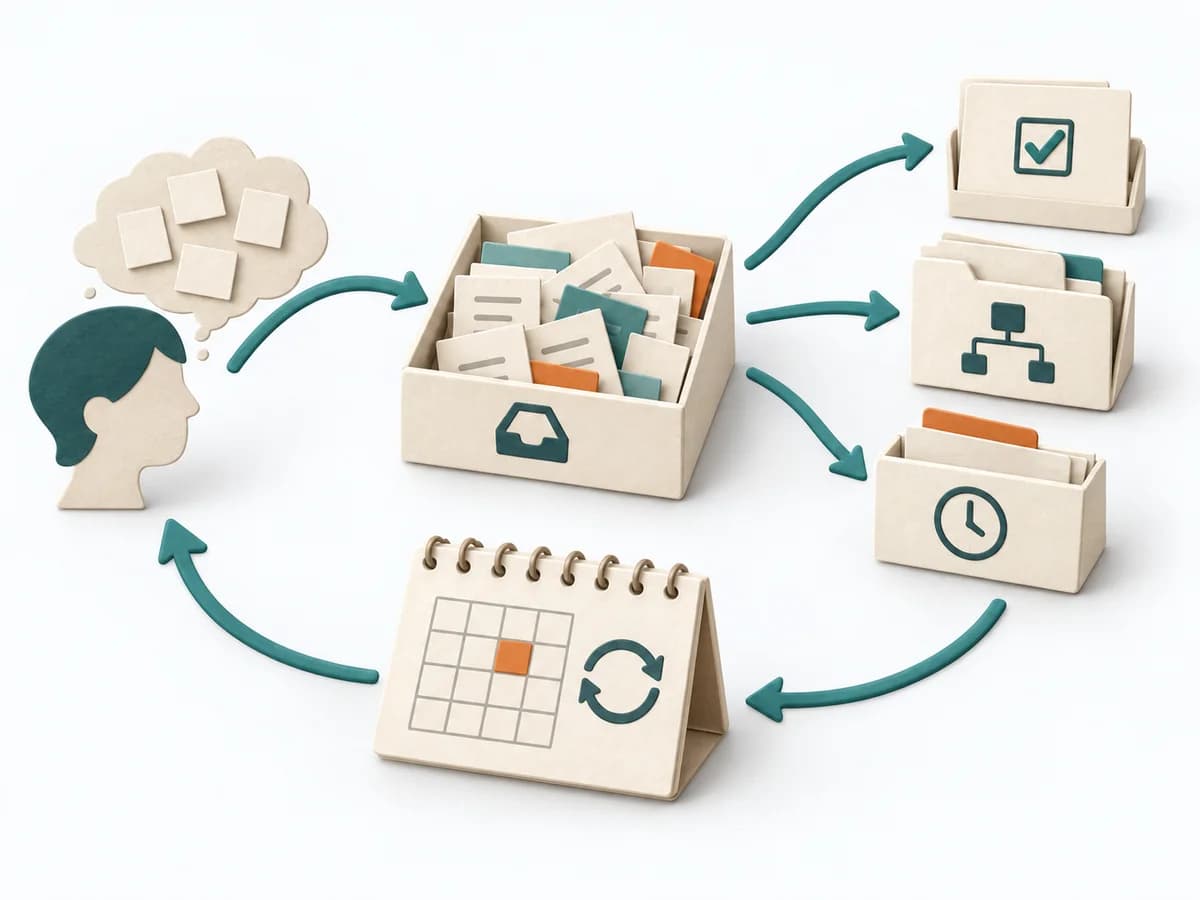 Operations Getting Things Done |  Operations ALPEN Method |
|---|---|---|---|---|
Purposedifferent | Event Modeling connects business workflows with commands, events, and views into one coherent mental model. It helps design behavior, UI, and technical slices from the same underlying logic. | When there is uncertainty about the real course of a process, the method brings observation to the place where work happens. It combines perception, follow-up questions, and process knowledge so decisions rest on actual workflows instead of assumptions. | With many open commitments and ideas in daily life, a reliable external storage system emerges. The method relieves the mind so priority and context don't have to compete in memory. | With an overloaded day full of too many tasks, a realistic picture of the day emerges. The method connects estimating, deciding, and buffer thinking so planning fits available energy and time. |
Complexitydifferent | Medium | Low | Medium | Low |
Timedifferent | 2-6 h | 30-120 min | 1-2 h Setup, laufend | 10-20 min daily |
Participantsdifferent | 2-8 | 2-6 | 1 | 1 |
Formatdifferent | Workshop + async | Workshop | Async | Async |
Outputdifferent | Event Model, UI Flow, Commands, Read Models | Observation Notes, Improvement Ideas | Action Lists, Project List, Review Routine | Daily Plan, Time Estimates, Review Notes |
Tagsno overlap | EventsBlueprintDomain-Driven DesignBehavior | LeanObservationProcessOperations | ProductivityPlanningTasksExecution | PlanningTime managementProductivityOperations |