View methods side by side.
Choose up to four methods. Add them using the search and share the comparison by copying its link.
| Criterion |  Knowledge Modeling Event Modeling |  Product Strategy DIBB | 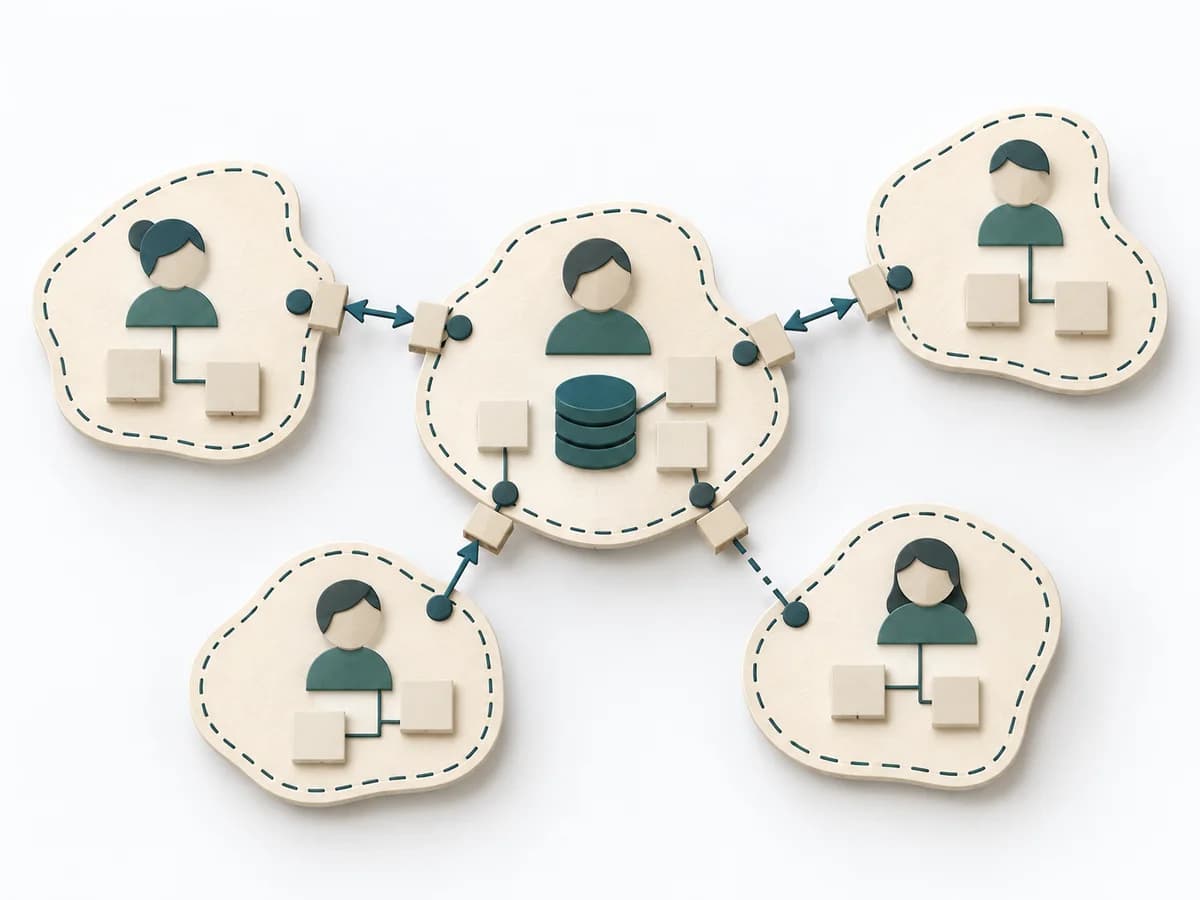 Domain Modeling Domain Context Map |  Decision Making Assumption Surfacing |
|---|---|---|---|---|
Purposedifferent | Event Modeling connects business workflows with commands, events, and views into one coherent mental model. It helps design behavior, UI, and technical slices from the same underlying logic. | DIBB helps clarify target groups, value, goals, and priorities by making the logic behind a decision explicit. It captures results as a DIBB document, belief list, bet list, and learning report. | When a domain model and its associated contexts need to be thought through together, it creates a shared overview. It connects the business view and organizational boundary into a readable whole. | Plans often contain assumptions that were never openly stated and remain dangerous precisely because of that. Assumption Surfacing makes these silent premises visible and prioritizes which of them carry the initiative or could sink it. |
Complexitydifferent | Medium | Low | Medium | Low |
Timedifferent | 2-6 h | 1-2 h | 1-3 h | 45-90 min |
Participantsdifferent | 2-8 | 2-8 | 3-10 | 2-8 |
Formatdifferent | Workshop + async | Workshop + async | Workshop | Workshop + async |
Outputdifferent | Event Model, UI Flow, Commands, Read Models | DIBB document, Belief list, Bet list, Learning report | Domain Context Map, Boundary Notes, Ownership Map | Assumption List, Critical Assumptions, Learning Plan |
Tagsno overlap | EventsBlueprintDomain-Driven DesignBehavior | StrategyDecisionAssumptionsHypothesis | Domain-Driven DesignContextBoundaries | AssumptionsRiskDecisionDiscovery |