View methods side by side.
Choose up to four methods. Add them using the search and share the comparison by copying its link.
| Criterion | 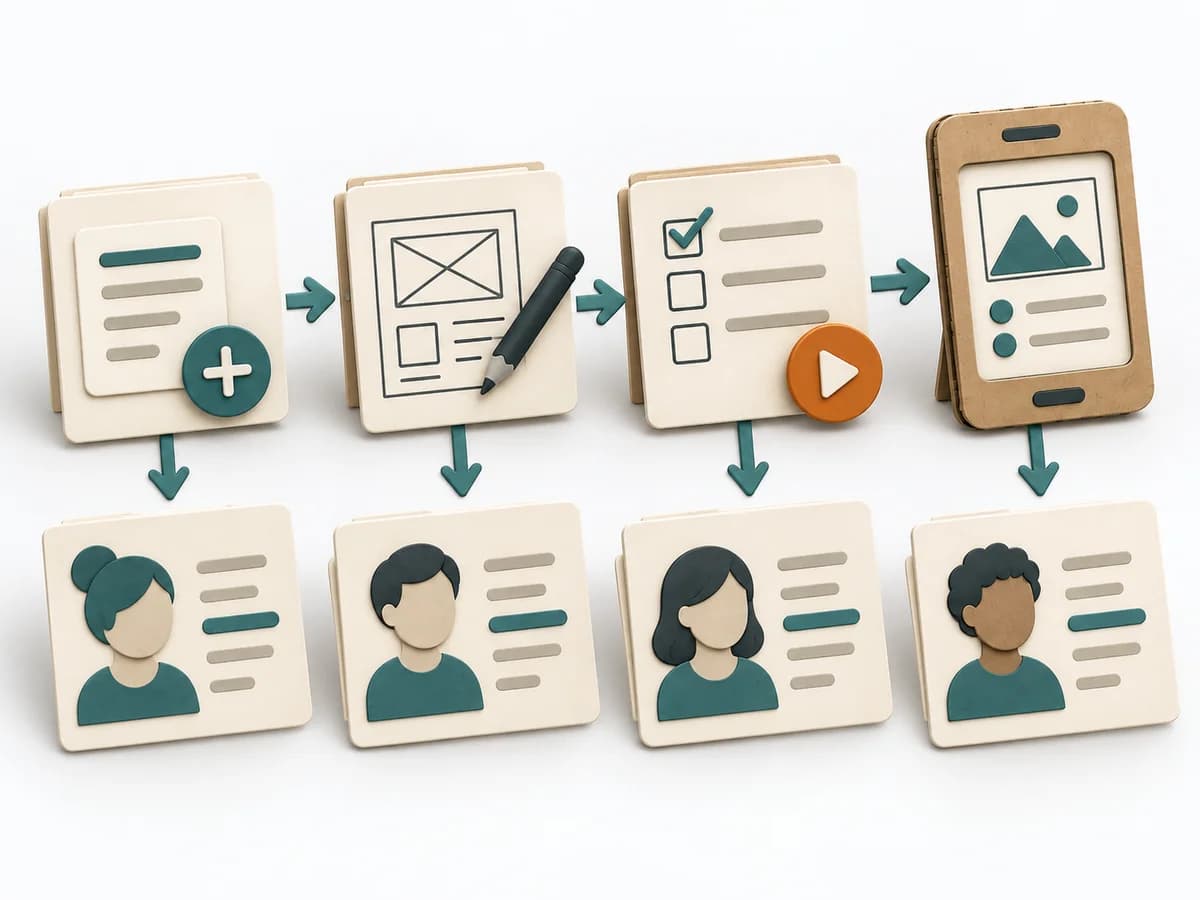 Knowledge Modeling Event Modeling | 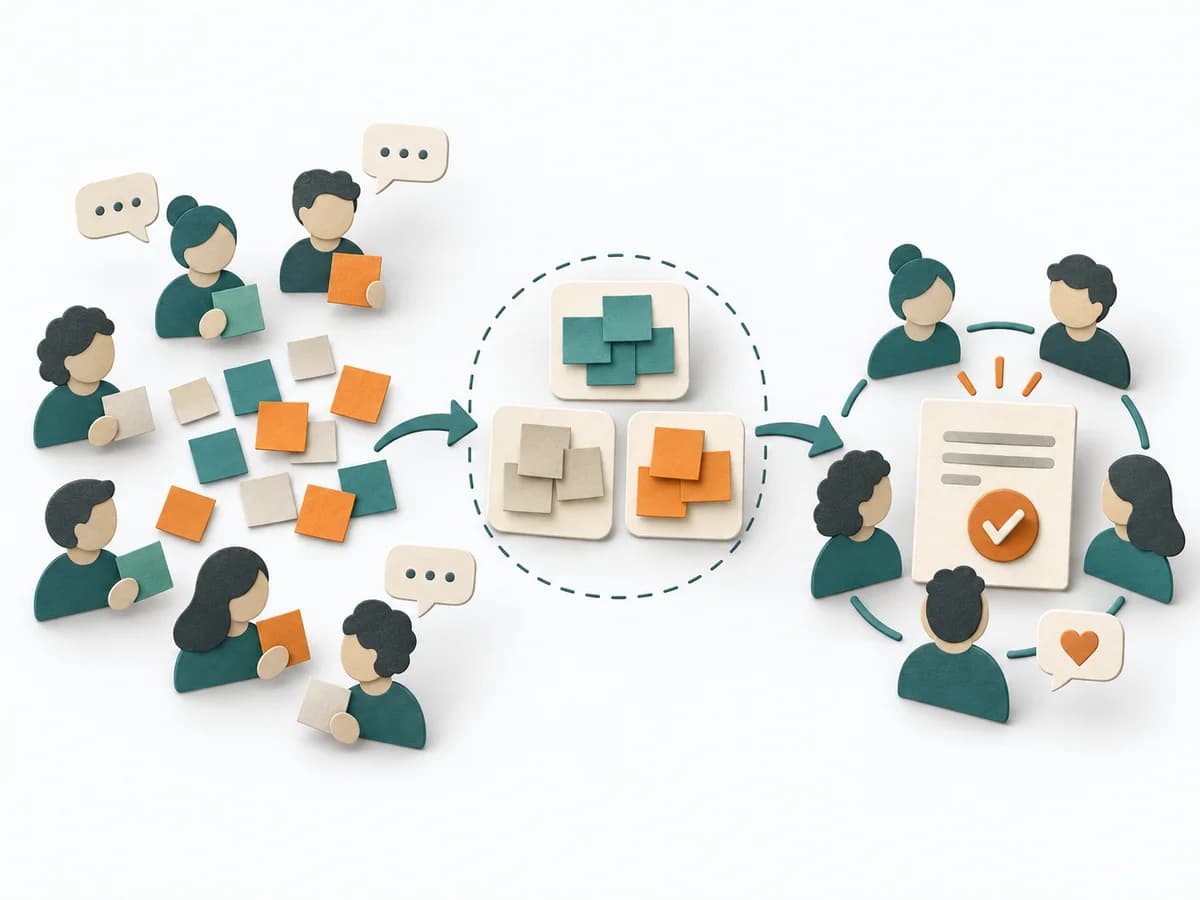 Facilitation Consensus Workshop |  Operations 5 Whys | 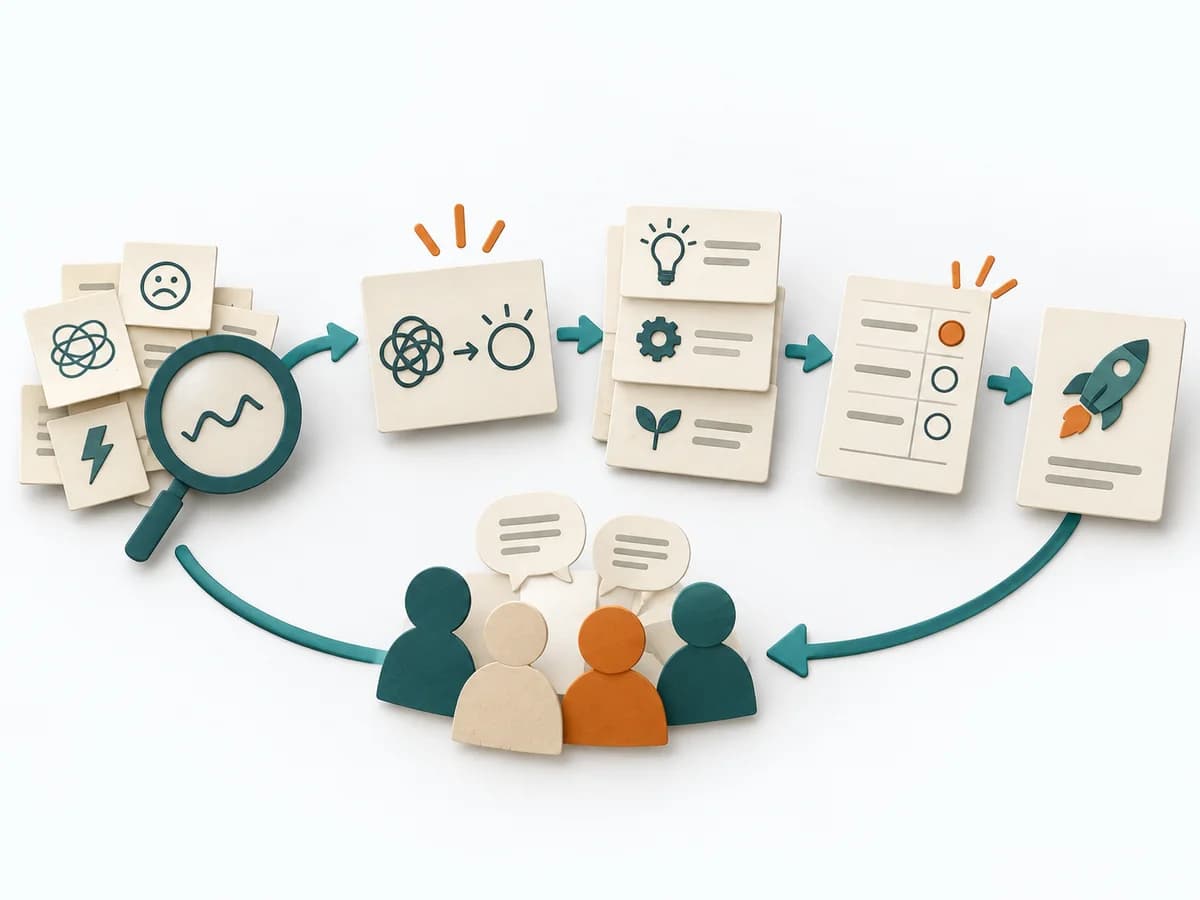 Facilitation Decision Jam |
|---|---|---|---|---|
Purposedifferent | Event Modeling connects business workflows with commands, events, and views into one coherent mental model. It helps design behavior, UI, and technical slices from the same underlying logic. | When a group needs a solid decision without outvoting individual factions, a Consensus Workshop creates a negotiable common ground. It makes agreement, reservations, and open tensions discussable at the same time. | For a single, hard-to-explain deviation, the method exposes the causal chain behind the visible symptom. It keeps the cause open until a controllable condition emerges instead of a mere description. | When a decision is stuck, Decision Jam loosens the knot through structured separation of problem, idea, and selection. The format creates movement without jumping prematurely at the first seemingly elegant answer. |
Complexitydifferent | Medium | Medium | Low | Low |
Timedifferent | 2-6 h | 1-3 h | 15-30 min | 60-90 min |
Participantsdifferent | 2-8 | 5-30 | 2-6 | 4-10 |
Formatdifferent | Workshop + async | Workshop | Workshop | Workshop |
Outputdifferent | Event Model, UI Flow, Commands, Read Models | Consensus Clusters, Theme Titles, Priority Areas | Root cause notes, Countermeasures | Problem Cluster, Prioritized Challenge, Experiment |
Tagsno overlap | EventsBlueprintDomain-Driven DesignBehavior | FacilitationConsensusWorkshopAlignment | Root causeIncidentLeanProblem solving | FacilitationDecisionProblem solvingWorkshop |