View methods side by side.
Choose up to four methods. Add them using the search and share the comparison by copying its link.
| Criterion | 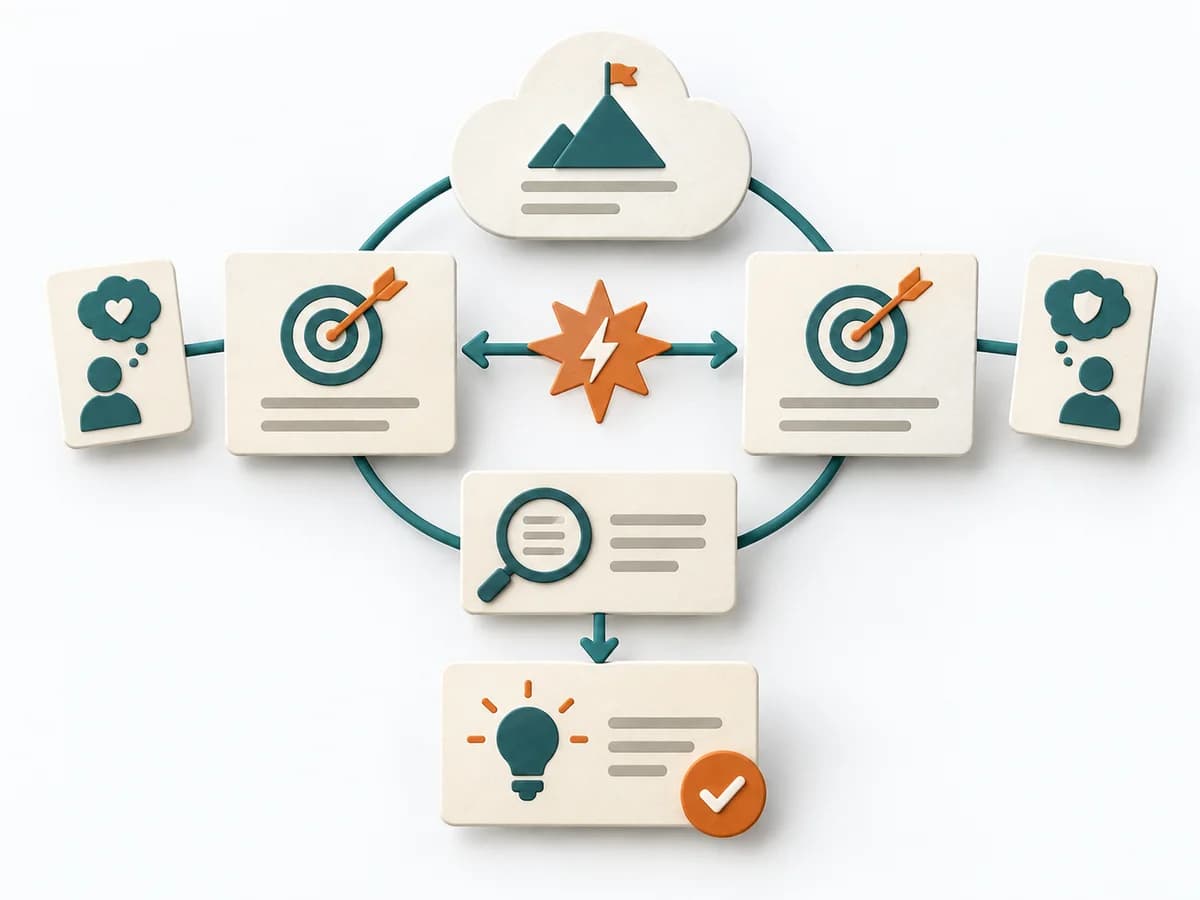 Systems Thinking Evaporating Cloud |  Product Strategy Lean Canvas | 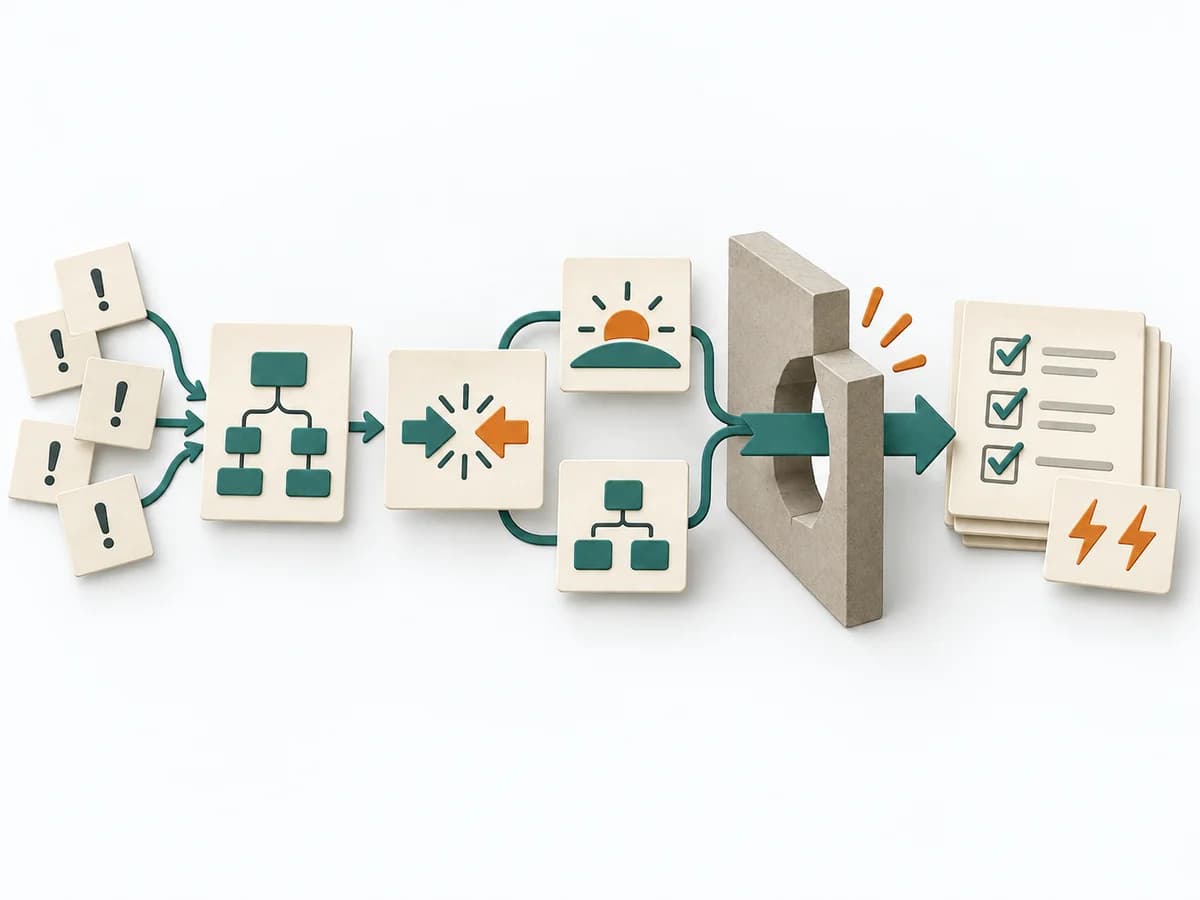 Systems Thinking Theory of Constraints Thinking Process |  Innovation Lean Startup |
|---|---|---|---|---|
Purposedifferent | The method makes visible why two seemingly incompatible demands arise and which assumption must be tested to resolve the conflict. | When an early product bet still has too many open points, it brings target group, problem, and assumptions into a single view. It condenses the idea so core risks become nameable. | The Theory of Constraints Thinking Process exposes a system's bottleneck and the logic behind it. It suits situations where many symptoms trace back to the same limiting relationship. | For uncertain business assumptions, the method forces the idea into contact with real market reactions early. It separates wishful picture, assumption, and observable behavior, so that learning becomes faster than planning. This translates uncertainty into measurable insight. |
Complexitydifferent | Medium | Medium | High | Medium |
Timedifferent | 60-120 min | 45-90 min | 0.5-3 Tage | Wochen bis Monate je Lernzyklus |
Participantsdifferent | 2-8 | 1-6 | 4-10 | 2-8 |
Formatdifferent | Workshop | Workshop + async | Workshop | Workshop + async |
Outputdifferent | Conflict Cloud, Assumption List, Breakthrough Ideas, Next Experiments | Lean Canvas, Core Assumptions, Experiment Backlog | Current Reality Logic, Conflict Cloud, Future Reality Tree, Implementation Obstacles | Hypothesis list, MVPs, Learning reports, Pivot or persevere decision |
Tagsno overlap | Theory of ConstraintsAssumptionsSystems thinking | StartupLeanAssumptionsBusiness model | Theory of ConstraintsConstraintsSystems thinkingCausality | LeanStartupValidationMVP |