View methods side by side.
Choose up to four methods. Add them using the search and share the comparison by copying its link.
| Criterion | 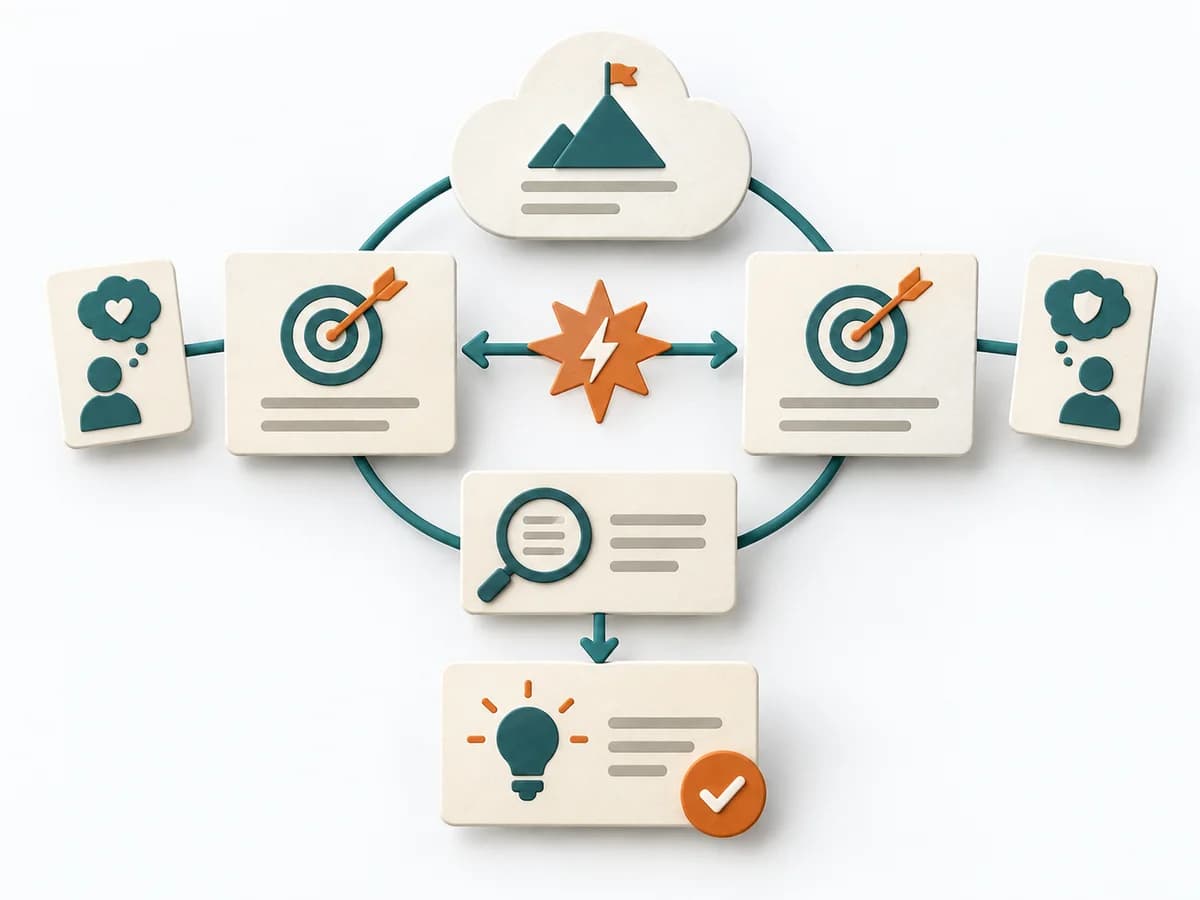 Systems Thinking Evaporating Cloud | 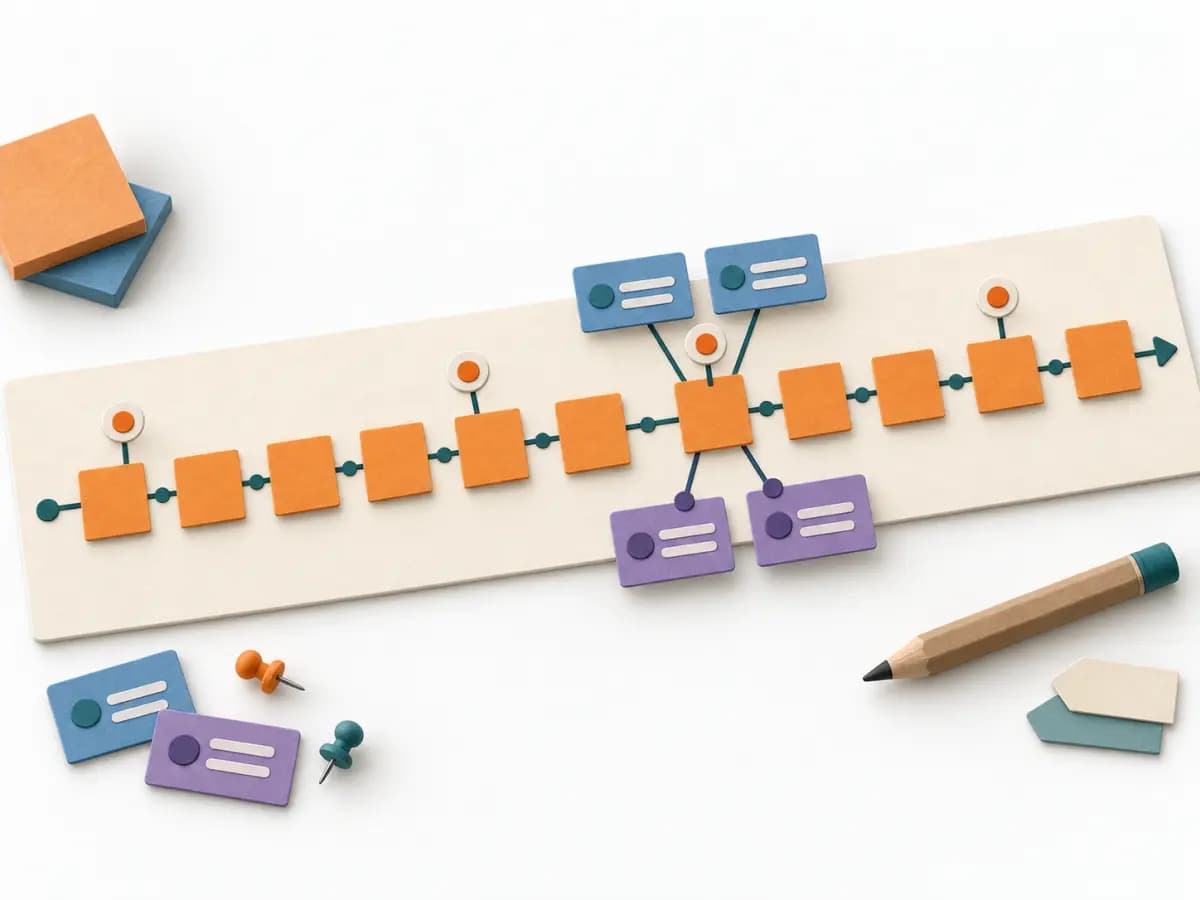 Domain Modeling EventStorming | 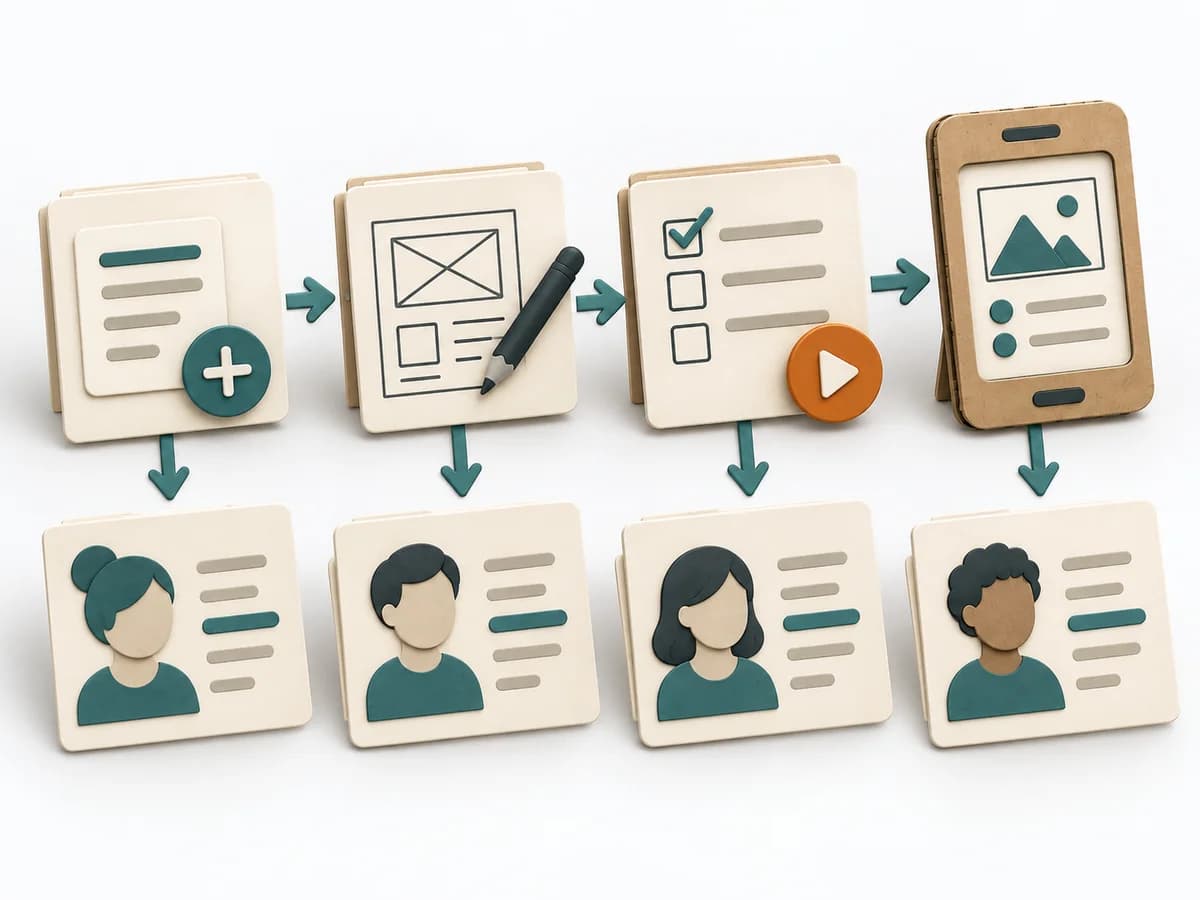 Knowledge Modeling Event Modeling | 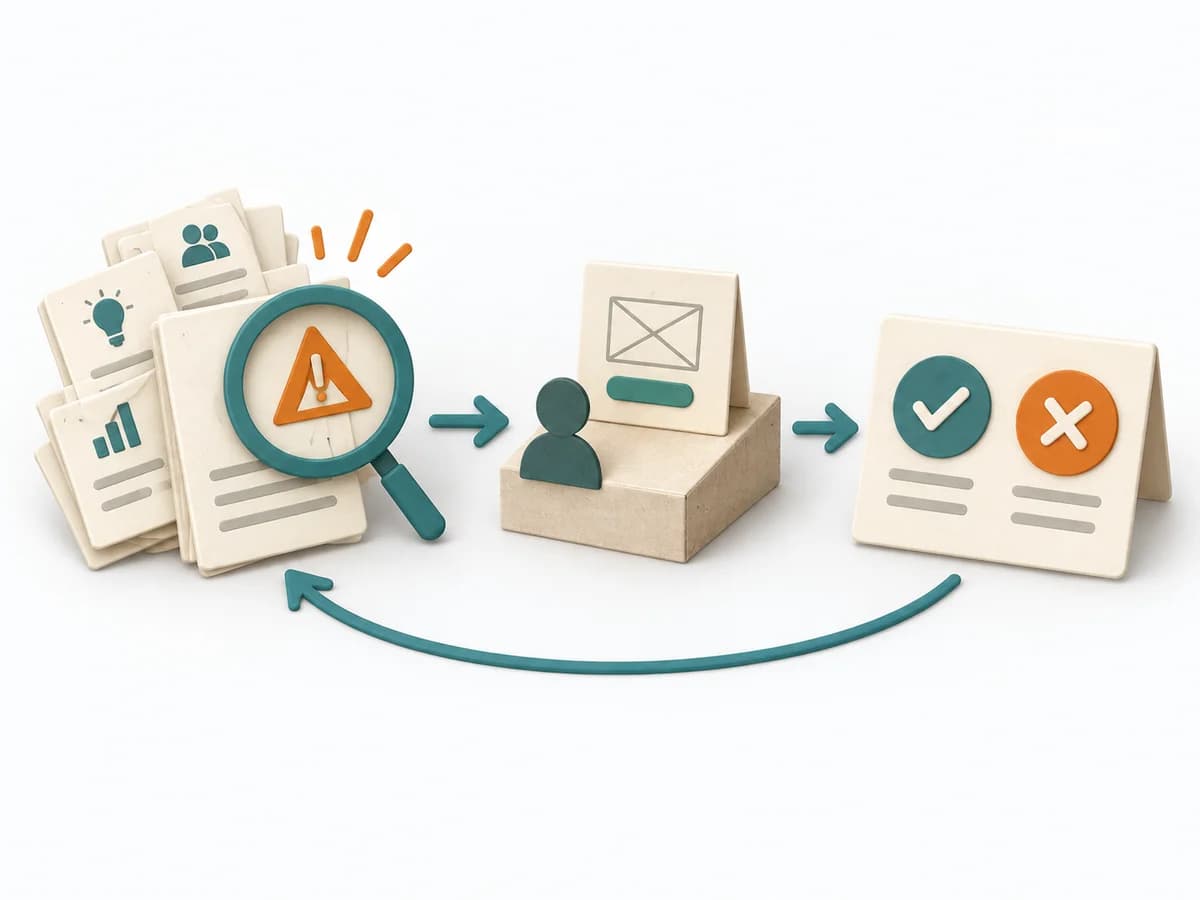 Product Discovery Riskiest Assumption Test |
|---|---|---|---|---|
Purposedifferent | The method makes visible why two seemingly incompatible demands arise and which assumption must be tested to resolve the conflict. | When a domain consists of many events, rules, and states, it creates a shared modeling space for the team. It bundles language, flows, and boundaries before domain knowledge fragments into siloed views. | Event Modeling connects business workflows with commands, events, and views into one coherent mental model. It helps design behavior, UI, and technical slices from the same underlying logic. | When an idea hinges on one critical unknown, it prioritizes testing that exact piece of uncertainty first. It separates problem, assumption, solution, and evidence. The result is captured as a prioritized list of assumptions, a test plan, and a result report. |
Complexitysame | Medium | Medium | Medium | Medium |
Timedifferent | 60-120 min | 2-8 h | 2-6 h | 1-2 Wochen pro Iteration |
Participantsdifferent | 2-8 | 5-12 | 2-8 | 2-6 |
Formatdifferent | Workshop | Workshop | Workshop + async | Workshop + async |
Outputdifferent | Conflict Cloud, Assumption List, Breakthrough Ideas, Next Experiments | Event Timeline, Ubiquitous Language, Boundaries, Open Questions | Event Model, UI Flow, Commands, Read Models | Prioritized Assumption List, Test Plan, Results Report |
Tagsno overlap | Theory of ConstraintsAssumptionsSystems thinking | Domain-Driven DesignEventsDiscoveryWorkshop | EventsBlueprintDomain-Driven DesignBehavior | ExperimentsValidationDiscoveryAssumptions |