View methods side by side.
Choose up to four methods. Add them using the search and share the comparison by copying its link.
| Criterion |  UX Research Empathy Mapping | 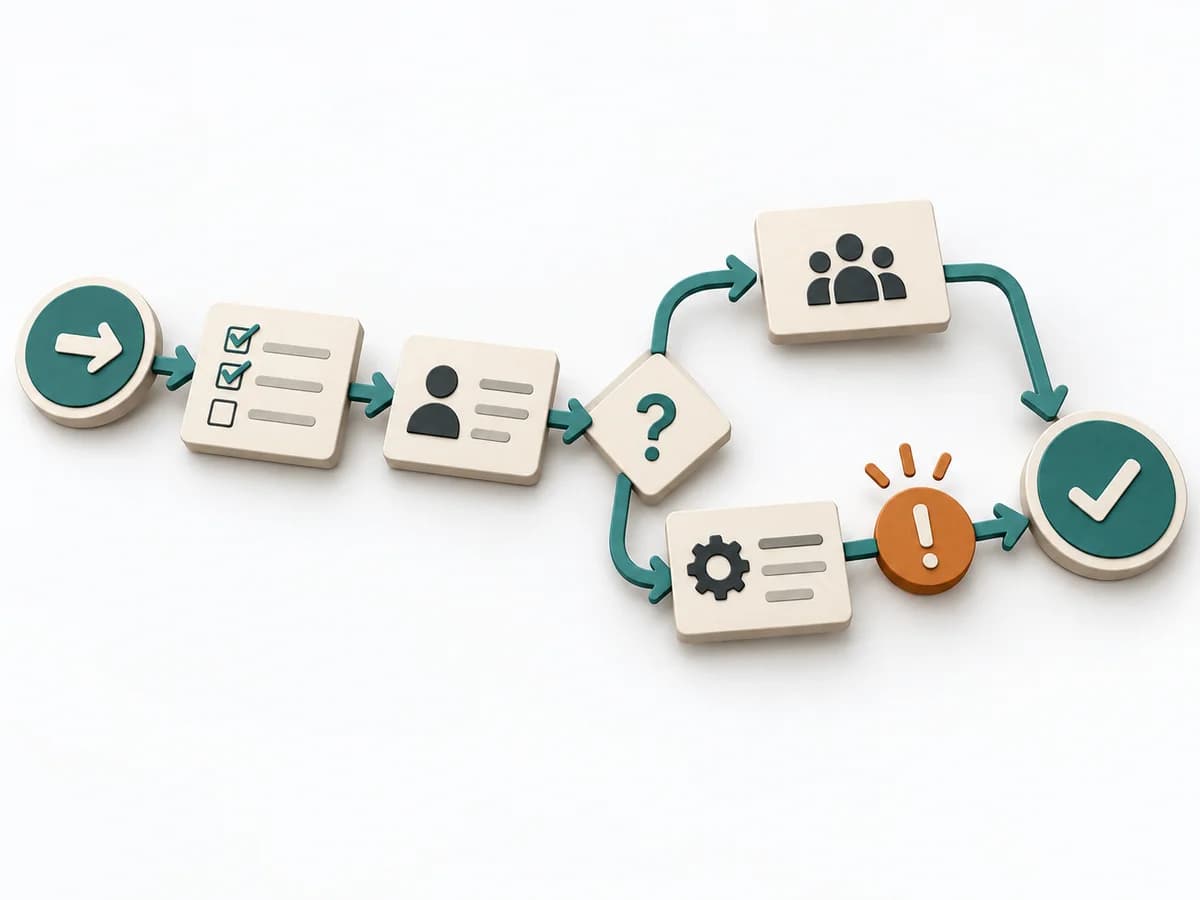 Operations Process Mapping | 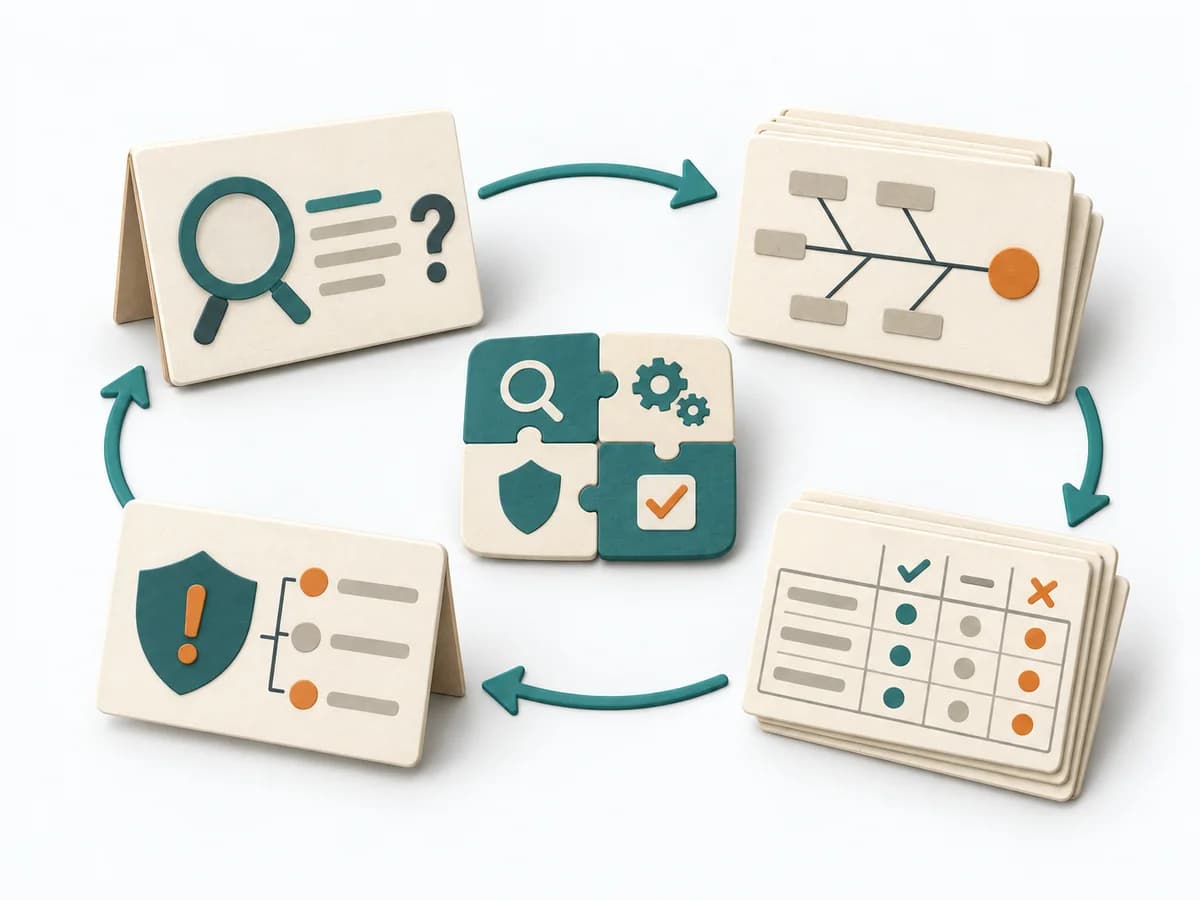 Operations Kepner-Tregoe | 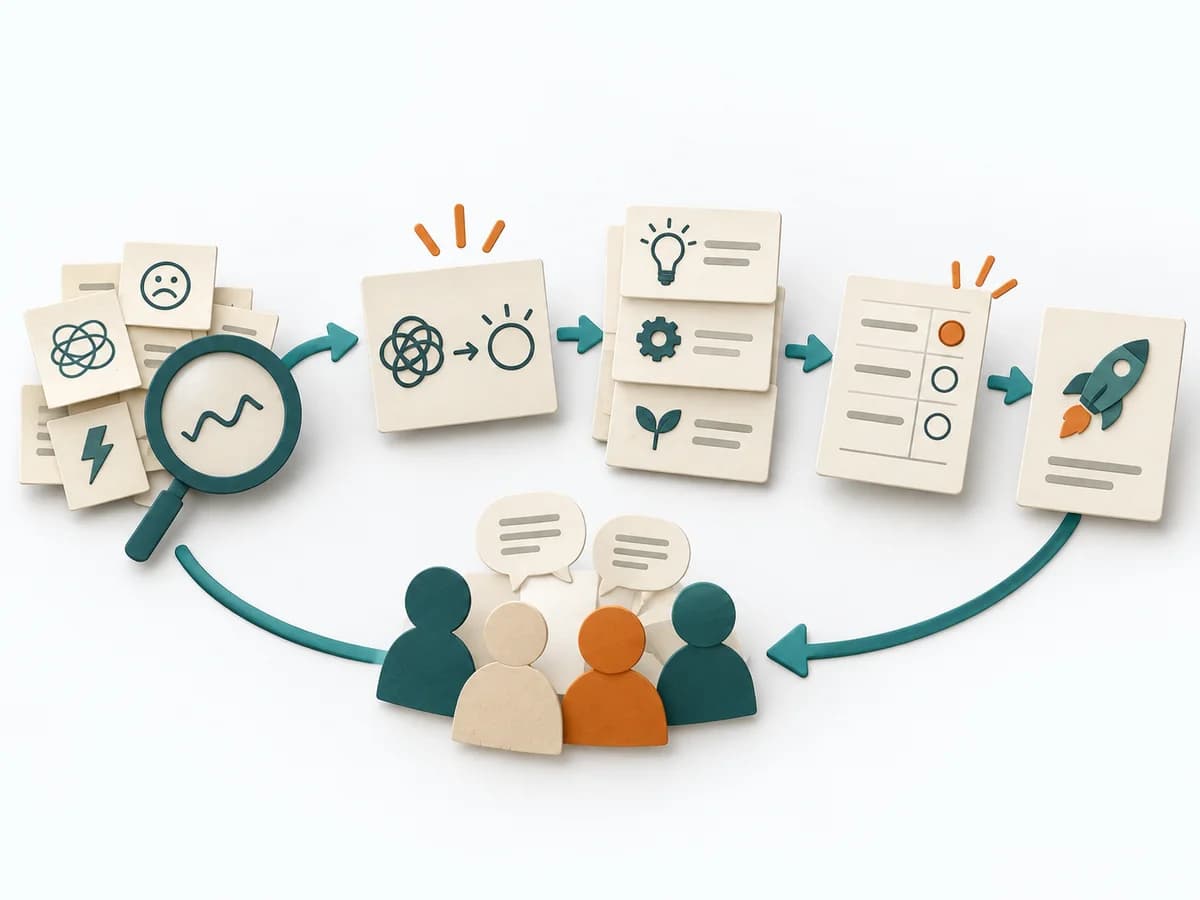 Facilitation Decision Jam |
|---|---|---|---|---|
Purposedifferent | When a lot is assumed about a target group but little is seen jointly, empathy mapping makes knowledge and gaps directly comparable. The picture also shows which assumptions hold up and where evidence is missing. | With a confusing workflow that has many handoffs, the method makes the actual process visible. It shows where work is passed on, delayed, or duplicated, so improvement targets the right spots. | For a disturbance that's hard to pin down, the method cleanly separates problem, cause, and decision. It reduces mixing when symptoms allow several interpretations. | When a decision is stuck, Decision Jam loosens the knot through structured separation of problem, idea, and selection. The format creates movement without jumping prematurely at the first seemingly elegant answer. |
Complexitydifferent | Low | Medium | High | Low |
Timedifferent | 30–60 min | 1-3 h | 2-8 h | 60-90 min |
Participantsdifferent | 4-8 | 3-10 | 2-8 | 4-10 |
Formatdifferent | Workshop | Workshop | Workshop + async | Workshop |
Outputdifferent | Empathy Map, Assumptions List, Research Gaps | Process Map, Handoff List, Improvement Backlog | Problem Analysis, Decision Analysis, Risk Plan | Problem Cluster, Prioritized Challenge, Experiment |
Tagsno overlap | SynthesisQualitativeWorkshop | ProcessOperationsImprovement | Problem solvingRoot causeDecisionOperations | FacilitationDecisionProblem solvingWorkshop |