View methods side by side.
Choose up to four methods. Add them using the search and share the comparison by copying its link.
| Criterion | 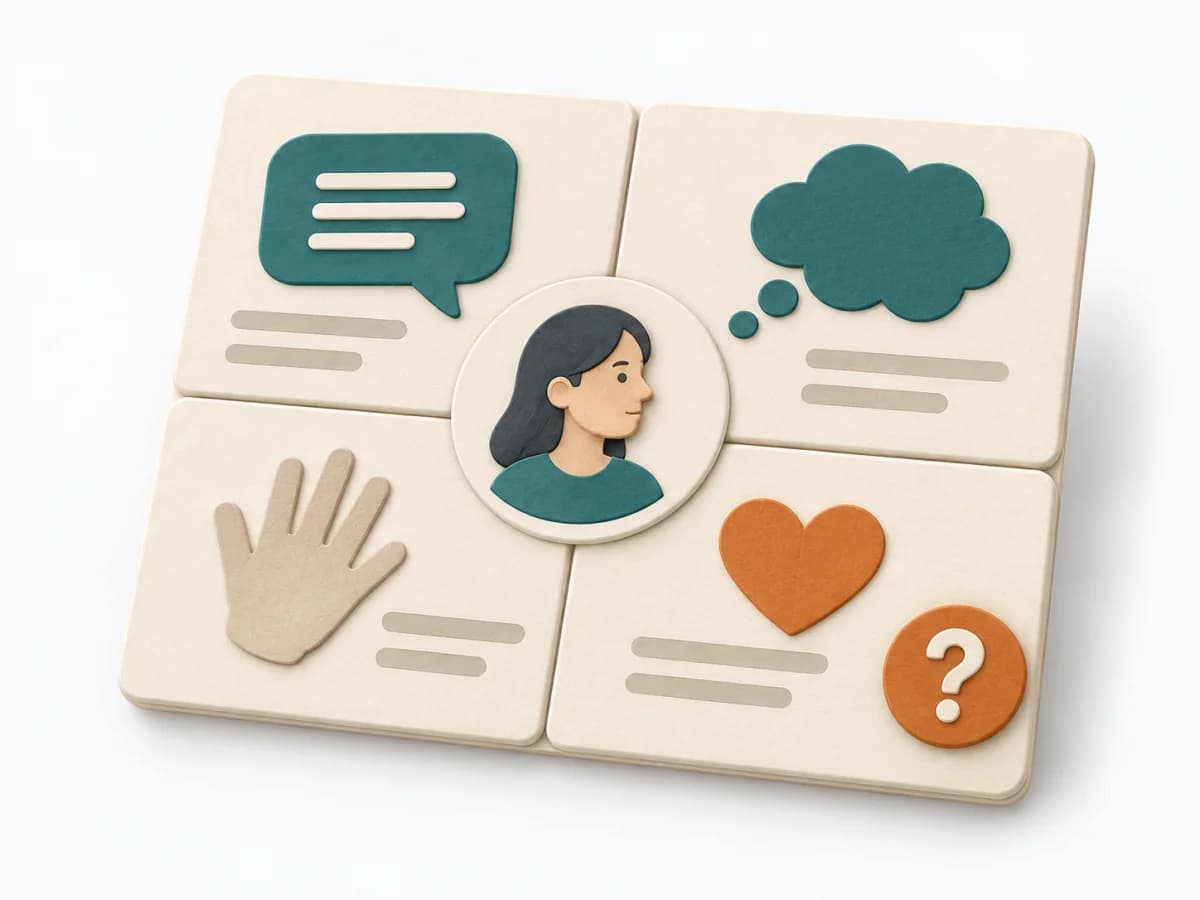 UX Research Empathy Mapping |  Domain Modeling Context Map |  Facilitation Stakeholder Mapping |  Facilitation Consensus Workshop |
|---|---|---|---|---|
Purposedifferent | When a lot is assumed about a target group but little is seen jointly, empathy mapping makes knowledge and gaps directly comparable. The picture also shows which assumptions hold up and where evidence is missing. | When several contexts need to talk to each other, it makes their relationships and dependencies legible. It helps sort integration pressure and responsibilities across system boundaries. | When an initiative depends on many people, interests, and power dynamics, Stakeholder Mapping systematically orders the environment. It shows who influences, who is affected, and where relationship management or safeguarding matters first. | When a group needs a solid decision without outvoting individual factions, a Consensus Workshop creates a negotiable common ground. It makes agreement, reservations, and open tensions discussable at the same time. |
Complexitydifferent | Low | Medium | Low | Medium |
Timedifferent | 30–60 min | 1-3 h | 60–90 min | 1-3 h |
Participantsdifferent | 4-8 | 2-8 | 2-8 | 5-30 |
Formatdifferent | Workshop | Workshop + async | Workshop + async | Workshop |
Outputdifferent | Empathy Map, Assumptions List, Research Gaps | Context Map, Integration Patterns, Boundary Notes | Stakeholder Map, Engagement Plan, Risk Notes | Consensus Clusters, Theme Titles, Priority Areas |
Tagsno overlap | SynthesisQualitativeWorkshop | Domain-Driven DesignBoundariesStrategy | StakeholdersAlignmentFacilitationChange | FacilitationConsensusWorkshopAlignment |