View methods side by side.
Choose up to four methods. Add them using the search and share the comparison by copying its link.
| Criterion |  UX Research Empathy Mapping |  Knowledge Modeling Concept Mapping | 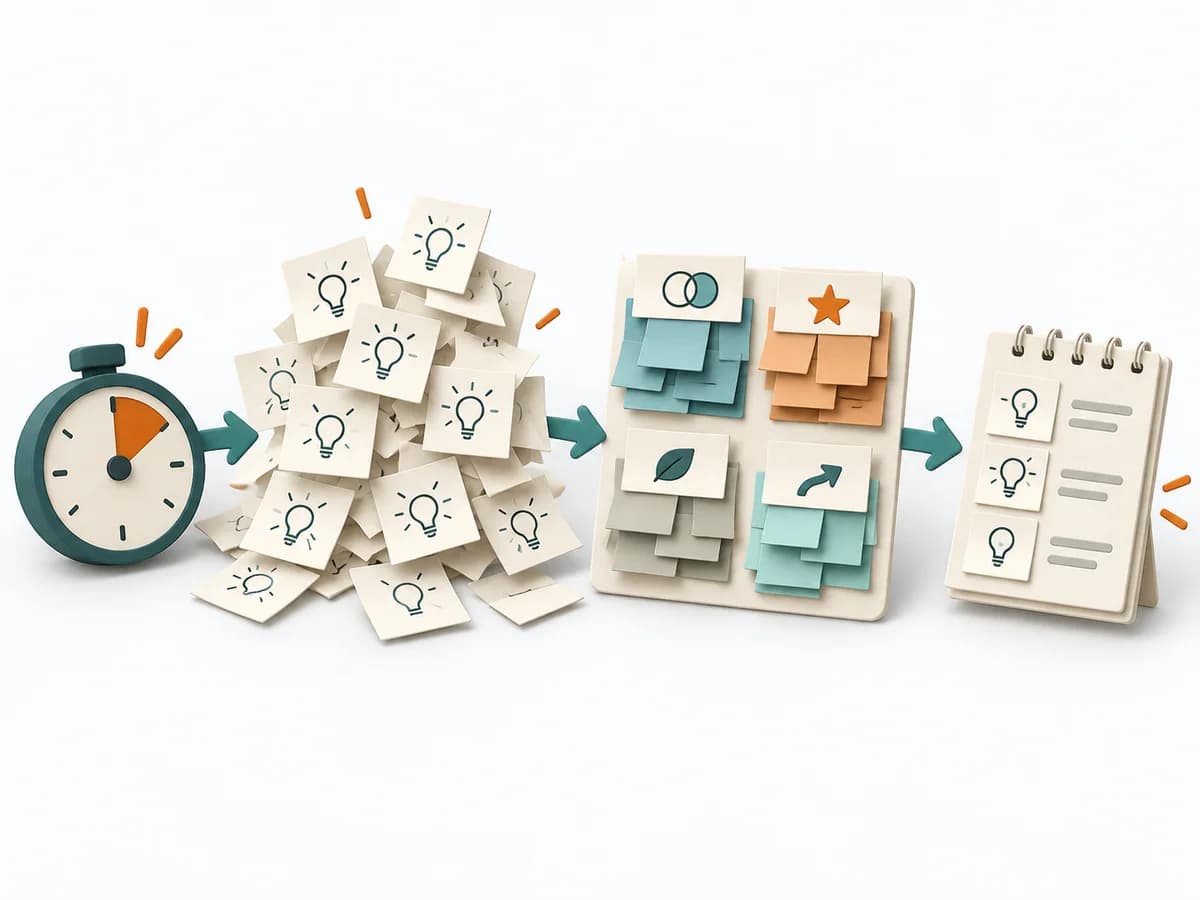 Innovation Rapid Ideation | 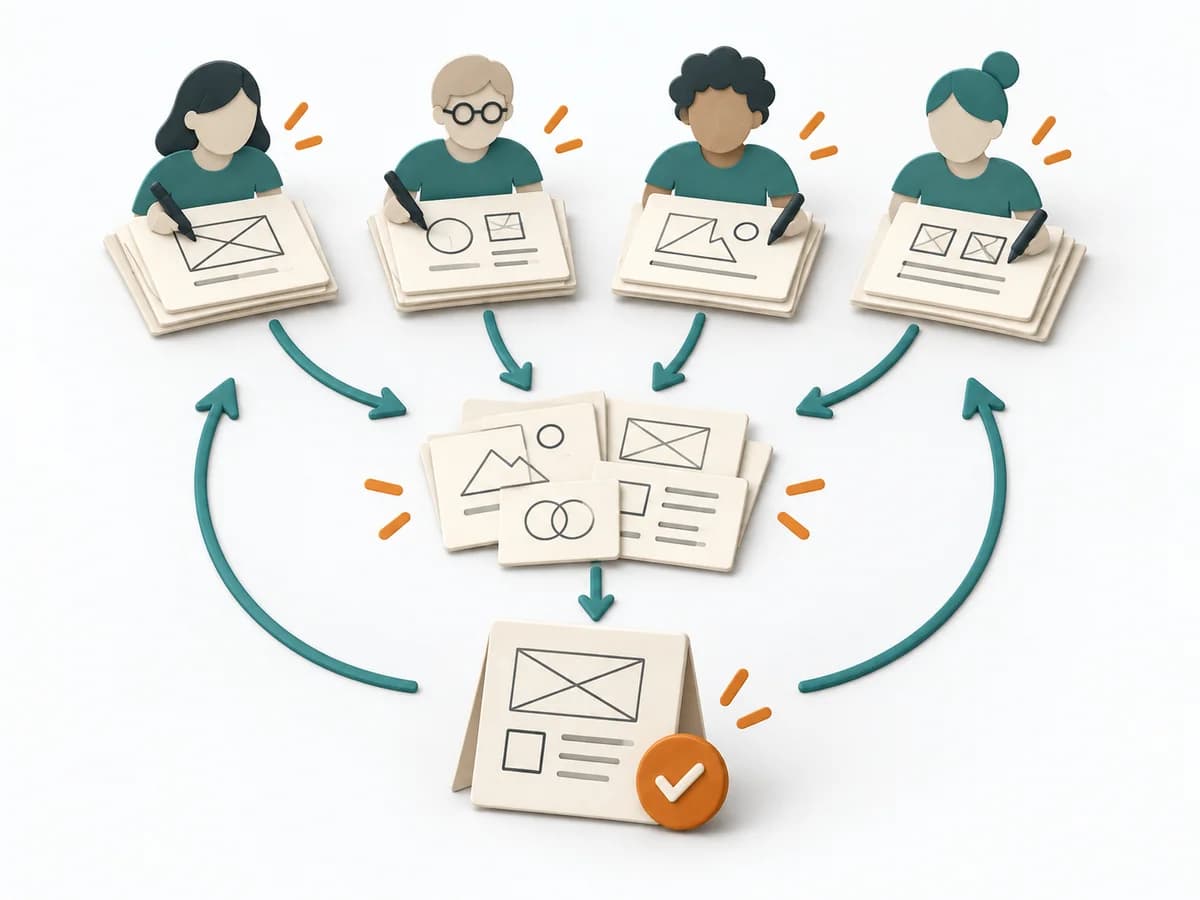 Innovation Design Charrette |
|---|---|---|---|---|
Purposedifferent | When a lot is assumed about a target group but little is seen jointly, empathy mapping makes knowledge and gaps directly comparable. The picture also shows which assumptions hold up and where evidence is missing. | Concept Mapping arranges terms and relationships in a network that makes subject-matter connections tangible. It fits when a topic needs to be understood structurally rather than linearly. | When a decision needs to be prepared quickly, the method generates many solution-close variants in a short time. It deliberately relies on pace to undercut self-censorship and perfectionism. This quickly produces a usable field for prioritization and further work. | In a tightly timed design process with many participants, the method pools several lines of thinking in a short time. It brings parallel design energy without letting the discussion tip into endless coordination. This quickly produces solid directions for architecture or space. |
Complexitydifferent | Low | Medium | Low | Medium |
Timedifferent | 30–60 min | 1-2 h | 5-20 min | Halber Tag bis mehrere Tage |
Participantsdifferent | 4-8 | 1-8 | 1-20 | 10-50 |
Formatdifferent | Workshop | Workshop + async | Workshop + async | Workshop |
Outputdifferent | Empathy Map, Assumptions List, Research Gaps | Concept Map, Relationship Labels, Knowledge Gaps | Ideenpool, Roh-Shortlist, Cluster | Sketches and Concepts, Consolidated Solution Sketch, Prioritized Direction |
Tagsno overlap | SynthesisQualitativeWorkshop | KnowledgeConceptsMappingSensemaking | BrainstormingIdeationDivergenceSpeed | BrainstormingWorkshopCollaborationIdeation |