View methods side by side.
Choose up to four methods. Add them using the search and share the comparison by copying its link.
| Criterion |  UX Research Empathy Mapping |  Operations Change Analysis | 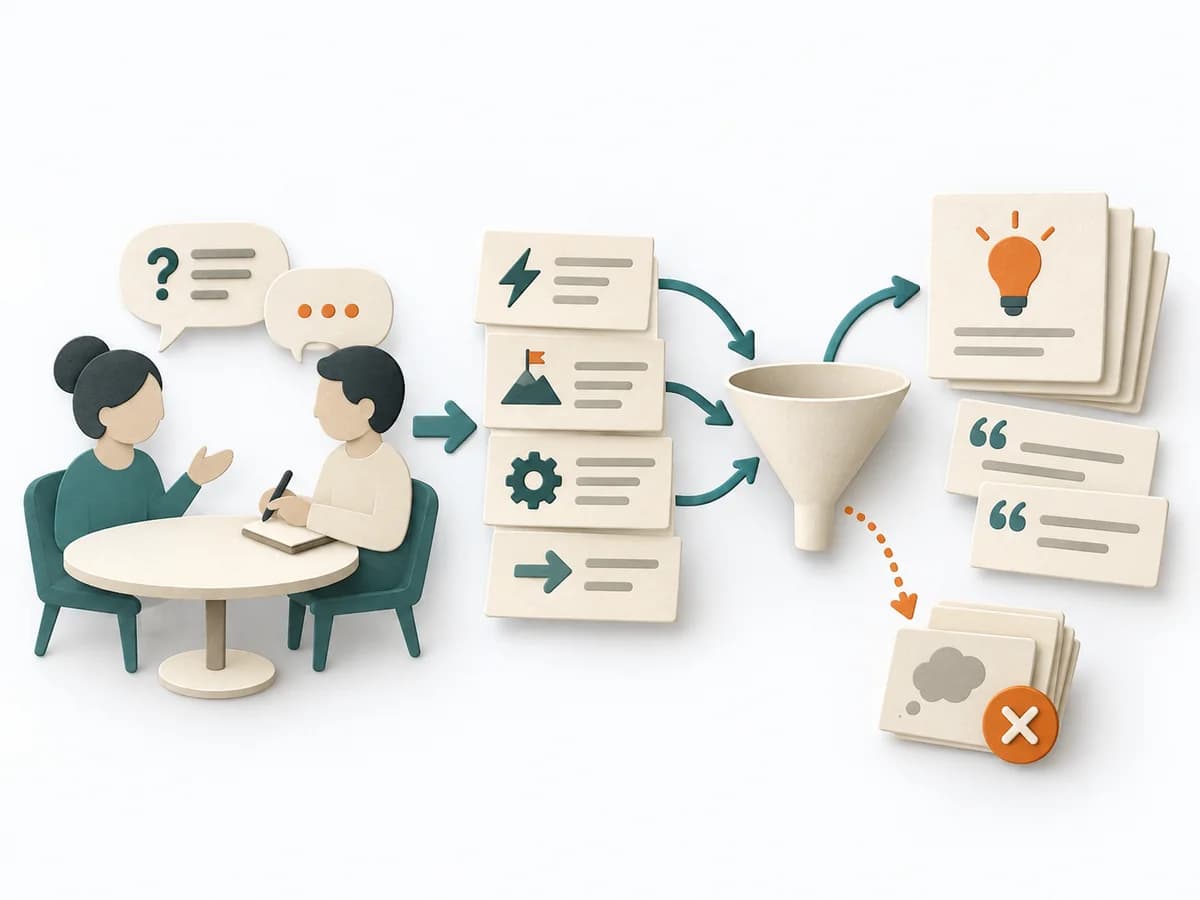 Product Discovery Opportunity Interview | 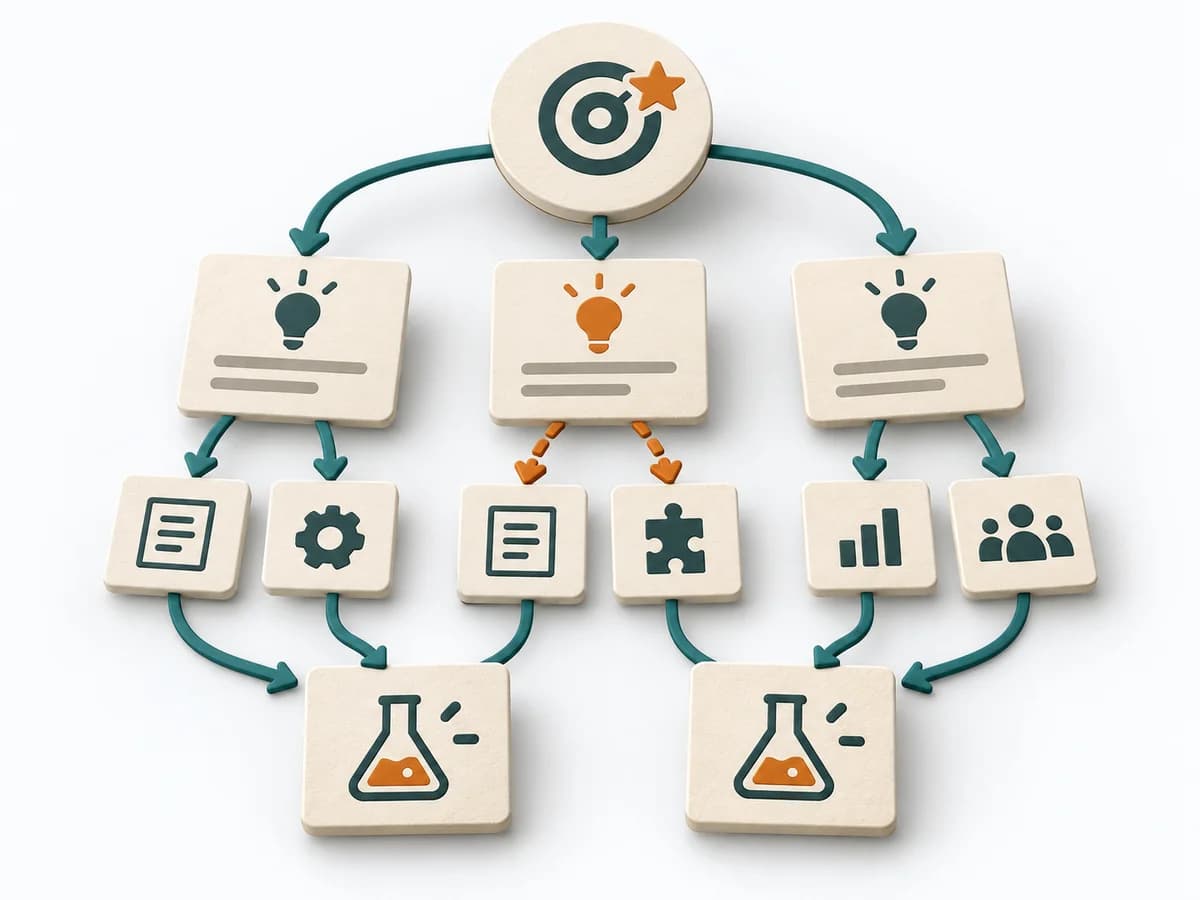 Product Discovery Opportunity Solution Tree |
|---|---|---|---|---|
Purposedifferent | When a lot is assumed about a target group but little is seen jointly, empathy mapping makes knowledge and gaps directly comparable. The picture also shows which assumptions hold up and where evidence is missing. | For a deviation after a change, the method isolates the influence of the altered condition. It narrows down which differences are relevant and which are just accompanying noise. | When opportunities are still hidden behind signals of need, it structures conversations around needs and obstacles. It looks for patterns that lead to new product opportunities. | When discovery keeps swinging between goals, ideas, and learning loops, it creates clear steering logic. It connects the desired outcome, opportunities, and experiments into a legible structure. |
Complexitydifferent | Low | Medium | Medium | Medium |
Timedifferent | 30–60 min | 45-120 min | 30-60 min je Interview | 1-2 h Setup, laufend |
Participantsdifferent | 4-8 | 2-6 | 5-12 Interviews | 2-6 |
Formatdifferent | Workshop | Workshop + async | Workshop + async | Workshop + async |
Outputdifferent | Empathy Map, Assumptions List, Research Gaps | Change Matrix, Cause Hypotheses, Validation Questions, Action List | Interview Notes, Opportunity Themes, Customer Quotes | Opportunity Solution Tree, Experiment Backlog, Learning Log |
Tagsno overlap | SynthesisQualitativeWorkshop | ChangeRoot causeTroubleshootingComparison | DiscoveryInterviewsOpportunityCustomer | DiscoveryOutcomesExperimentsOpportunity |