View methods side by side.
Choose up to four methods. Add them using the search and share the comparison by copying its link.
| Criterion |  UX Research Empathy Mapping |  Operations Barrier Analysis |  Systems Thinking Current Reality Tree | 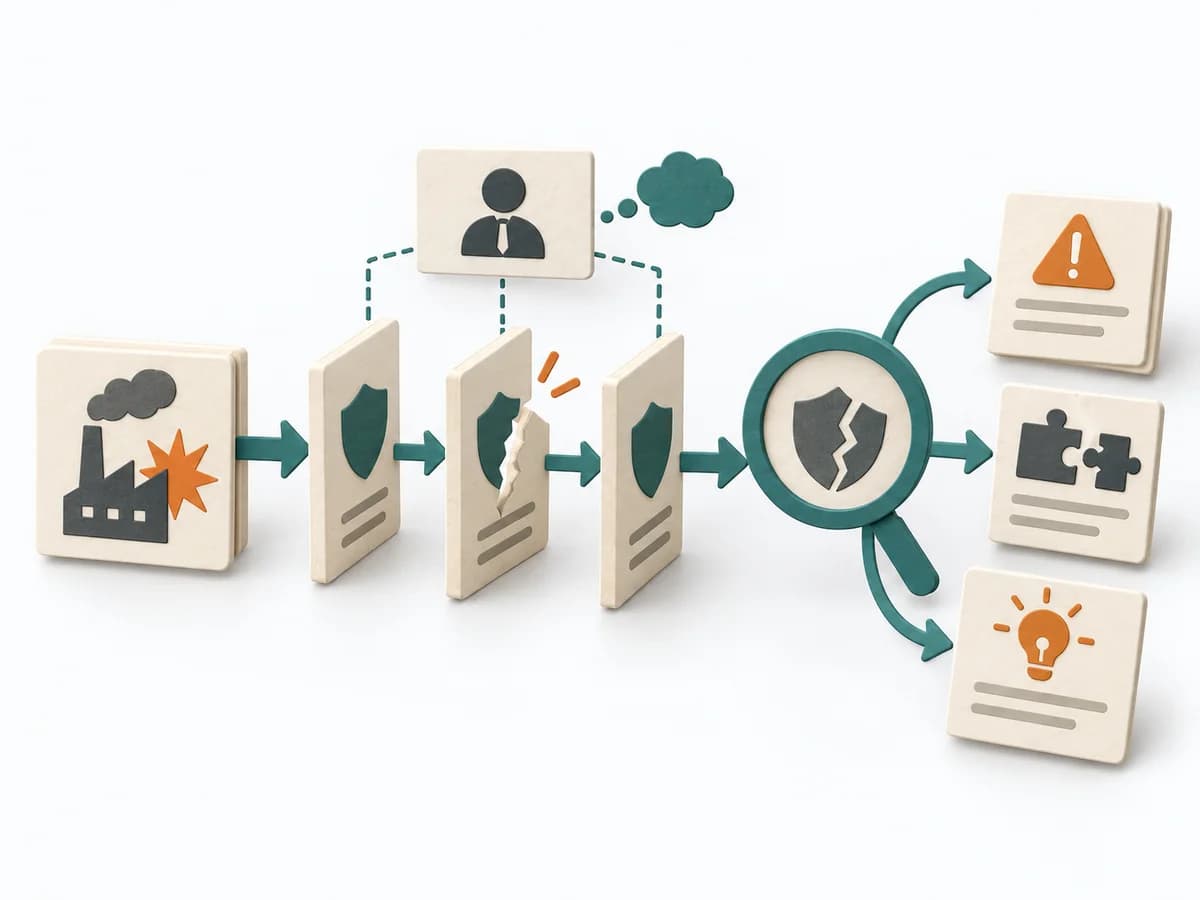 Operations MORT Analysis |
|---|---|---|---|---|
Purposedifferent | When a lot is assumed about a target group but little is seen jointly, empathy mapping makes knowledge and gaps directly comparable. The picture also shows which assumptions hold up and where evidence is missing. | For a risk that can only be managed through multiple layers of protection, the method examines the effectiveness of each barrier. It shows where safeguards are missing, too weak, or fail under real conditions. | A Current Reality Tree condenses many symptoms into a few causal chains. The method makes visible which core problems drive several negative effects at once. | For a safety-relevant event or a system with high protection requirements, the method examines where controls failed. It exposes both technical and organizational gaps. |
Complexitydifferent | Low | Medium | High | High |
Timedifferent | 30–60 min | 2-4 h | 2-6 h | Mehrere Tage bis Wochen |
Participantsdifferent | 4-8 | 2-6 | 3-8 | 2-6 |
Formatdifferent | Workshop | Workshop + async | Workshop | Workshop + async |
Outputdifferent | Empathy Map, Assumptions List, Research Gaps | Barrier Inventory, Failure Analysis per Barrier, Action Backlog | Current Reality Tree, Core Problems, Intervention Ideas | MORT Worksheets, Findings per Branch, Corrective Actions, Systemic Recommendations |
Tagsno overlap | SynthesisQualitativeWorkshop | Root causeSafetyIncident | Systems thinkingRoot causeConstraintsCausality | Root causeSafetySystemicIncident |