View methods side by side.
Choose up to four methods. Add them using the search and share the comparison by copying its link.
| Criterion |  Innovation Double Diamond | 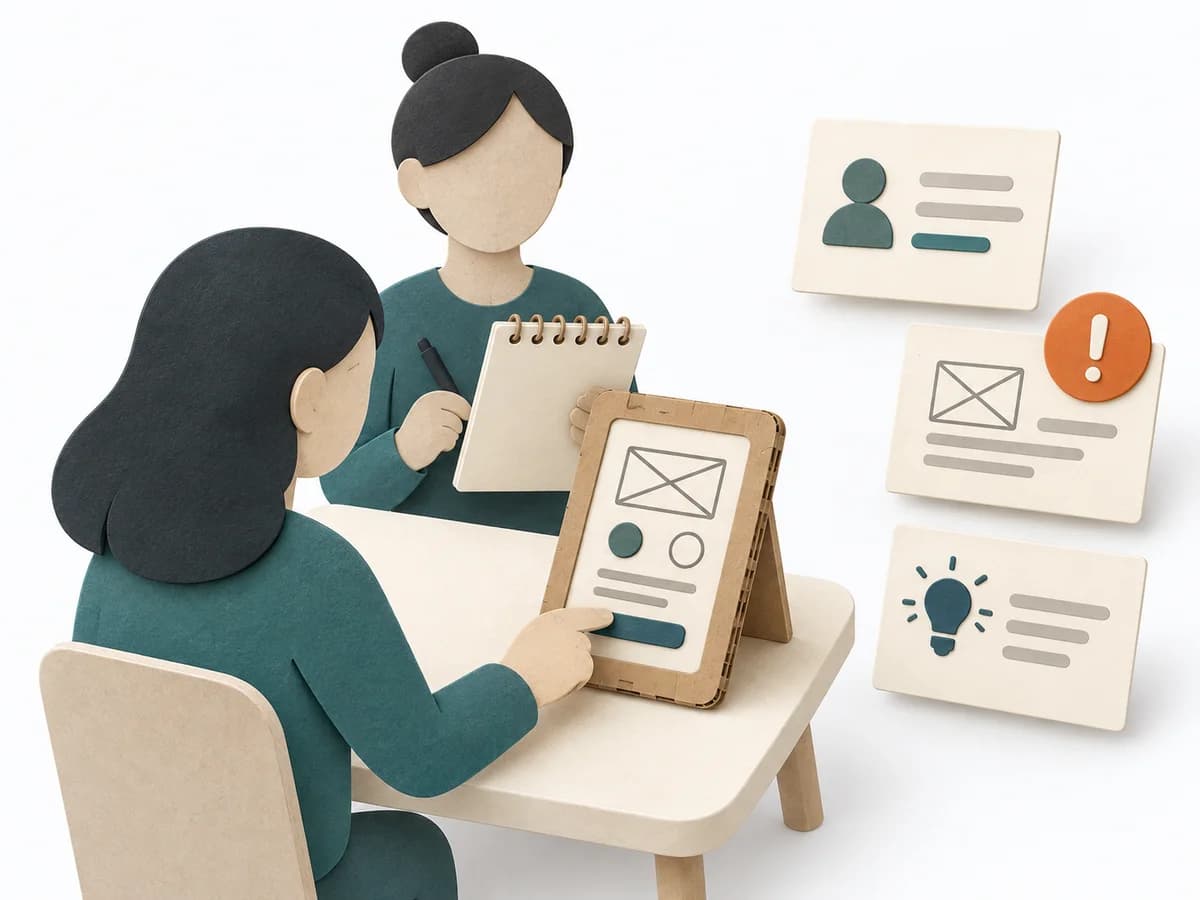 UX Research Usability Testing | 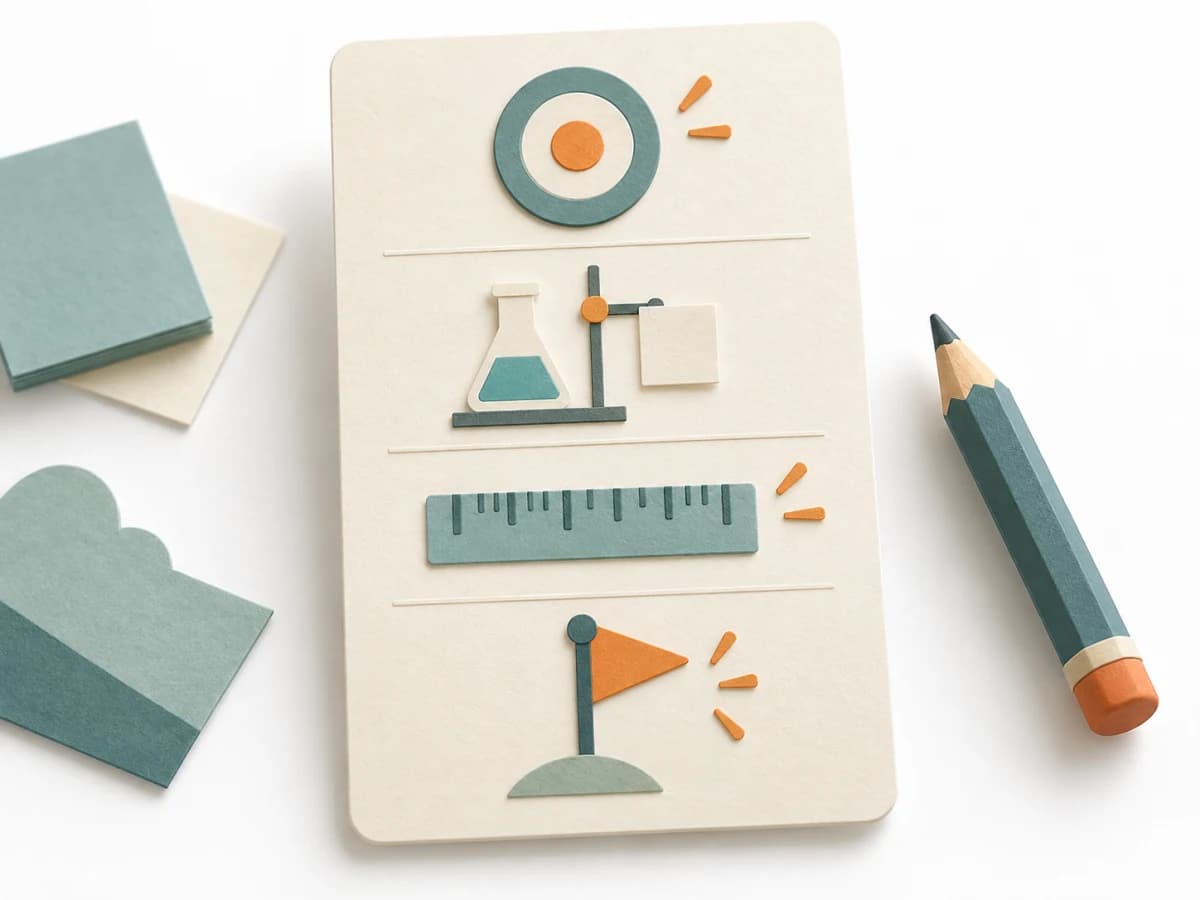 Product Discovery Test Card |  Product Discovery Fake Door Test |
|---|---|---|---|---|
Purposedifferent | For complex problems with a fuzzy situation, the method cleanly separates search space and decision. It first creates breadth in understanding and then focus in elaboration. This brings open questions, problem definition, and solution path into a traceable movement. | When a product is built but people get stuck on tasks, usability testing shows the friction at concrete points. Observed use instead of self-report makes visible where orientation, understanding, or interaction breaks down. | The Test Card turns a critical assumption into a testable claim and specifies in advance which result counts as success. | When demand is still unclear, it measures interest in a feature before it is built. It separates real behavior from polite agreement and deliberately keeps build effort small. |
Complexitydifferent | Medium | Medium | Low | Medium |
Timedifferent | Wochen bis Monate | 1-2 h je Session | 20-35 min | 1-5 Tage |
Participantsdifferent | 3-12 | Based on research question | 1-5 | Nutzertraffic |
Formatdifferent | Workshop + async | Workshop + async | Workshop + async | Async |
Outputdifferent | Problem Statement, Solution Options, Prototypes, Deliverables per Phase | Usability Issues, Severity List, Recommendations | Test Card with a pre-set threshold | Click Data, Interest Signal, Learning Decision |
Tagsno overlap | ProcessDivergenceInnovation | ValidationUXPrototype | ExperimentsValidationDiscoveryHypothesis | ValidationExperimentsDemandDiscovery |