View methods side by side.
Choose up to four methods. Add them using the search and share the comparison by copying its link.
| Criterion |  Innovation Double Diamond |  Agile Specification by Example | 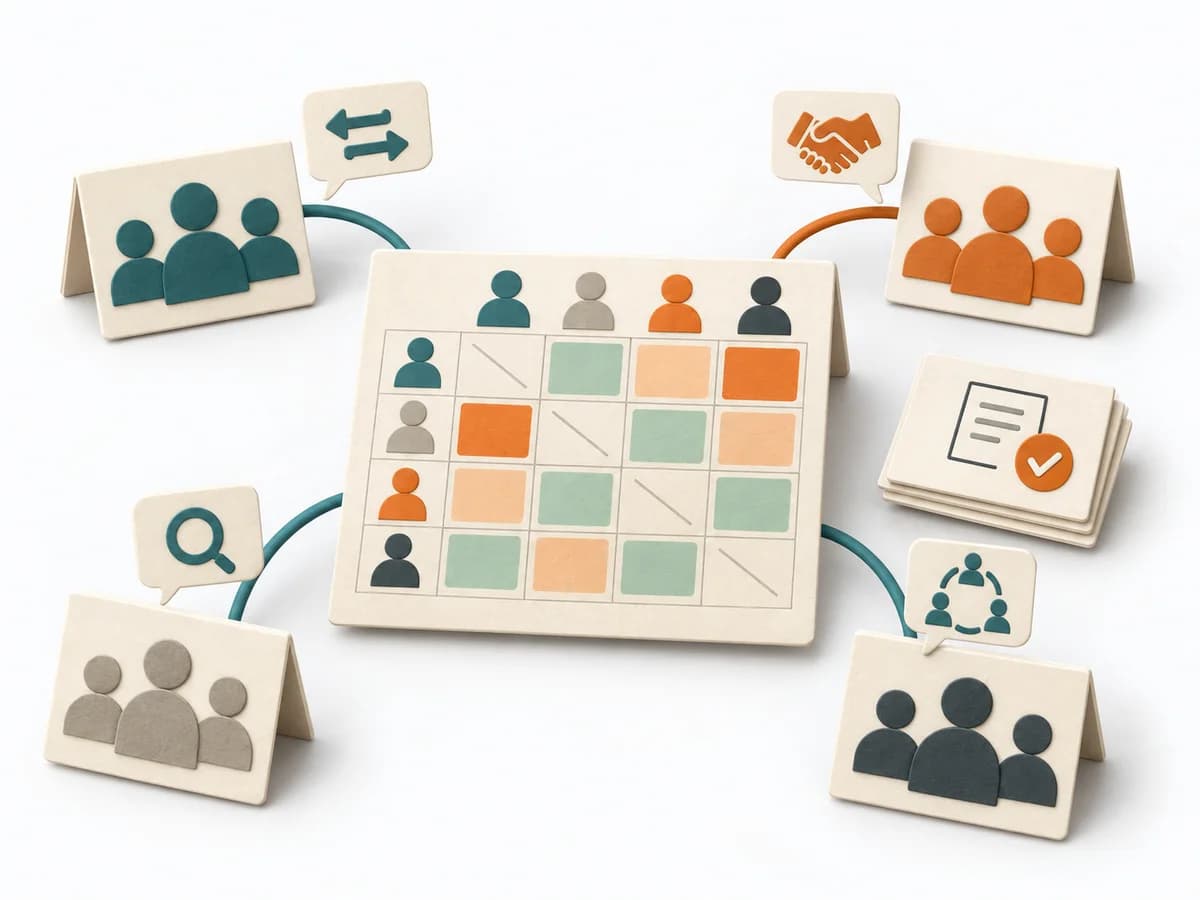 Team Design Team Topologies Interaction Modes | 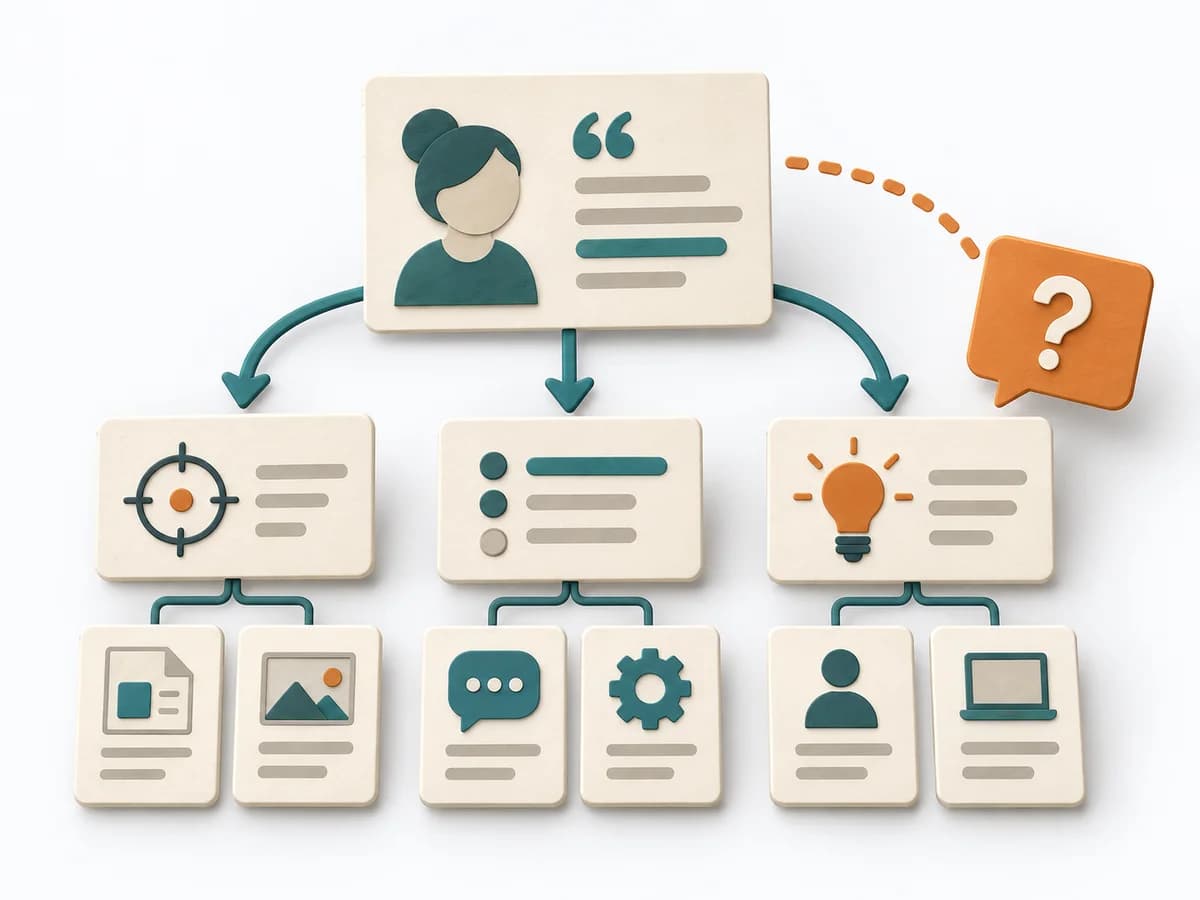 Agile Example Mapping |
|---|---|---|---|---|
Purposedifferent | For complex problems with a fuzzy situation, the method cleanly separates search space and decision. It first creates breadth in understanding and then focus in elaboration. This brings open questions, problem definition, and solution path into a traceable movement. | When business rules need to become precise, it ties language, example, and test together. It sorts work by value, risk, and delivery ability. The result is captured as an Example Table and Acceptance Tests. | When several teams collaborate repeatedly, it describes the right interaction mode for each interface between them. It clarifies responsibility, interaction, and load between teams. The result is captured as an interaction heat map and pairwise agreements. | When a story carries business rules and exceptions, it brings clarity before implementation. It makes examples, open questions, and boundaries visible enough that the logic becomes jointly sound. |
Complexitydifferent | Medium | Medium | Medium | Low |
Timedifferent | Wochen bis Monate | 60-90 min pro Feature | Half day | 30-60 min |
Participantsdifferent | 3-12 | 3-6 | Team-Leads plus Architecture | 3-7 |
Formatdifferent | Workshop + async | Workshop | Workshop | Workshop |
Outputdifferent | Problem Statement, Solution Options, Prototypes, Deliverables per Phase | Example Table, Acceptance Tests | Interaction Heat Map, Agreements per Pair | Example Map, Acceptance Criteria, Open Questions |
Tagsno overlap | ProcessDivergenceInnovation | AgileRequirementsExamplesBehavior-Driven Development | TeamAlignmentCollaborationOrganization | Behavior-Driven DevelopmentRequirementsExamplesRefinement |