View methods side by side.
Choose up to four methods. Add them using the search and share the comparison by copying its link.
| Criterion |  Innovation Double Diamond |  Systems Thinking Leverage Points | 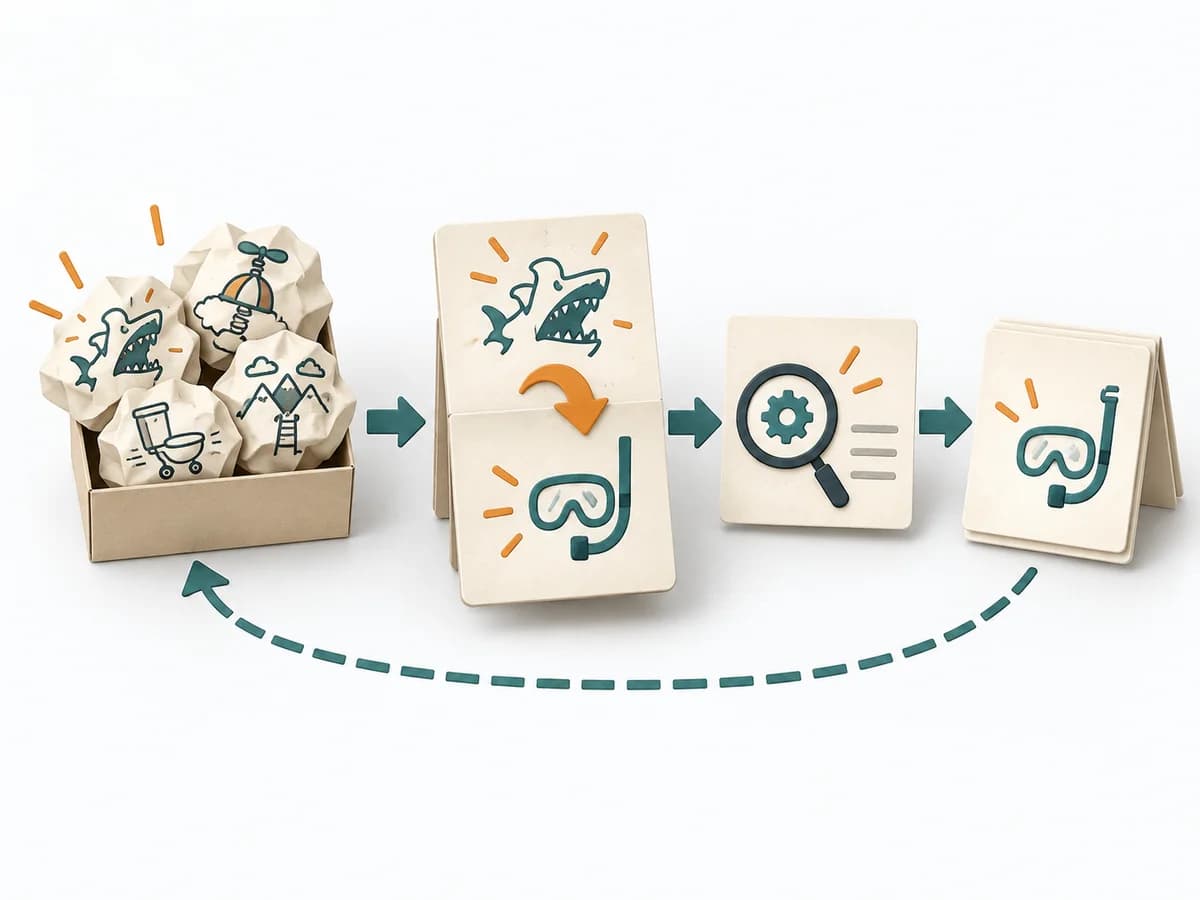 Innovation Worst Possible Idea |  Innovation Lotus Blossom |
|---|---|---|---|---|
Purposedifferent | For complex problems with a fuzzy situation, the method cleanly separates search space and decision. It first creates breadth in understanding and then focus in elaboration. This brings open questions, problem definition, and solution path into a traceable movement. | Leverage Points show exactly where interventions in a system produce a disproportionate effect. It draws relationships, patterns, and feedback loops. The result is captured as a leverage map and action strategy. | For a seemingly familiar problem with paralyzing seriousness, the method dissolves pressure and fear of judgment. It deliberately makes failure pictures extreme, so hidden assumptions become visible faster. This clarifies what a workable path should avoid. | When a central question feels too large, the method breaks it into neighboring topic fields with their own depth of ideation. It holds structure and openness at the same time, so adjacent perspectives don't get lost. This grows an idea space out of a core problem. |
Complexitydifferent | Medium | High | Low | Low |
Timedifferent | Wochen bis Monate | Half day | 20-45 min | 45-90 min |
Participantsdifferent | 3-12 | 3-12 | 3-12 | 3-10 |
Formatdifferent | Workshop + async | Workshop | Workshop | Workshop |
Outputdifferent | Problem Statement, Solution Options, Prototypes, Deliverables per Phase | Leverage Map, Action Strategy | Bad Idea List, Reframed Concepts, Idea Shortlist | Lotus Diagram, Idea Themes, Shortlist |
Tagsno overlap | ProcessDivergenceInnovation | Systems thinkingChangeStrategy | IdeationCreativityDivergence | BrainstormingIdeationCreativityDivergenceWorkshop |