View methods side by side.
Choose up to four methods. Add them using the search and share the comparison by copying its link.
| Criterion |  Innovation Double Diamond |  Systems Thinking Leverage Points | 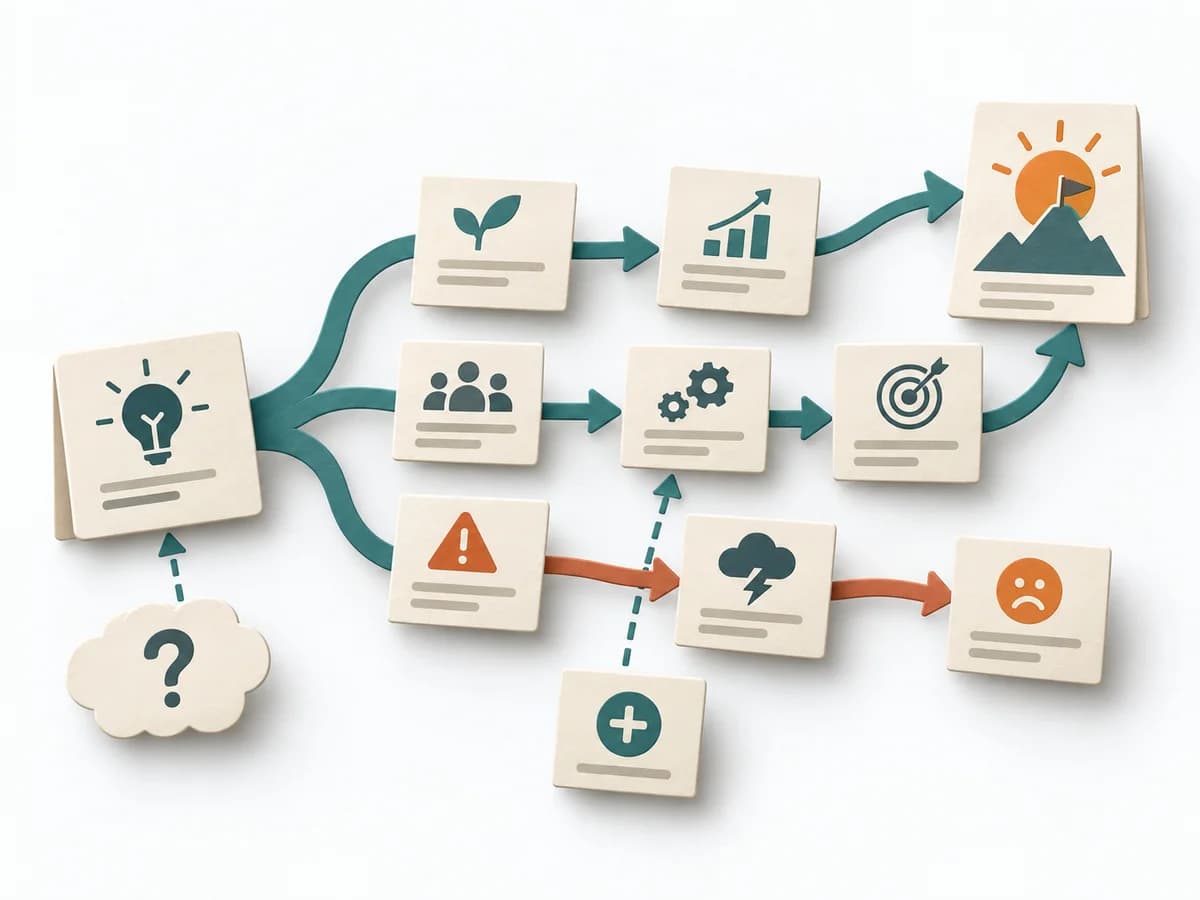 Systems Thinking Future Reality Tree | 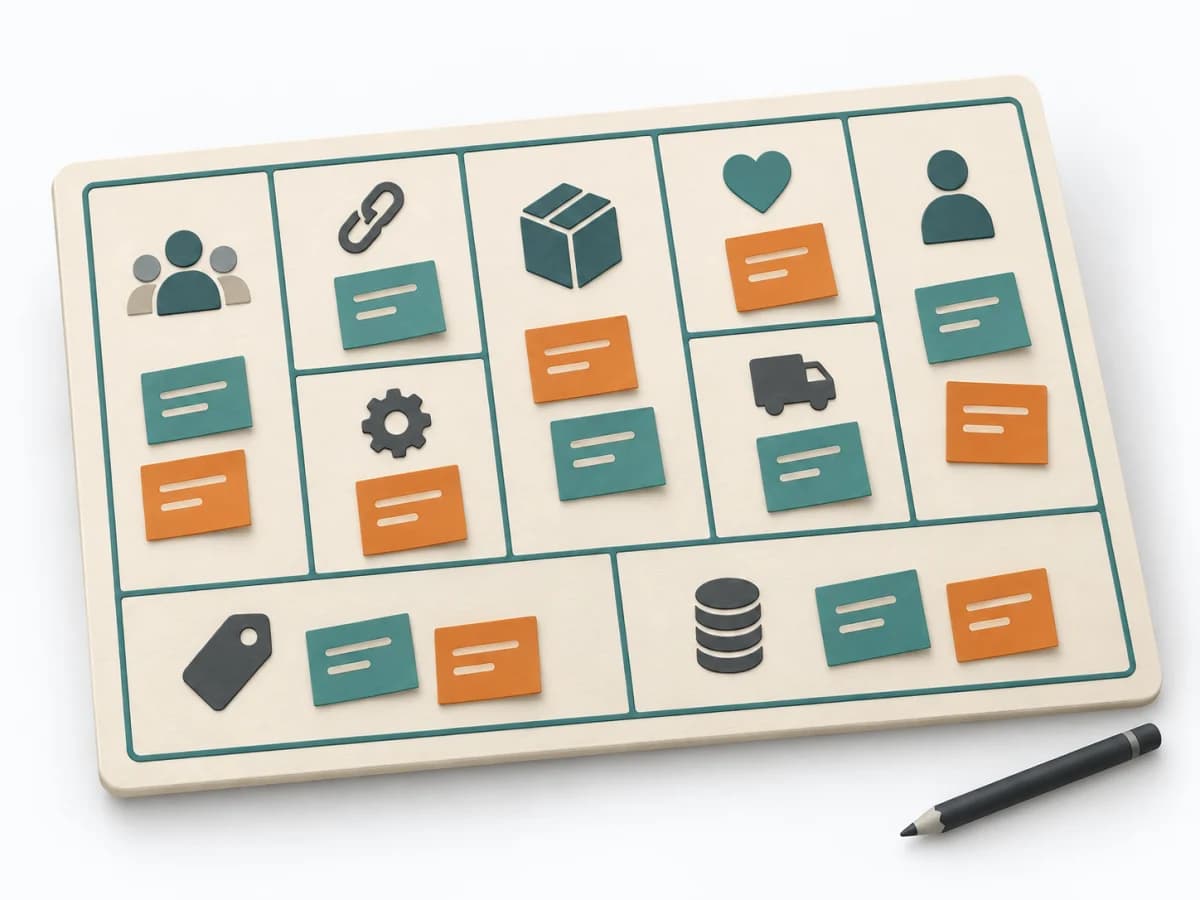 Business Strategy Business Model Canvas |
|---|---|---|---|---|
Purposedifferent | For complex problems with a fuzzy situation, the method cleanly separates search space and decision. It first creates breadth in understanding and then focus in elaboration. This brings open questions, problem definition, and solution path into a traceable movement. | Leverage Points show exactly where interventions in a system produce a disproportionate effect. It draws relationships, patterns, and feedback loops. The result is captured as a leverage map and action strategy. | A Future Reality Tree shows how desired actions are meant to lead to a better system state. The method checks whether a path of change holds together logically before time flows into implementation. | The Business Model Canvas condenses a business model to its key building blocks and assumptions. It makes variants quickly comparable and reveals gaps before validation or implementation begins. |
Complexitydifferent | Medium | High | High | Medium |
Timedifferent | Wochen bis Monate | Half day | 2-4 h | 1-2 h |
Participantsdifferent | 3-12 | 3-12 | 3-8 | 2-8 |
Formatdifferent | Workshop + async | Workshop | Workshop | Workshop + async |
Outputdifferent | Problem Statement, Solution Options, Prototypes, Deliverables per Phase | Leverage Map, Action Strategy | Future Reality Tree, Negative Branches, Assumption List, Improved Injections | Business Model Canvas, Assumption List, Business Hypotheses |
Tagsno overlap | ProcessDivergenceInnovation | Systems thinkingChangeStrategy | Theory of ConstraintsSystems thinkingChange | Business modelStrategyValueInnovation |