View methods side by side.
Choose up to four methods. Add them using the search and share the comparison by copying its link.
| Criterion | 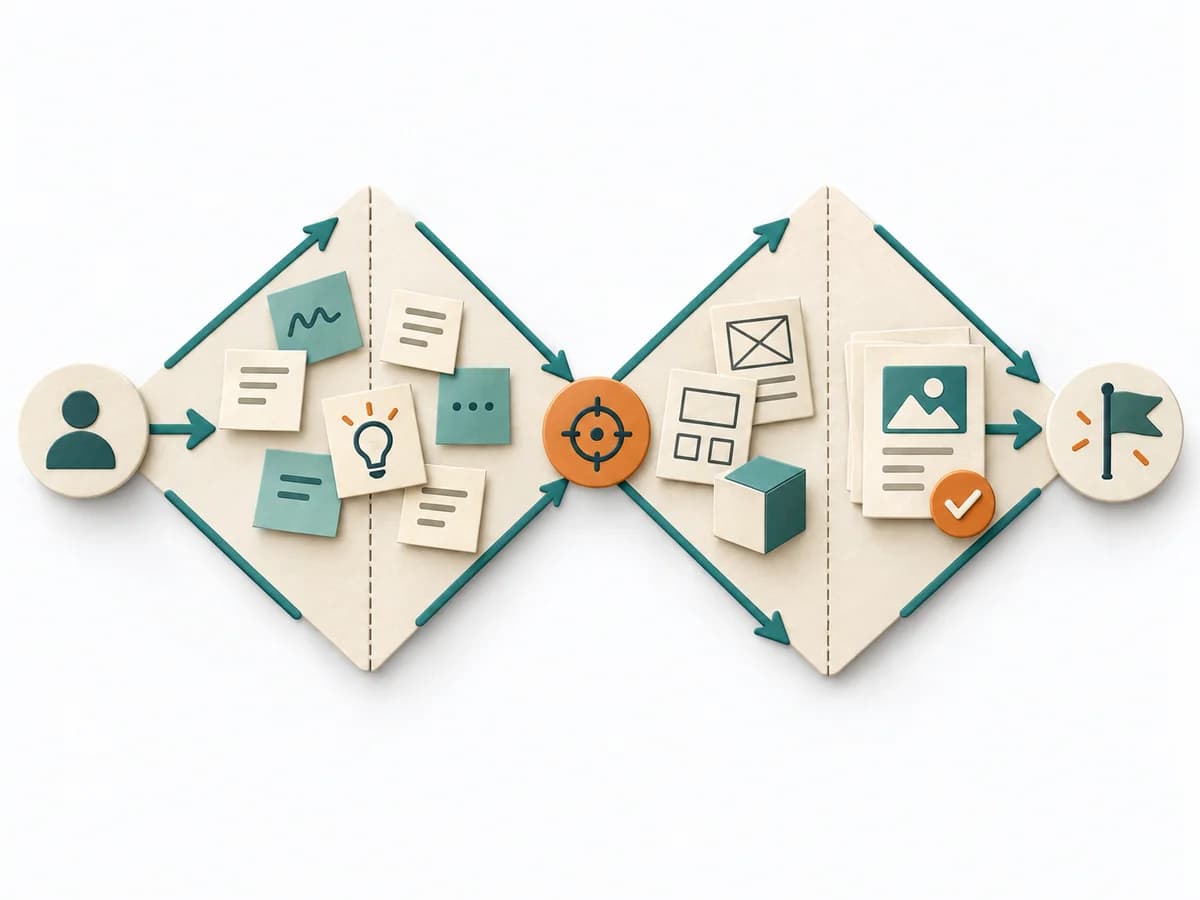 Innovation Double Diamond | 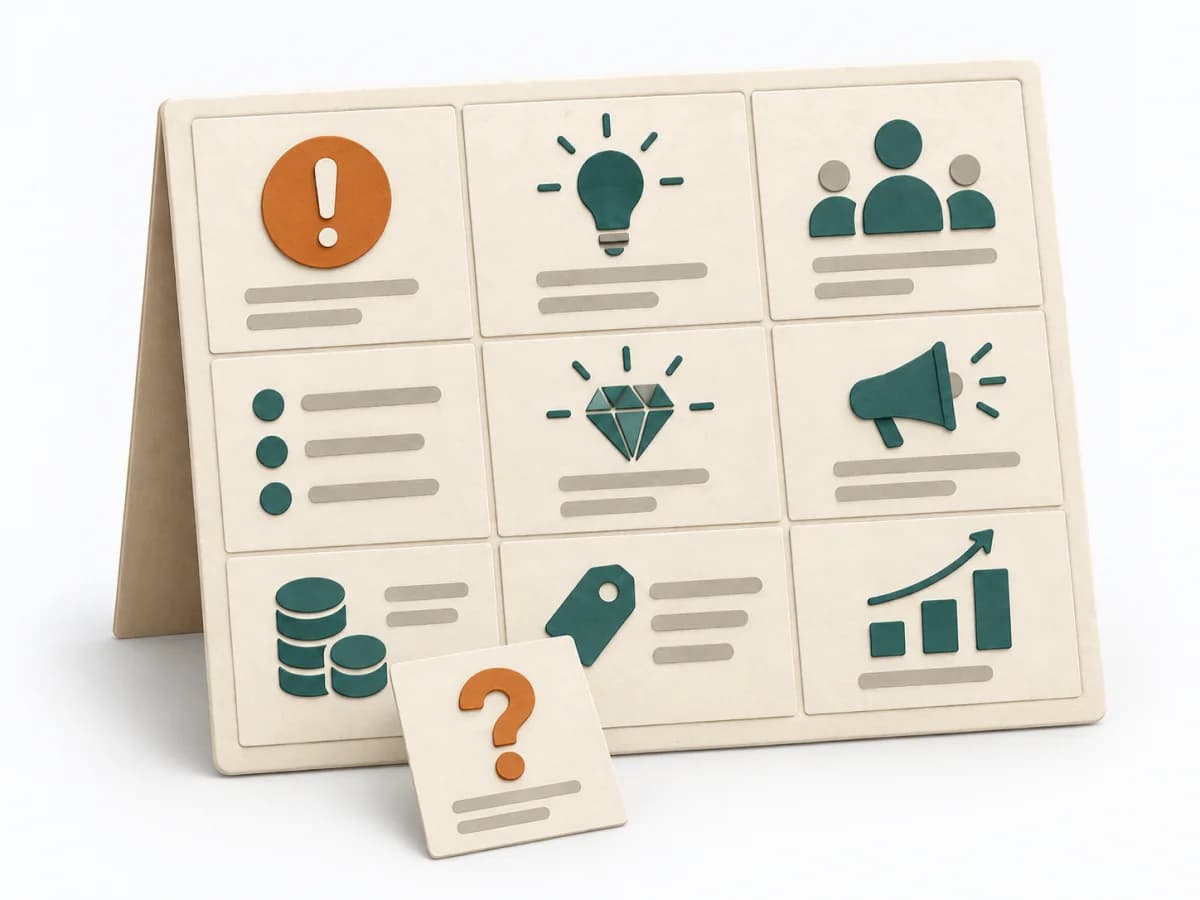 Product Strategy Lean Canvas |  Growth A/B Testing |  Product Discovery Assumption Mapping |
|---|---|---|---|---|
Purposedifferent | For complex problems with a fuzzy situation, the method cleanly separates search space and decision. It first creates breadth in understanding and then focus in elaboration. This brings open questions, problem definition, and solution path into a traceable movement. | When an early product bet still has too many open points, it brings target group, problem, and assumptions into a single view. It condenses the idea so core risks become nameable. | When two variants compete, discussions quickly decide by taste rather than effect. A/B Testing checks behavior under controlled conditions and separates real improvement from chance or expectation effects. | When assumptions still sit unordered in the room, it weighs uncertainty against leverage. It makes visible which hypotheses should be checked first. |
Complexitydifferent | Medium | Medium | High | Medium |
Timedifferent | Wochen bis Monate | 45-90 min | 1-4 Wochen | 45-60 min |
Participantsdifferent | 3-12 | 1-6 | 1-6 | 2-8 |
Formatdifferent | Workshop + async | Workshop + async | Async | Workshop + async |
Outputdifferent | Problem Statement, Solution Options, Prototypes, Deliverables per Phase | Lean Canvas, Core Assumptions, Experiment Backlog | Experiment results, Decision log, Learning summary | Assumption map, Test backlog, Risk ranking |
Tagsno overlap | ProcessDivergenceInnovation | StartupLeanAssumptionsBusiness model | ExperimentsGrowthAnalyticsValidation | AssumptionsRiskExperimentsValidation |