View methods side by side.
Choose up to four methods. Add them using the search and share the comparison by copying its link.
| Criterion |  Innovation Double Diamond | 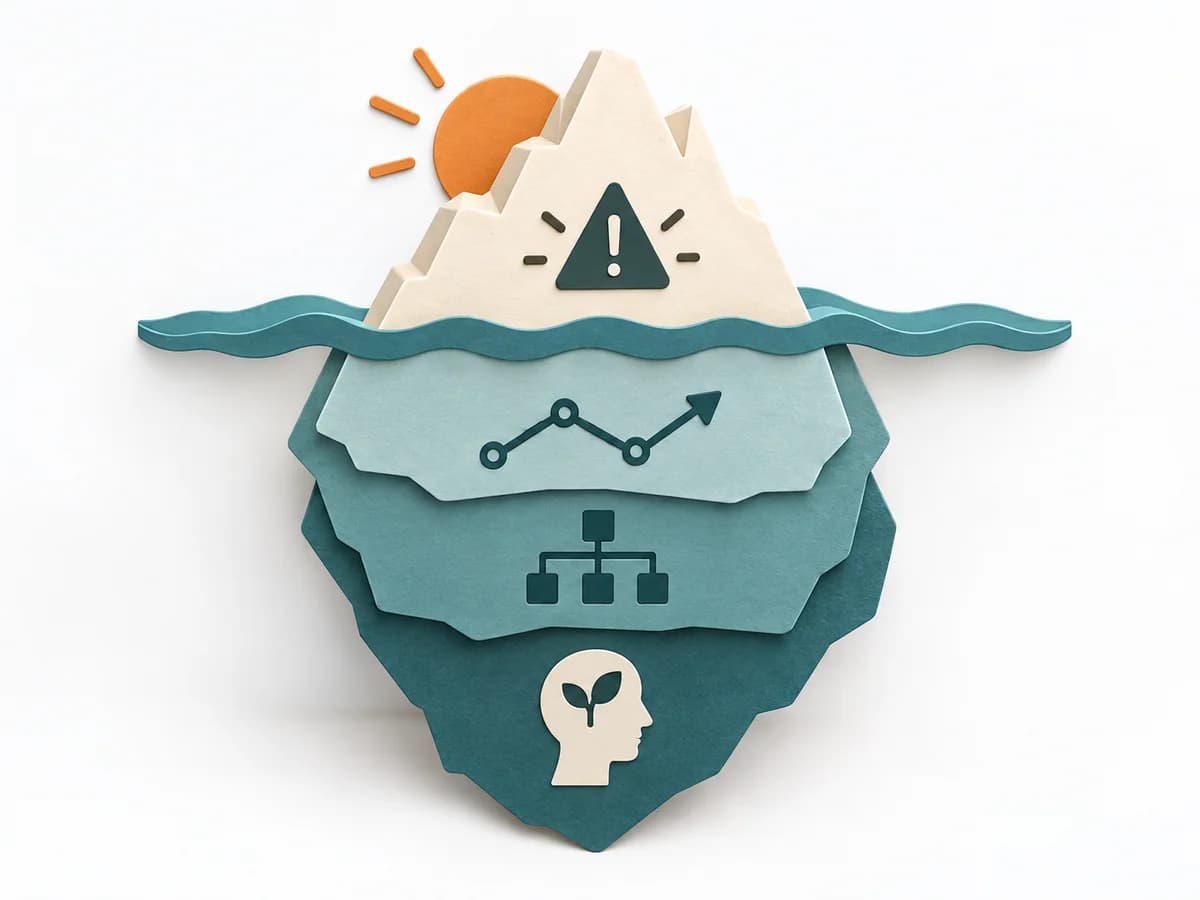 Systems Thinking Iceberg Model |  Operations Change Analysis | 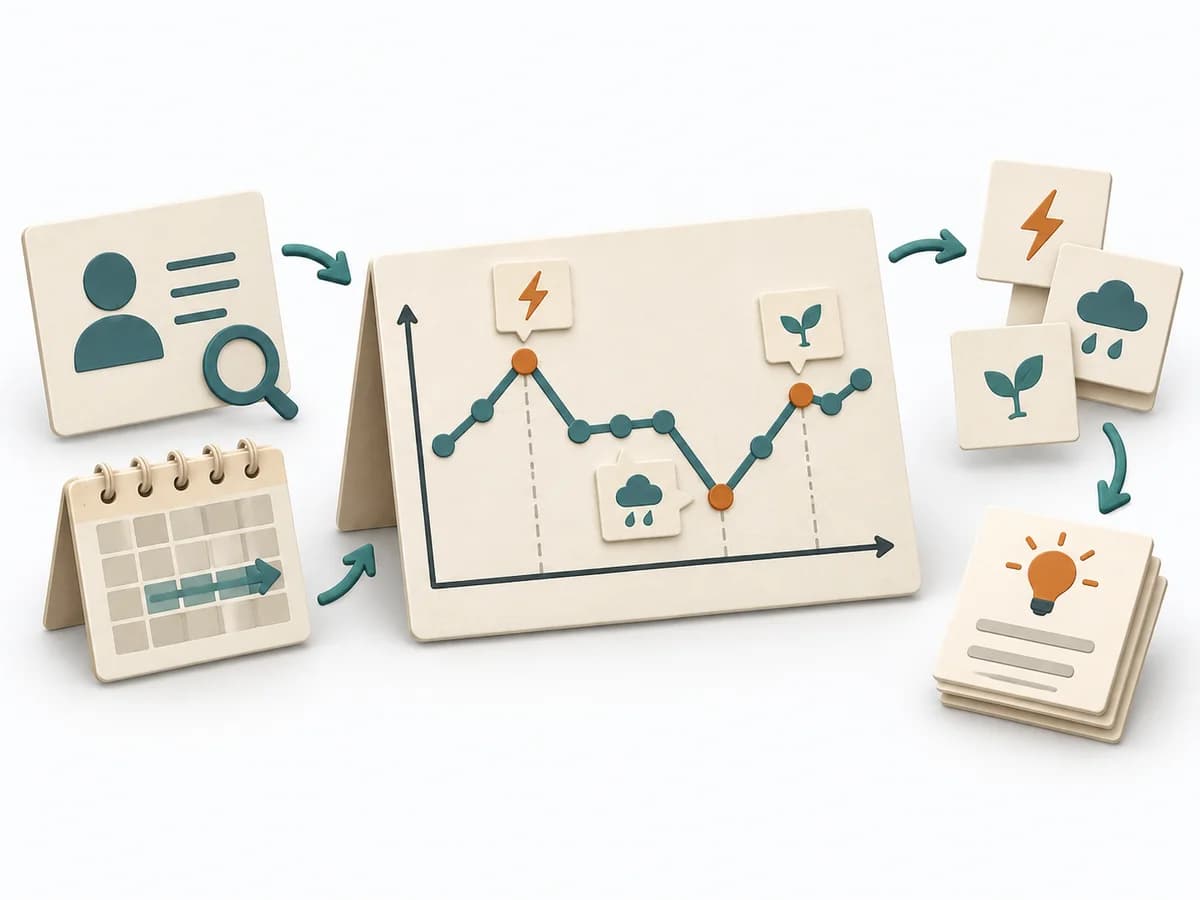 Systems Thinking Behavior Over Time Graph |
|---|---|---|---|---|
Purposedifferent | For complex problems with a fuzzy situation, the method cleanly separates search space and decision. It first creates breadth in understanding and then focus in elaboration. This brings open questions, problem definition, and solution path into a traceable movement. | The Iceberg Model separates visible events from patterns, structures, and mental models. This turns a single observation into a deeper understanding of why a problem keeps recurring. | For a deviation after a change, the method isolates the influence of the altered condition. It narrows down which differences are relevant and which are just accompanying noise. | A Behavior Over Time Graph shows how a metric or observation develops over time. The method makes trends, breaks, and recurring patterns visible that get lost in snapshots. |
Complexitydifferent | Medium | Low | Medium | Low |
Timedifferent | Wochen bis Monate | 30-60 min | 45-120 min | 20-45 min |
Participantsdifferent | 3-12 | 2-10 | 2-6 | 1-10 |
Formatsame | Workshop + async | Workshop + async | Workshop + async | Workshop + async |
Outputdifferent | Problem Statement, Solution Options, Prototypes, Deliverables per Phase | Iceberg Worksheet, Pattern Notes, Intervention Ideas | Change Matrix, Cause Hypotheses, Validation Questions, Action List | Behavior Over Time Graph, Trend Hypotheses, Key Events |
Tagsno overlap | ProcessDivergenceInnovation | Systems thinkingRoot causePatterns | ChangeRoot causeTroubleshootingComparison | Systems thinkingPatternsDynamics |