View methods side by side.
Choose up to four methods. Add them using the search and share the comparison by copying its link.
| Criterion |  Facilitation Dot Voting | 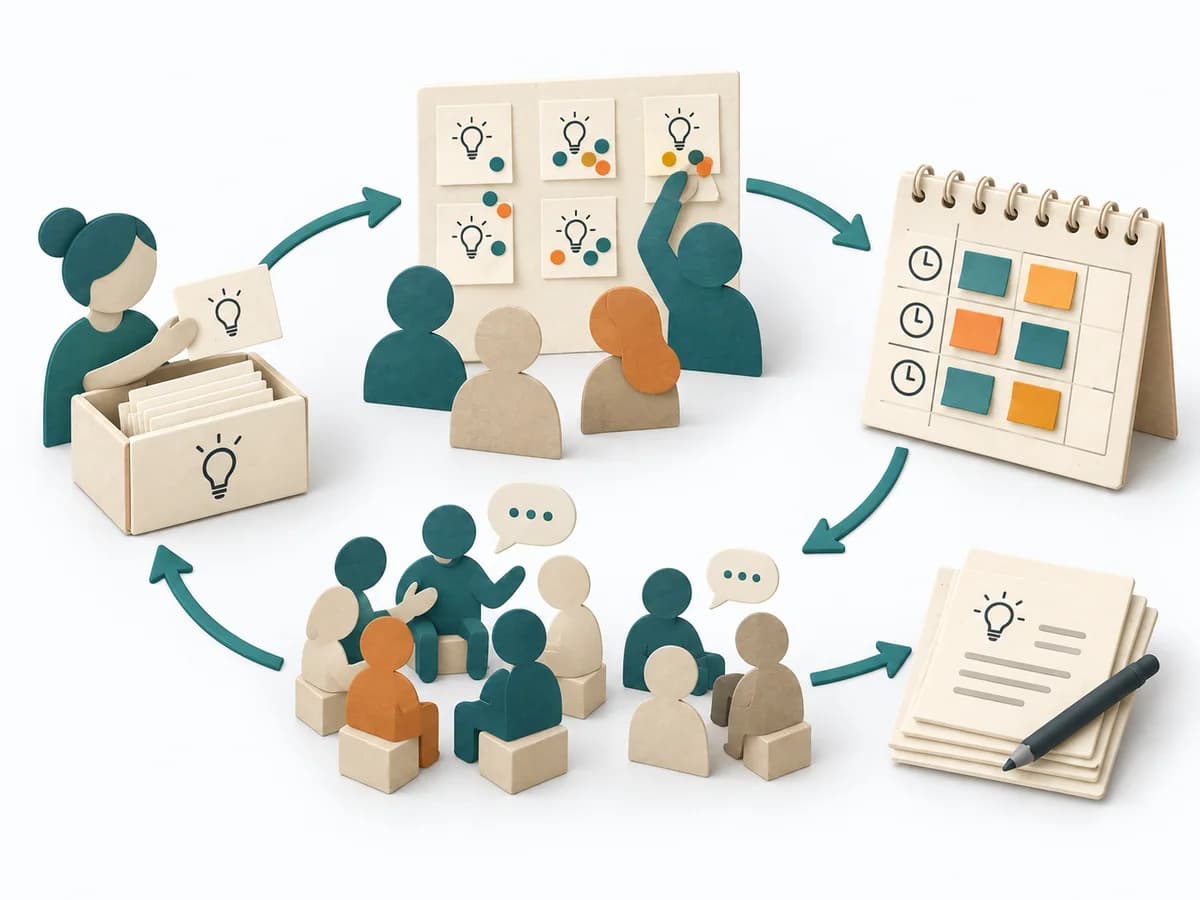 Facilitation Barcamp |  Decision Making Force Field Analysis |  Facilitation Consensus Workshop |
|---|---|---|---|---|
Purposedifferent | When a workshop has produced too many options and the group needs to condense quickly, dot voting makes preferences visible in a short time. It bundles individual votes into a solid signal for the next selection. | When many people can contribute knowledge and the flow should stay open, Barcamp provides a framework for self-organized sessions. The format channels energy without defining the content too narrowly in advance. | In change initiatives, supporting and restraining forces sit at the table at the same time. Force Field Analysis makes these tensions explicit and shows where change can be pushed forward by strengthening or relieving. | When a group needs a solid decision without outvoting individual factions, a Consensus Workshop creates a negotiable common ground. It makes agreement, reservations, and open tensions discussable at the same time. |
Complexitydifferent | Low | Medium | Low | Medium |
Timedifferent | 5-15 min | Halber Tag bis 2 Tage | 45-90 min | 1-3 h |
Participantsdifferent | 3-20 | 15-200 | 3-12 | 5-30 |
Formatsame | Workshop | Workshop | Workshop | Workshop |
Outputdifferent | Ranked list, Consensus signal, Shortlist | Session Board, Session Notes, Community Learnings | Force Field Map, Change Levers, Risk Notes | Consensus Clusters, Theme Titles, Priority Areas |
Tagsno overlap | FacilitationVotingConsensusPrioritization | FacilitationLarge groupLearning | ChangeDecisionStrategy | FacilitationConsensusWorkshopAlignment |