View methods side by side.
Choose up to four methods. Add them using the search and share the comparison by copying its link.
| Criterion |  Knowledge Modeling Domain Storytelling | 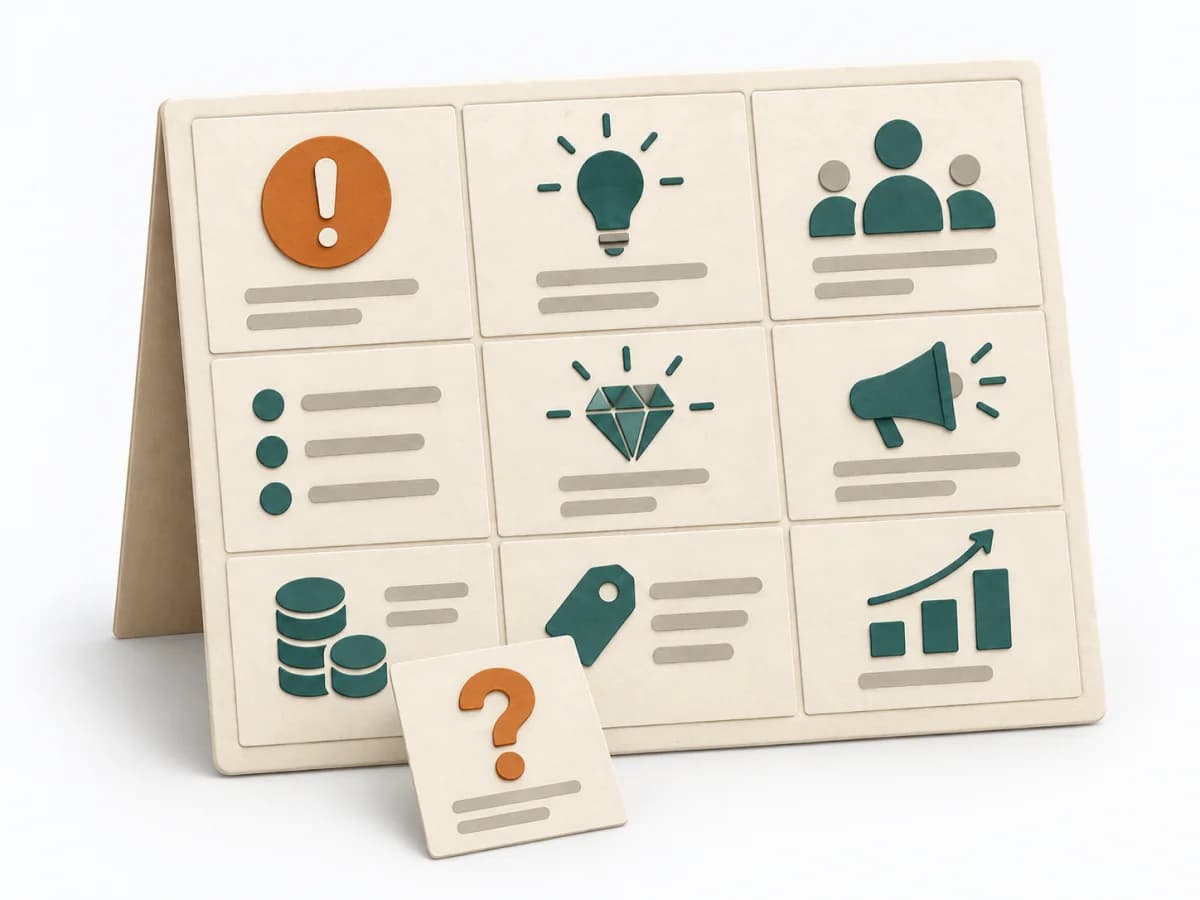 Product Strategy Lean Canvas | 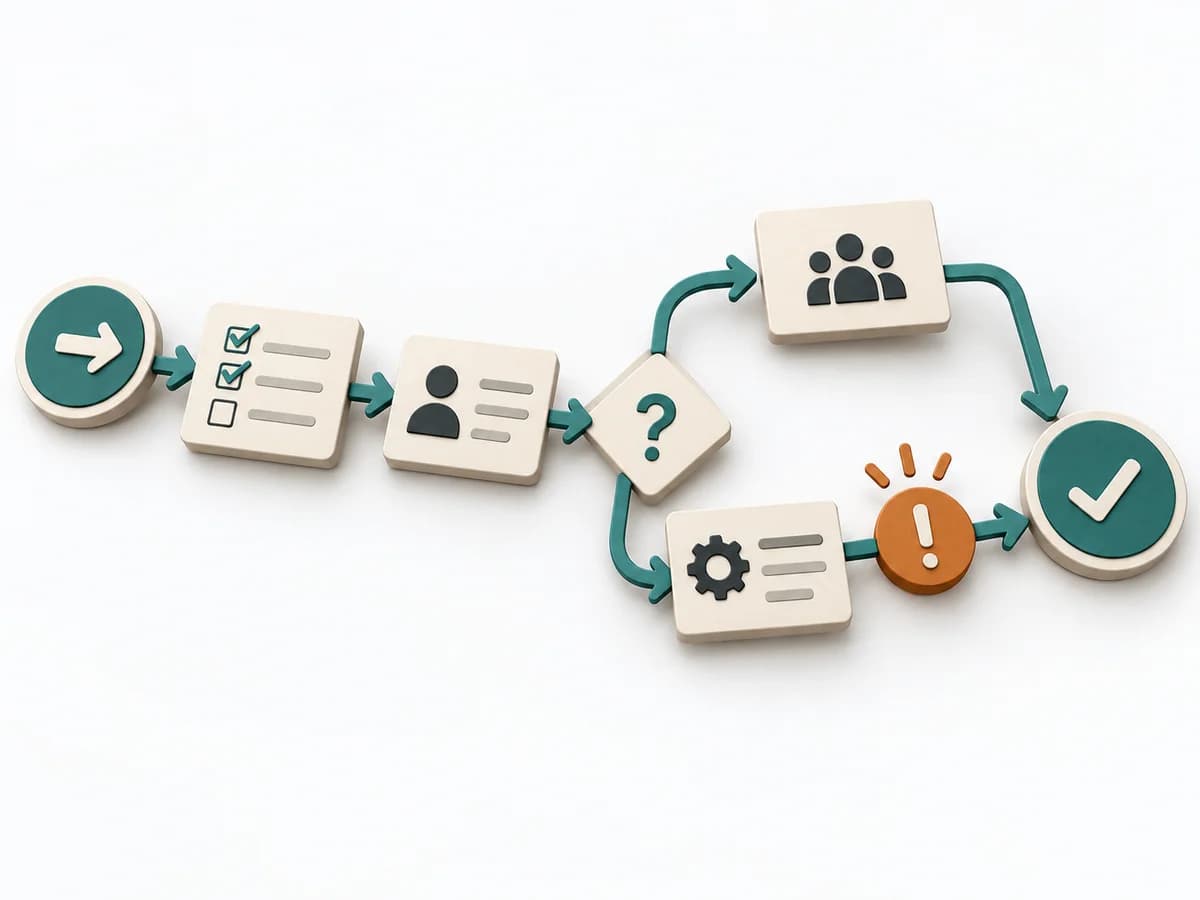 Operations Process Mapping |  Operations After-Action Review |
|---|---|---|---|---|
Purposedifferent | Domain Storytelling translates domain knowledge into a shared narrative of actors, objects, and workflows. It is especially useful when language, rules, and process understanding must be tightly connected. | When an early product bet still has too many open points, it brings target group, problem, and assumptions into a single view. It condenses the idea so core risks become nameable. | With a confusing workflow that has many handoffs, the method makes the actual process visible. It shows where work is passed on, delayed, or duplicated, so improvement targets the right spots. | After missions or project phases with unclear outcomes, the method makes visible what actually happened and what can be learned from it. It separates course, effect, and causes so experience turns into solid improvement. |
Complexitydifferent | Low | Medium | Medium | Low |
Timedifferent | 1-2 h | 45-90 min | 1-3 h | 20-45 min |
Participantsdifferent | 2-8 | 1-6 | 3-10 | 3-12 |
Formatdifferent | Workshop | Workshop + async | Workshop | Workshop + async |
Outputdifferent | Domain Story, Glossary Notes, Process Narrative | Lean Canvas, Core Assumptions, Experiment Backlog | Process Map, Handoff List, Improvement Backlog | Lessons learned, Action items, Event summary |
Tagsno overlap | KnowledgeDomain-Driven DesignProcess | StartupLeanAssumptionsBusiness model | ProcessOperationsImprovement | LearningOperationsImprovement |