View methods side by side.
Choose up to four methods. Add them using the search and share the comparison by copying its link.
| Criterion |  Knowledge Modeling Domain Storytelling | 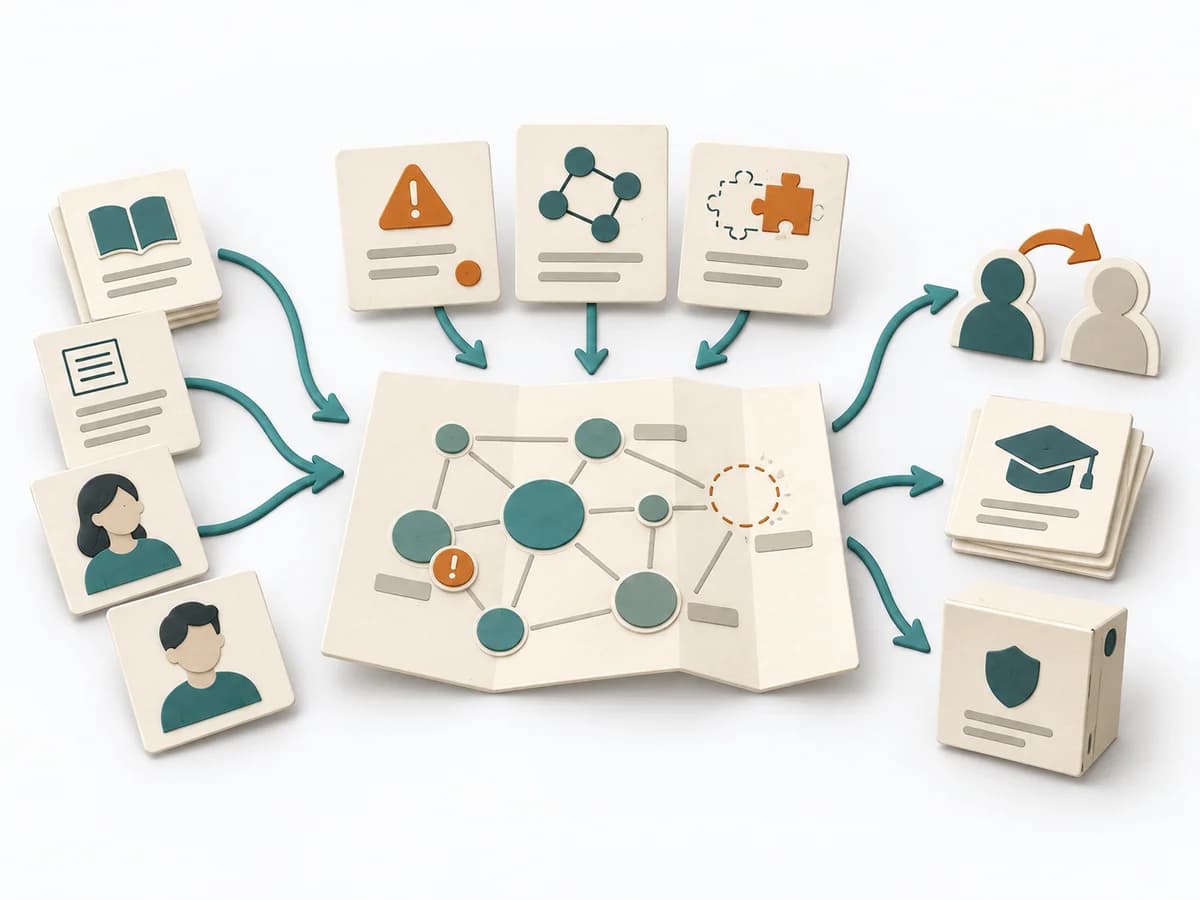 Knowledge Modeling Knowledge Mapping | 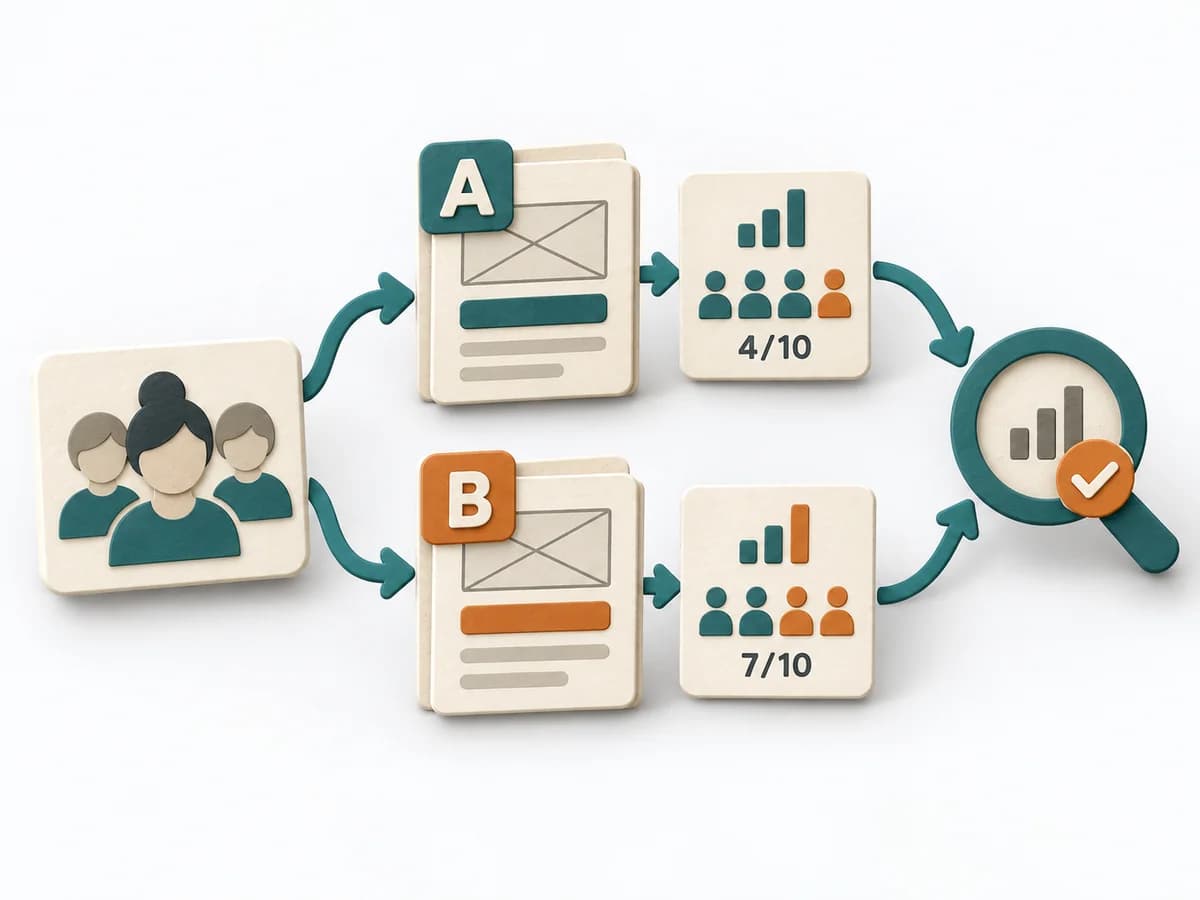 Growth A/B Testing |  Knowledge Modeling Concept Mapping |
|---|---|---|---|---|
Purposedifferent | Domain Storytelling translates domain knowledge into a shared narrative of actors, objects, and workflows. It is especially useful when language, rules, and process understanding must be tightly connected. | Knowledge Mapping makes knowledge, gaps, and transfer paths visible across a field. It fits when expertise should not just exist but also be findable and transferable. | When two variants compete, discussions quickly decide by taste rather than effect. A/B Testing checks behavior under controlled conditions and separates real improvement from chance or expectation effects. | Concept Mapping arranges terms and relationships in a network that makes subject-matter connections tangible. It fits when a topic needs to be understood structurally rather than linearly. |
Complexitydifferent | Low | Medium | High | Medium |
Timedifferent | 1-2 h | 1-3 h | 1-4 Wochen | 1-2 h |
Participantsdifferent | 2-8 | 3-12 | 1-6 | 1-8 |
Formatdifferent | Workshop | Workshop | Async | Workshop + async |
Outputdifferent | Domain Story, Glossary Notes, Process Narrative | Knowledge Map, Critical Knowledge Areas, Transfer Plan | Experiment results, Decision log, Learning summary | Concept Map, Relationship Labels, Knowledge Gaps |
Tagsno overlap | KnowledgeDomain-Driven DesignProcess | KnowledgeMappingRisk | ExperimentsGrowthAnalyticsValidation | KnowledgeConceptsMappingSensemaking |