View methods side by side.
Choose up to four methods. Add them using the search and share the comparison by copying its link.
| Criterion |  Knowledge Modeling Domain Storytelling | 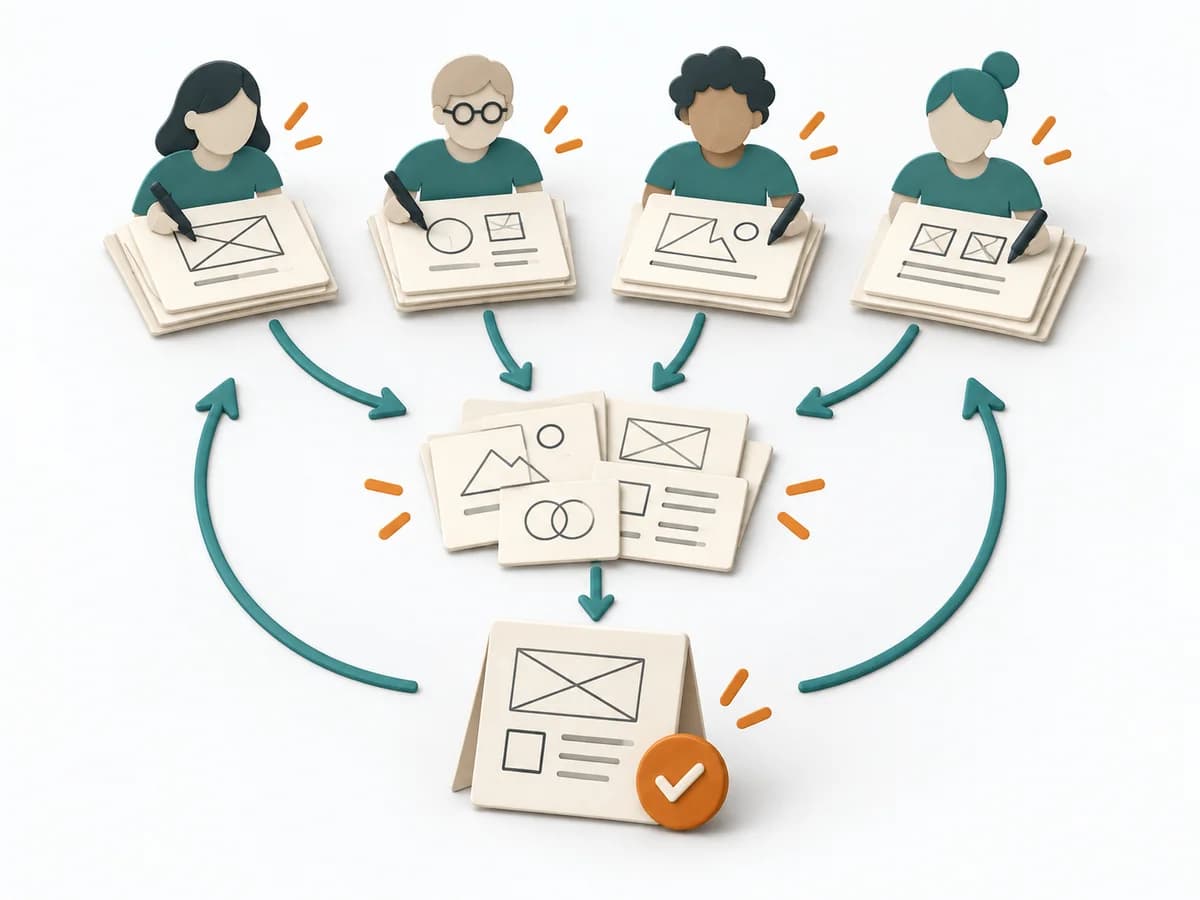 Innovation Design Charrette | 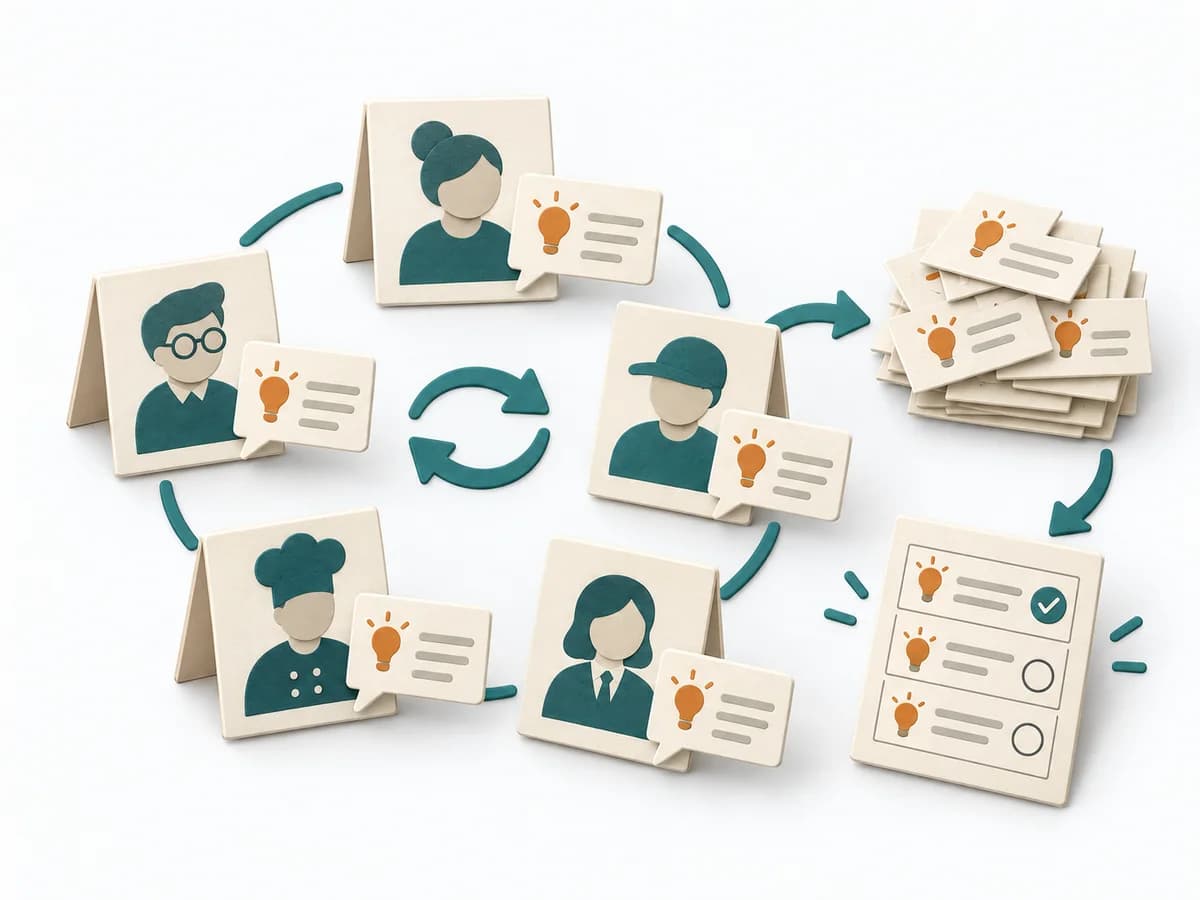 Innovation Rolestorming |  Innovation Reverse Brainstorming |
|---|---|---|---|---|
Purposedifferent | Domain Storytelling translates domain knowledge into a shared narrative of actors, objects, and workflows. It is especially useful when language, rules, and process understanding must be tightly connected. | In a tightly timed design process with many participants, the method pools several lines of thinking in a short time. It brings parallel design energy without letting the discussion tip into endless coordination. This quickly produces solid directions for architecture or space. | When a search for ideas stalls, switching roles helps people step outside their own perspective and activate new logics of action. The method reduces habit because contributions arise from a different stance. This brings unfamiliar, often fitting solution approaches into play. | For persistent errors or blockages, the method shifts the view to the opposite of the desired effect. It exposes the mechanics of failure and makes hidden causes easier to grasp. This makes improvement more concrete and the problem clearer. |
Complexitydifferent | Low | Medium | Low | Low |
Timedifferent | 1-2 h | Halber Tag bis mehrere Tage | 30-60 min | 30-60 min |
Participantsdifferent | 2-8 | 10-50 | 3-12 | 3-12 |
Formatsame | Workshop | Workshop | Workshop | Workshop |
Outputdifferent | Domain Story, Glossary Notes, Process Narrative | Sketches and Concepts, Consolidated Solution Sketch, Prioritized Direction | Rollenkarten, Ideenpool pro Rolle, Konsolidierte Shortlist | Reverse Ideas, Risk Themes, Solution Ideas |
Tagsno overlap | KnowledgeDomain-Driven DesignProcess | BrainstormingWorkshopCollaborationIdeation | BrainstormingIdeationCreativity | BrainstormingIdeationCreativityRisk |