View methods side by side.
Choose up to four methods. Add them using the search and share the comparison by copying its link.
| Criterion |  Knowledge Modeling Domain Storytelling | 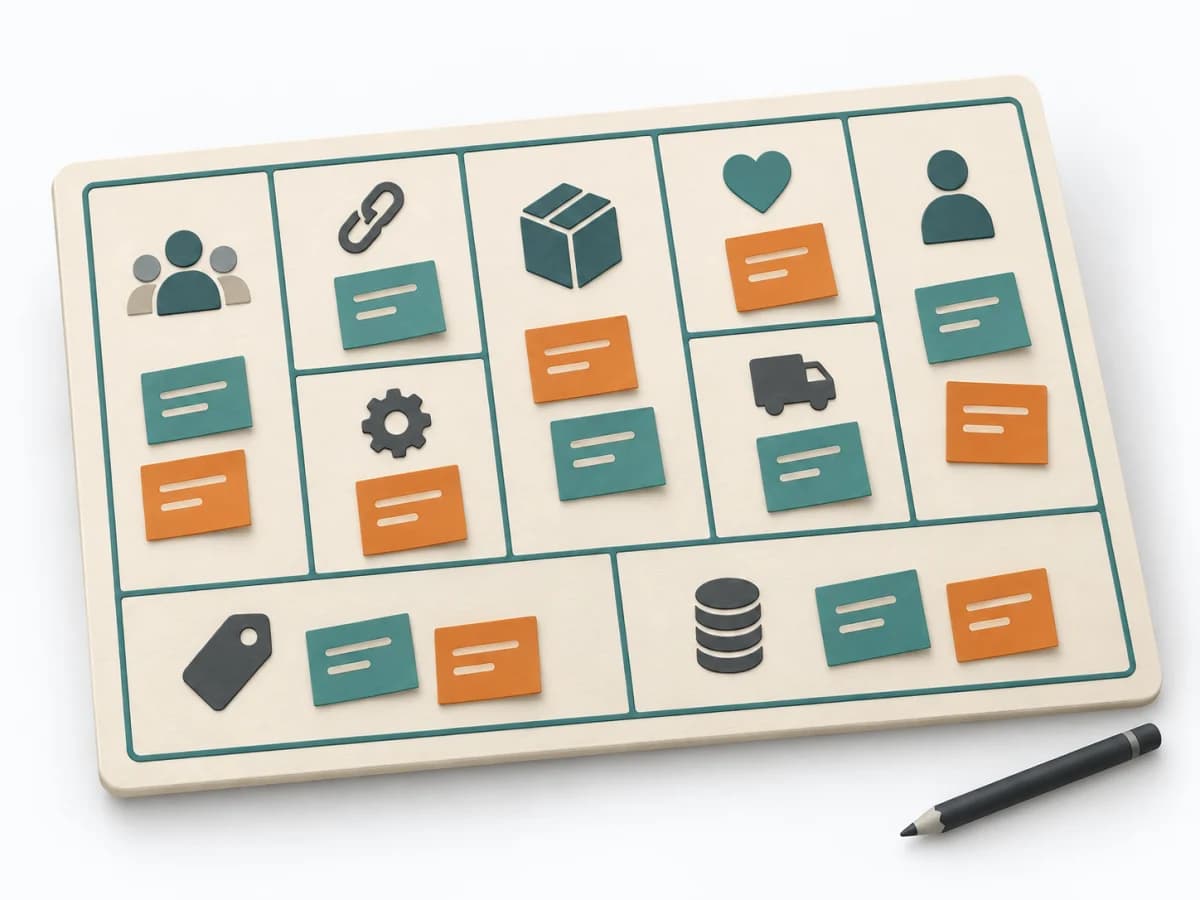 Business Strategy Business Model Canvas |  Innovation Double Diamond | 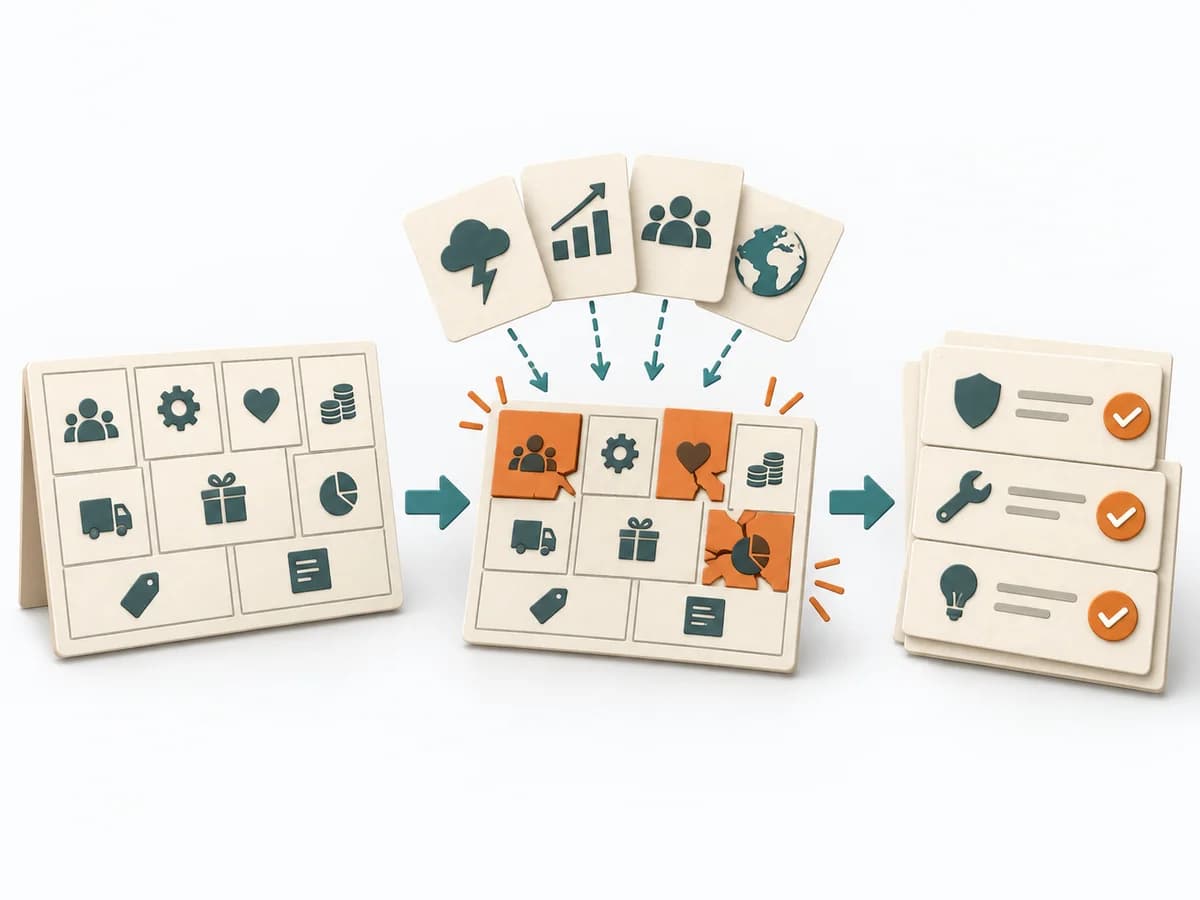 Business Strategy Business Model Stress Test |
|---|---|---|---|---|
Purposedifferent | Domain Storytelling translates domain knowledge into a shared narrative of actors, objects, and workflows. It is especially useful when language, rules, and process understanding must be tightly connected. | The Business Model Canvas condenses a business model to its key building blocks and assumptions. It makes variants quickly comparable and reveals gaps before validation or implementation begins. | For complex problems with a fuzzy situation, the method cleanly separates search space and decision. It first creates breadth in understanding and then focus in elaboration. This brings open questions, problem definition, and solution path into a traceable movement. | A Business Model Stress Test checks how well a business model holds up under pressure and headwinds. It compares strengths, risks, market logic, and courses of action. The result is captured as a stress-test report and action plan per scenario. |
Complexitydifferent | Low | Medium | Medium | High |
Timedifferent | 1-2 h | 1-2 h | Wochen bis Monate | Half day |
Participantsdifferent | 2-8 | 2-8 | 3-12 | 3-8 |
Formatdifferent | Workshop | Workshop + async | Workshop + async | Workshop |
Outputdifferent | Domain Story, Glossary Notes, Process Narrative | Business Model Canvas, Assumption List, Business Hypotheses | Problem Statement, Solution Options, Prototypes, Deliverables per Phase | Stress Test Report, Action Plan per Scenario |
Tagsno overlap | KnowledgeDomain-Driven DesignProcess | Business modelStrategyValueInnovation | ProcessDivergenceInnovation | StrategyBusiness modelRiskDiagnosis |