View methods side by side.
Choose up to four methods. Add them using the search and share the comparison by copying its link.
| Criterion | 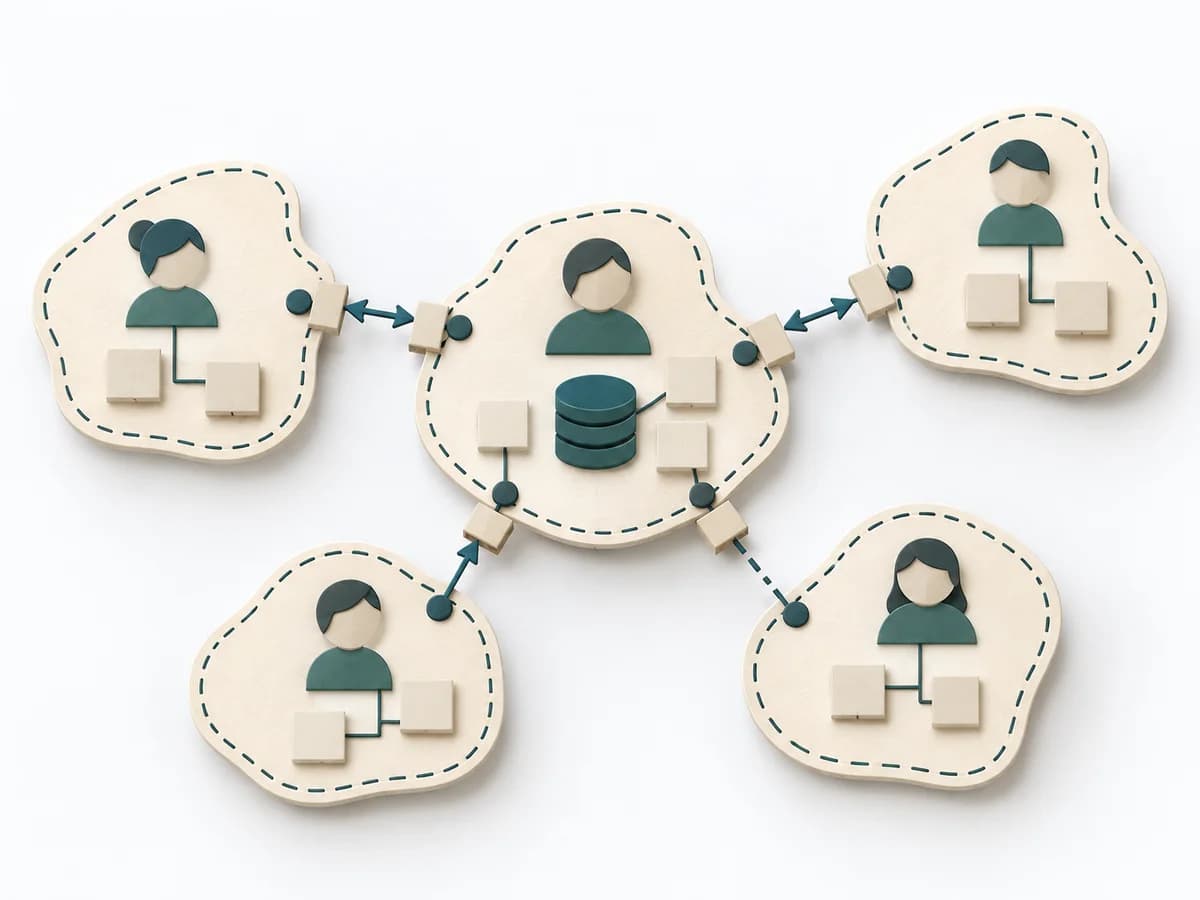 Domain Modeling Domain Context Map |  UX Design Lean UX Canvas |  Product Discovery Assumption Mapping | 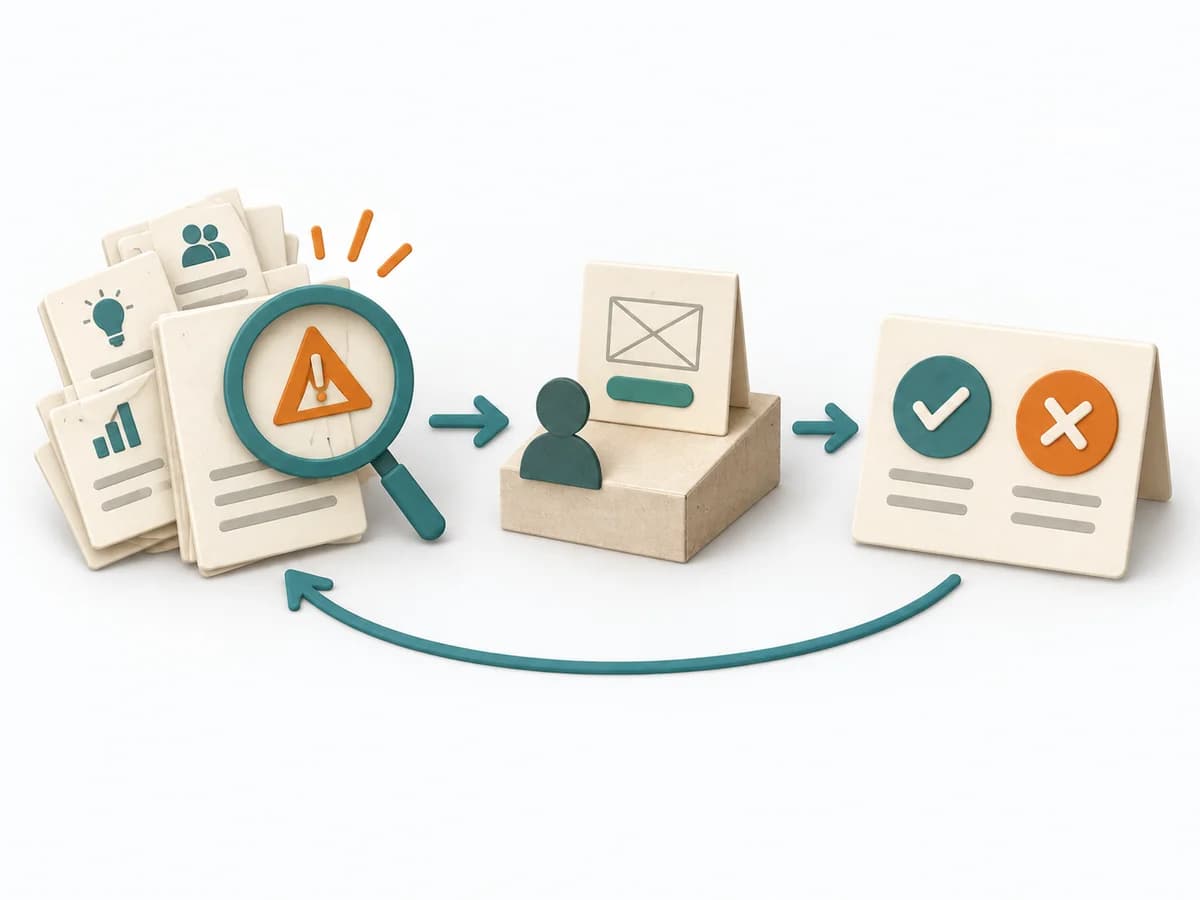 Product Discovery Riskiest Assumption Test |
|---|---|---|---|---|
Purposedifferent | When a domain model and its associated contexts need to be thought through together, it creates a shared overview. It connects the business view and organizational boundary into a readable whole. | The Lean UX Canvas helps clarify user behavior, touchpoints, and concept decisions. It makes assumptions and desired outcomes visible and captures the result as a completed canvas, hypothesis list, and first experiment. | When assumptions still sit unordered in the room, it weighs uncertainty against leverage. It makes visible which hypotheses should be checked first. | When an idea hinges on one critical unknown, it prioritizes testing that exact piece of uncertainty first. It separates problem, assumption, solution, and evidence. The result is captured as a prioritized list of assumptions, a test plan, and a result report. |
Complexitysame | Medium | Medium | Medium | Medium |
Timedifferent | 1-3 h | 2-3 h | 45-60 min | 1-2 Wochen pro Iteration |
Participantsdifferent | 3-10 | 3-8 | 2-8 | 2-6 |
Formatdifferent | Workshop | Workshop + async | Workshop + async | Workshop + async |
Outputdifferent | Domain Context Map, Boundary Notes, Ownership Map | Completed Lean UX Canvas, Hypothesis list, First experiment | Assumption map, Test backlog, Risk ranking | Prioritized Assumption List, Test Plan, Results Report |
Tagsno overlap | Domain-Driven DesignContextBoundaries | CanvasHypothesisOutcomesDiscovery | AssumptionsRiskExperimentsValidation | ExperimentsValidationDiscoveryAssumptions |