View methods side by side.
Choose up to four methods. Add them using the search and share the comparison by copying its link.
| Criterion | 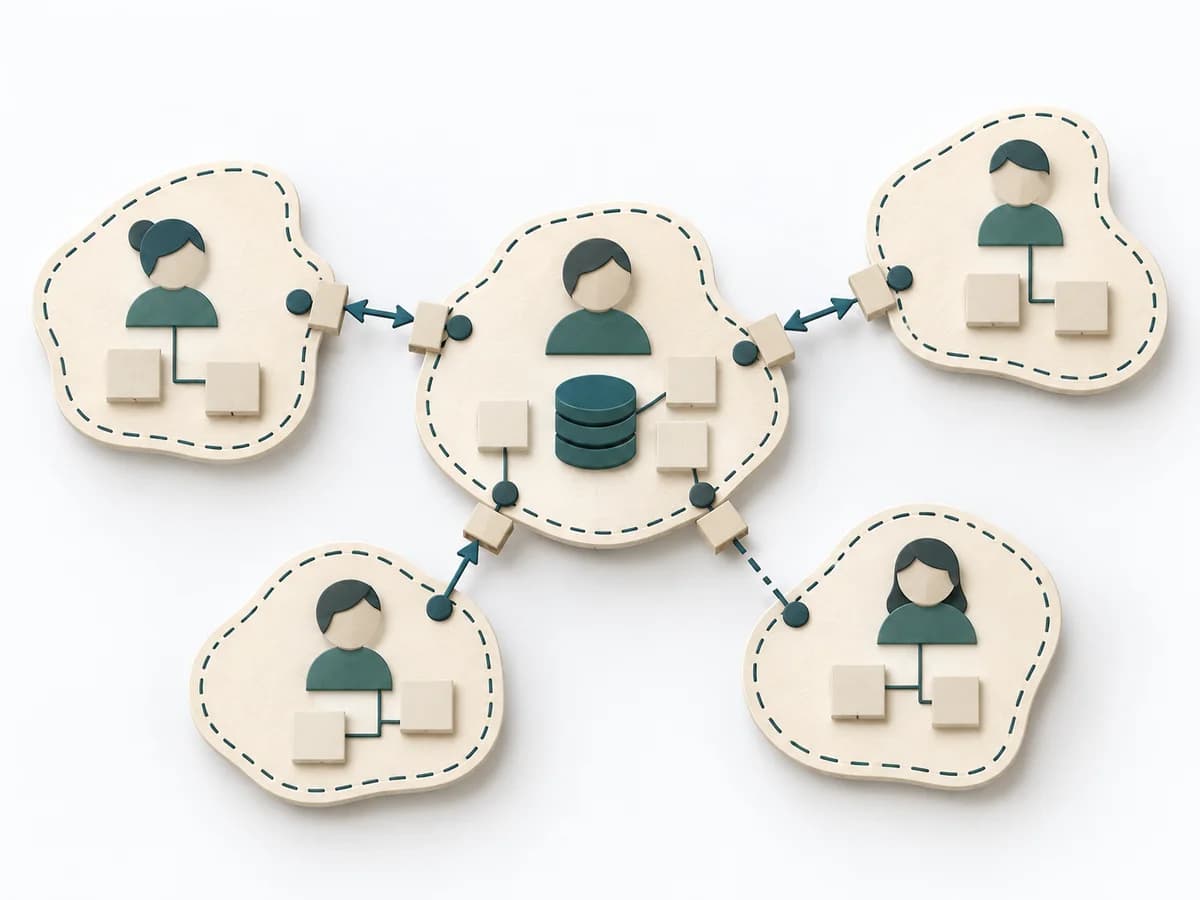 Domain Modeling Domain Context Map |  Growth Hooked Model |  Growth Funnel Analysis |  Domain Modeling Bounded Context Canvas |
|---|---|---|---|---|
Purposedifferent | When a domain model and its associated contexts need to be thought through together, it creates a shared overview. It connects the business view and organizational boundary into a readable whole. | The Hooked Model helps clarify engagement loops, user behavior, and experiments. It makes repeat behavior measurable and captures the result as a hooked loop, trigger map, and reward design. | When many visitors or users drop off along the way, the reason behind the number often stays hidden. Funnel Analysis exposes these transitions and makes visible exactly where the path collapses. | When a business context is still loosely outlined, it shapes language, responsibility, and integration space. It clarifies what belongs together and where a boundary needs to hold. |
Complexitysame | Medium | Medium | Medium | Medium |
Timedifferent | 1-3 h | Multiple workshops over several weeks | 1-3 h | 1-3 h |
Participantsdifferent | 3-10 | 2-8 | 1-5 | 3-8 |
Formatdifferent | Workshop | Workshop + async | Async | Workshop + async |
Outputdifferent | Domain Context Map, Boundary Notes, Ownership Map | Hooked loop, Trigger map, Reward design, Ethics check | Funnel report, Drop-off analysis, Optimization hypotheses | Context Canvas, Glossary, Integration Notes |
Tagsno overlap | Domain-Driven DesignContextBoundaries | GrowthBehaviorRetention | AnalyticsConversionGrowth | Domain-Driven DesignBoundariesModeling |