View methods side by side.
Choose up to four methods. Add them using the search and share the comparison by copying its link.
| Criterion |  Domain Modeling Domain Context Map | 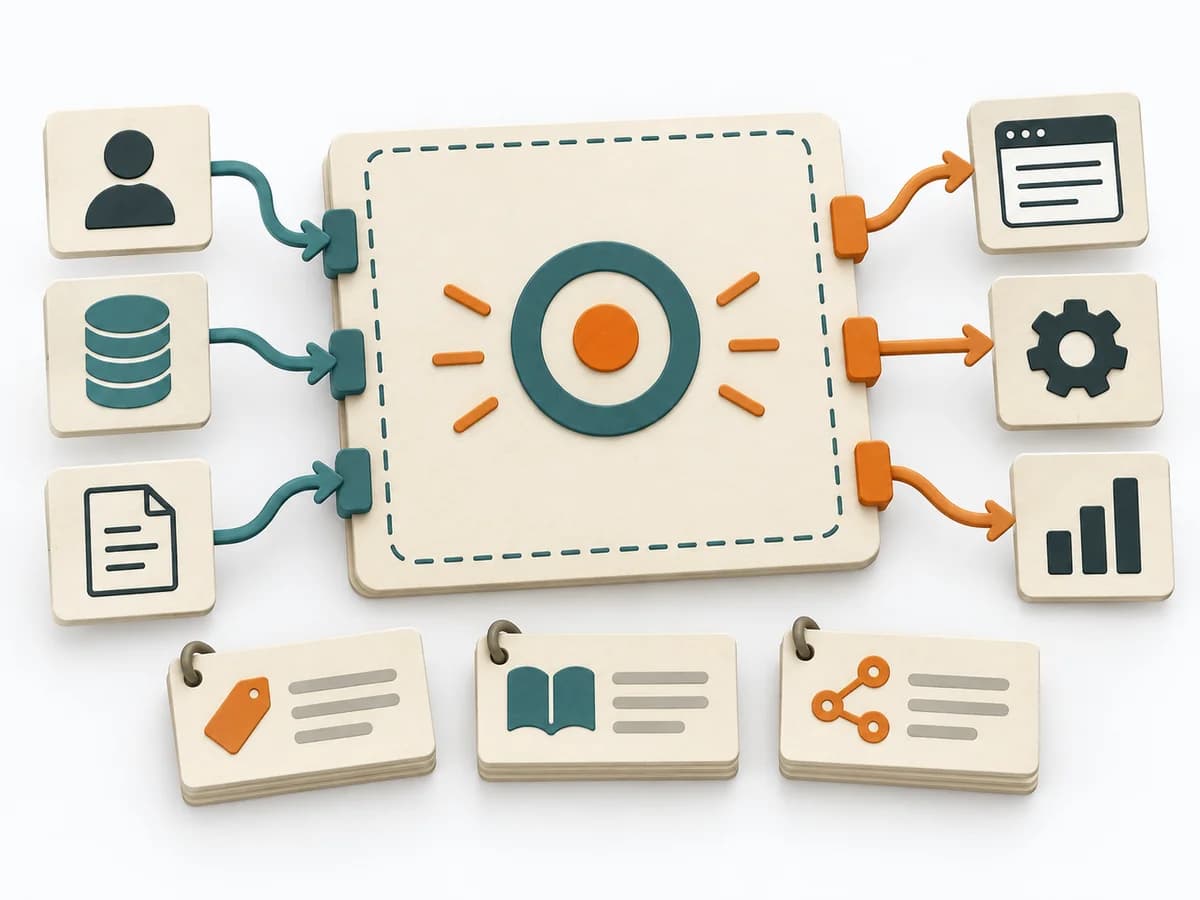 Domain Modeling Bounded Context Canvas |  Agile ROAM Board |  Domain Modeling Context Map |
|---|---|---|---|---|
Purposedifferent | When a domain model and its associated contexts need to be thought through together, it creates a shared overview. It connects the business view and organizational boundary into a readable whole. | When a business context is still loosely outlined, it shapes language, responsibility, and integration space. It clarifies what belongs together and where a boundary needs to hold. | When work needs to move between different states or columns, it makes that movement and its handoffs legible. It sorts work by value, risk, and delivery ability. The result is captured as a ROAM Board and an Owner List. | When several contexts need to talk to each other, it makes their relationships and dependencies legible. It helps sort integration pressure and responsibilities across system boundaries. |
Complexitydifferent | Medium | Medium | Low | Medium |
Timedifferent | 1-3 h | 1-3 h | 20-40 min initial, dann laufend | 1-3 h |
Participantsdifferent | 3-10 | 3-8 | 3-15 | 2-8 |
Formatdifferent | Workshop | Workshop + async | Workshop + async | Workshop + async |
Outputdifferent | Domain Context Map, Boundary Notes, Ownership Map | Context Canvas, Glossary, Integration Notes | ROAM Board, Owner List | Context Map, Integration Patterns, Boundary Notes |
Tagsno overlap | Domain-Driven DesignContextBoundaries | Domain-Driven DesignBoundariesModeling | RiskAgileTrackingAlignment | Domain-Driven DesignBoundariesStrategy |