View methods side by side.
Choose up to four methods. Add them using the search and share the comparison by copying its link.
| Criterion | 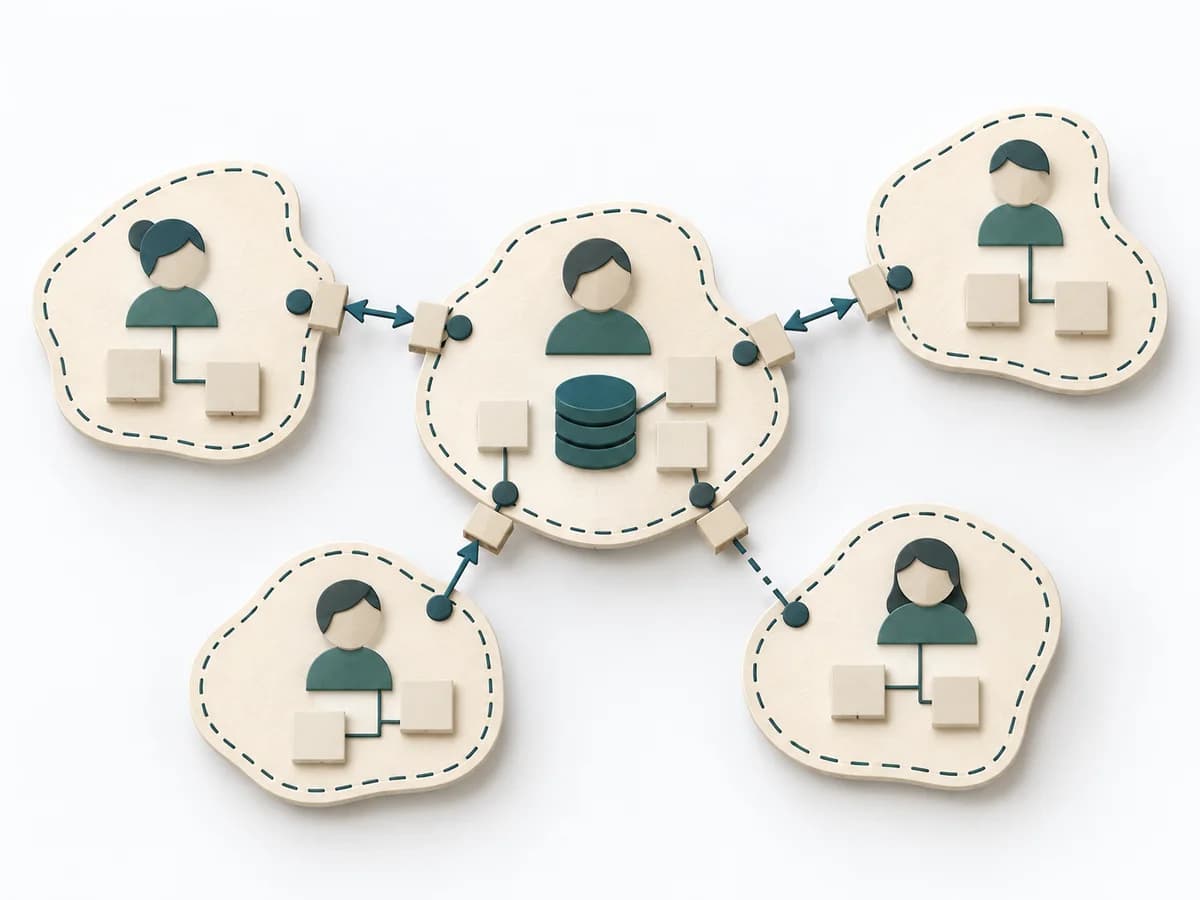 Domain Modeling Domain Context Map |  Domain Modeling Bounded Context Canvas |  Architecture Architecture Decision Record |  Domain Modeling Context Map |
|---|---|---|---|---|
Purposedifferent | When a domain model and its associated contexts need to be thought through together, it creates a shared overview. It connects the business view and organizational boundary into a readable whole. | When a business context is still loosely outlined, it shapes language, responsibility, and integration space. It clarifies what belongs together and where a boundary needs to hold. | An ADR permanently records an architecture decision with context, trade-offs, and consequence. It creates continuity for later changes because the decision path stays traceable. | When several contexts need to talk to each other, it makes their relationships and dependencies legible. It helps sort integration pressure and responsibilities across system boundaries. |
Complexitydifferent | Medium | Medium | Low | Medium |
Timedifferent | 1-3 h | 1-3 h | 15-45 min | 1-3 h |
Participantsdifferent | 3-10 | 3-8 | 1-3 | 2-8 |
Formatdifferent | Workshop | Workshop + async | Async | Workshop + async |
Outputdifferent | Domain Context Map, Boundary Notes, Ownership Map | Context Canvas, Glossary, Integration Notes | ADR File, Decision Log, Rationale | Context Map, Integration Patterns, Boundary Notes |
Tagsno overlap | Domain-Driven DesignContextBoundaries | Domain-Driven DesignBoundariesModeling | ArchitectureRationaleDocumentationGovernance | Domain-Driven DesignBoundariesStrategy |