View methods side by side.
Choose up to four methods. Add them using the search and share the comparison by copying its link.
| Criterion | 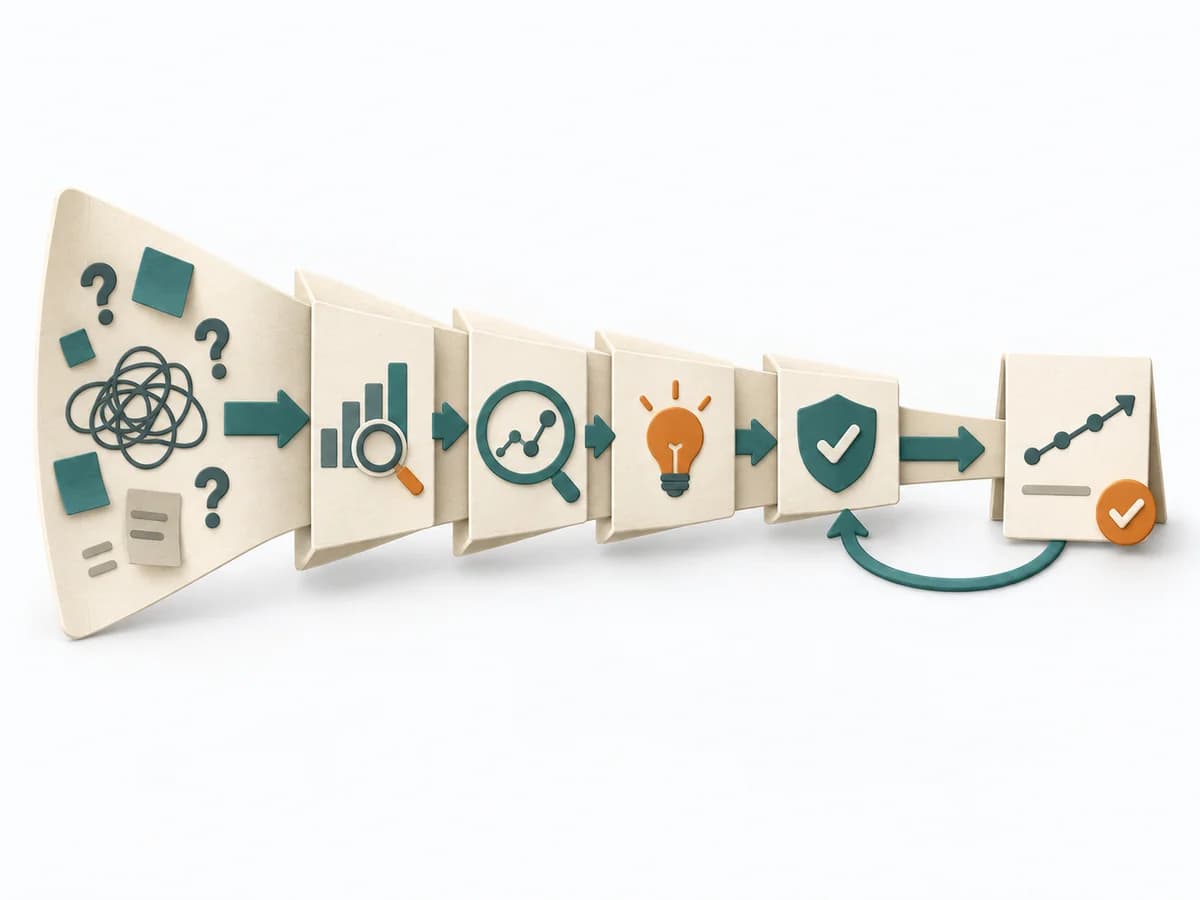 Operations DMAIC |  Product Strategy Product Vision Board |  Facilitation Power Interest Grid |  Facilitation Stakeholder Mapping |
|---|---|---|---|---|
Purposedifferent | For a process problem with fluctuating performance, the method brings analysis and improvement into a disciplined sequence. It creates a framework in which numbers, causes, and control come together. | When a product needs a shared direction, it connects target audience, benefit, and business picture in a clear vision. It makes the envisioned future legible for the team. | When many stakeholders compete for attention at once, the Power Interest Grid sorts them by influence and stake. It turns individual contributions into a visible selection. The result is captured as a Power Interest Grid and a stakeholder-specific strategy. | When an initiative depends on many people, interests, and power dynamics, Stakeholder Mapping systematically orders the environment. It shows who influences, who is affected, and where relationship management or safeguarding matters first. |
Complexitydifferent | High | Low | Low | Low |
Timedifferent | 2-12 Wochen | 1-2 h | 30-60 min | 60–90 min |
Participantsdifferent | 3-10 | 2-8 | 2-8 | 2-8 |
Formatdifferent | Workshop + async | Workshop + async | Workshop | Workshop + async |
Outputdifferent | Project Charter, Measurement Plan, Cause Analysis, Control Plan | Product Vision Board, Vision Statement, Assumptions and Validation Questions | Power Interest Grid, Strategy per Stakeholder | Stakeholder Map, Engagement Plan, Risk Notes |
Tagsno overlap | Continuous improvementQualityProcess improvement | VisionCanvasStrategyAlignment | StakeholdersFacilitationAlignmentPlanning | StakeholdersAlignmentFacilitationChange |