View methods side by side.
Choose up to four methods. Add them using the search and share the comparison by copying its link.
| Criterion |  Operations DMAIC |  Decision Making Delphi Method |  Operations 5 Whys | 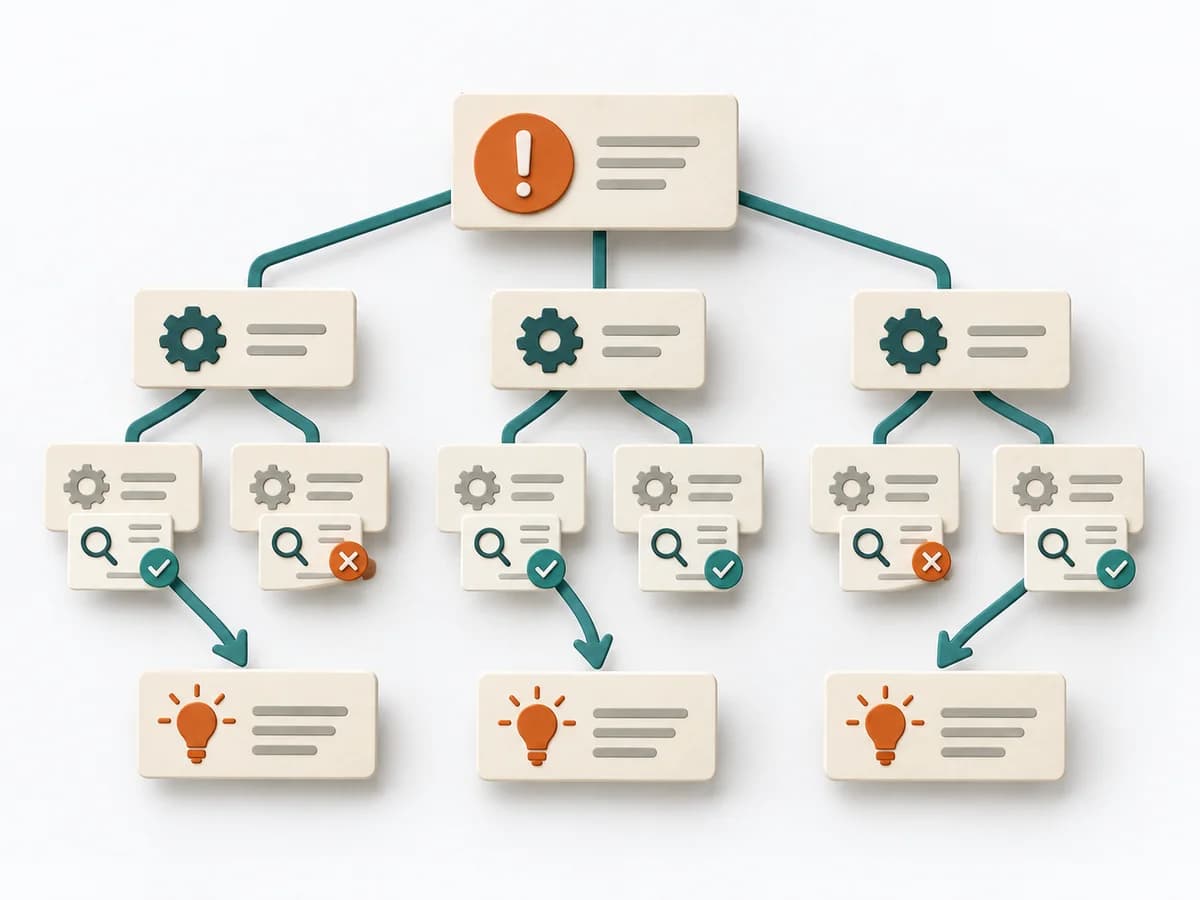 Operations Root Cause Tree Analysis |
|---|---|---|---|---|
Purposedifferent | For a process problem with fluctuating performance, the method brings analysis and improvement into a disciplined sequence. It creates a framework in which numbers, causes, and control come together. | When knowledge is distributed and direct dominance should be avoided, groups quickly fall under the sway of their opinion leaders. The Delphi Method gathers assessments iteratively and gradually brings expert judgments closer together. | For a single, hard-to-explain deviation, the method exposes the causal chain behind the visible symptom. It keeps the cause open until a controllable condition emerges instead of a mere description. | For a problem with several suspected causes, the method builds a causal structure instead of a mere list. It makes visible how causes connect and where the strongest points of leverage lie. |
Complexitydifferent | High | High | Low | Medium |
Timedifferent | 2-12 Wochen | 1-4 Wochen | 15-30 min | 1-3 h |
Participantsdifferent | 3-10 | 6-30 Experten | 2-6 | 2-8 |
Formatdifferent | Workshop + async | Async | Workshop | Workshop |
Outputdifferent | Project Charter, Measurement Plan, Cause Analysis, Control Plan | Expert Forecast, Consensus Range, Assumption Notes | Root cause notes, Countermeasures | Cause Tree, Evidence Notes, Countermeasures |
Tagsno overlap | Continuous improvementQualityProcess improvement | ForecastingExpertsDecisionStrategy | Root causeIncidentLeanProblem solving | Root causeTreeIncidentQuality |