View methods side by side.
Choose up to four methods. Add them using the search and share the comparison by copying its link.
| Criterion |  Operations DMAIC |  Facilitation Consensus Workshop |  Operations 5 Whys | 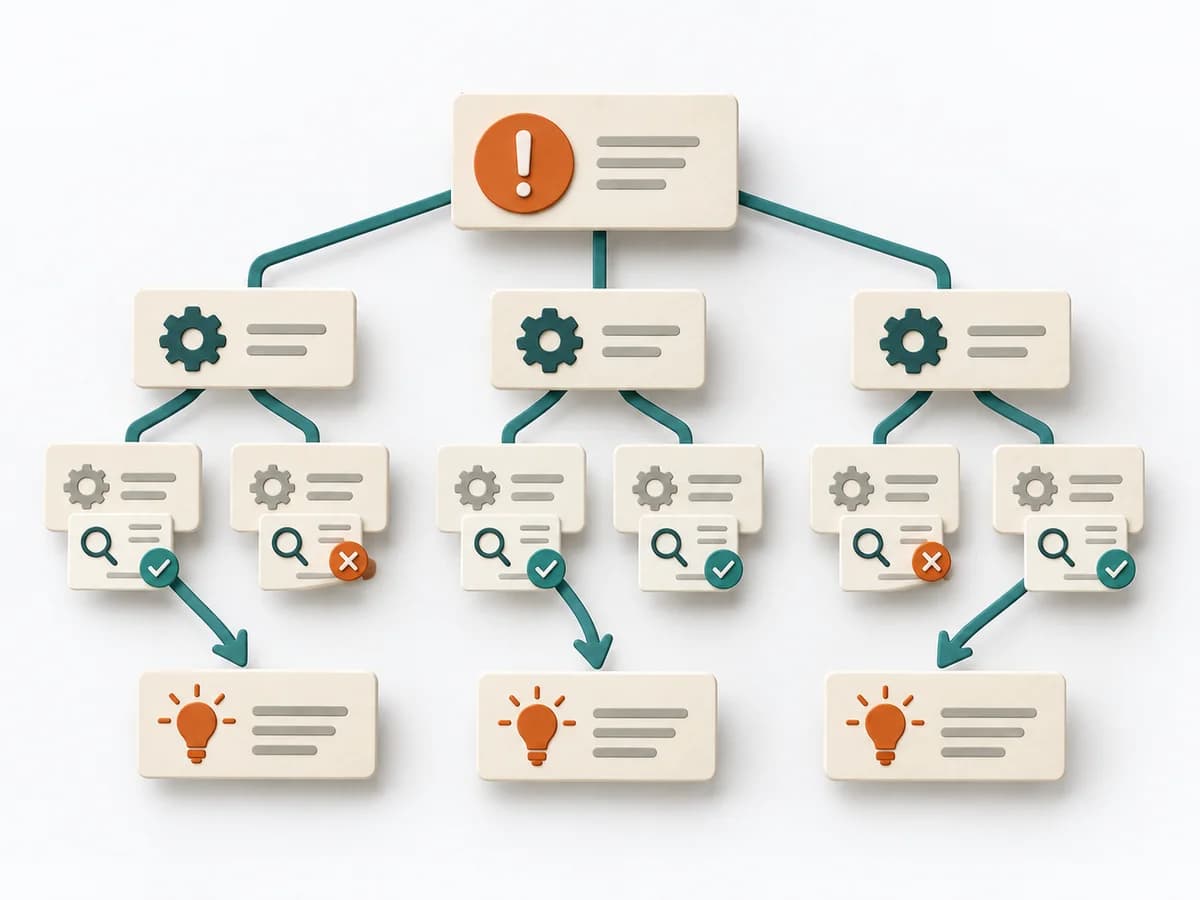 Operations Root Cause Tree Analysis |
|---|---|---|---|---|
Purposedifferent | For a process problem with fluctuating performance, the method brings analysis and improvement into a disciplined sequence. It creates a framework in which numbers, causes, and control come together. | When a group needs a solid decision without outvoting individual factions, a Consensus Workshop creates a negotiable common ground. It makes agreement, reservations, and open tensions discussable at the same time. | For a single, hard-to-explain deviation, the method exposes the causal chain behind the visible symptom. It keeps the cause open until a controllable condition emerges instead of a mere description. | For a problem with several suspected causes, the method builds a causal structure instead of a mere list. It makes visible how causes connect and where the strongest points of leverage lie. |
Complexitydifferent | High | Medium | Low | Medium |
Timedifferent | 2-12 Wochen | 1-3 h | 15-30 min | 1-3 h |
Participantsdifferent | 3-10 | 5-30 | 2-6 | 2-8 |
Formatdifferent | Workshop + async | Workshop | Workshop | Workshop |
Outputdifferent | Project Charter, Measurement Plan, Cause Analysis, Control Plan | Consensus Clusters, Theme Titles, Priority Areas | Root cause notes, Countermeasures | Cause Tree, Evidence Notes, Countermeasures |
Tagsno overlap | Continuous improvementQualityProcess improvement | FacilitationConsensusWorkshopAlignment | Root causeIncidentLeanProblem solving | Root causeTreeIncidentQuality |