View methods side by side.
Choose up to four methods. Add them using the search and share the comparison by copying its link.
| Criterion |  Operations DMAIC |  Domain Modeling Bounded Context Canvas |  Operations Barrier Analysis | 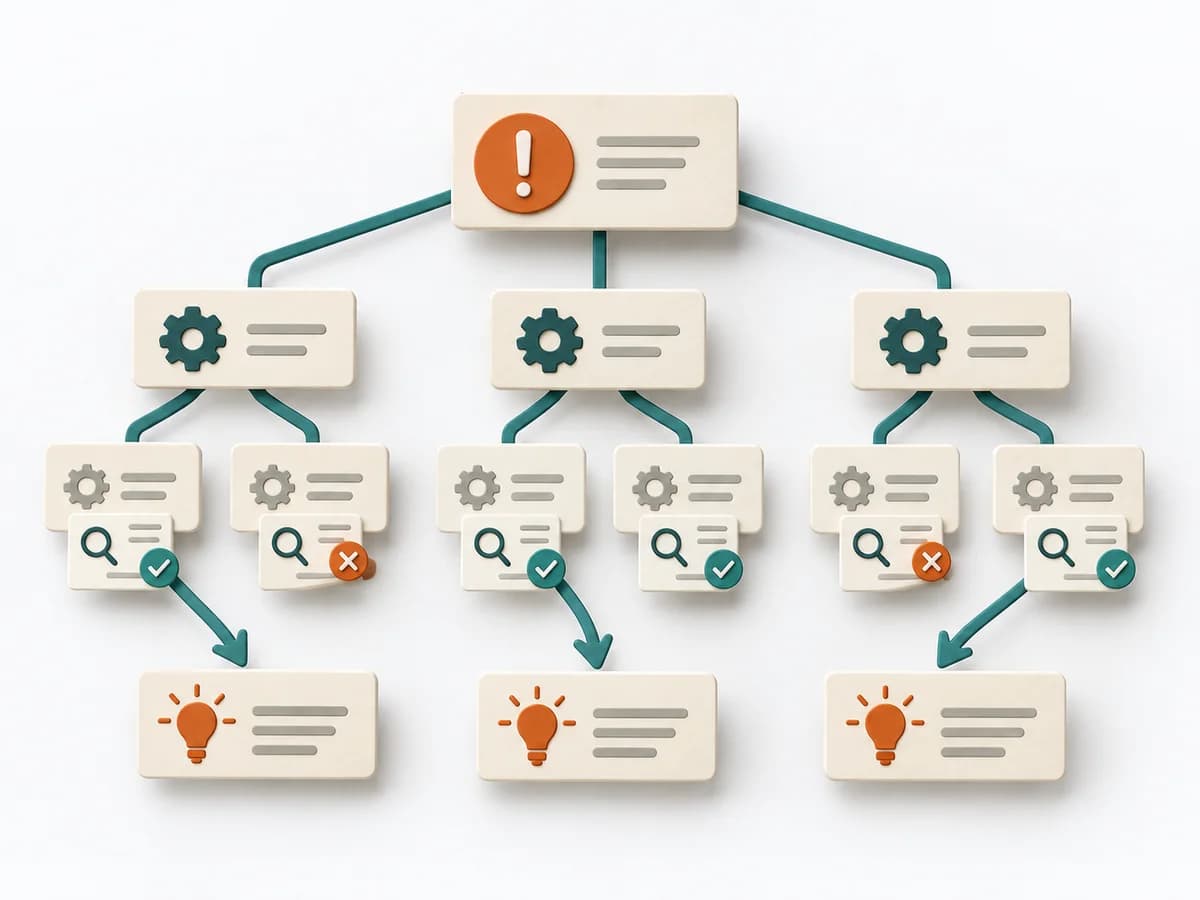 Operations Root Cause Tree Analysis |
|---|---|---|---|---|
Purposedifferent | For a process problem with fluctuating performance, the method brings analysis and improvement into a disciplined sequence. It creates a framework in which numbers, causes, and control come together. | When a business context is still loosely outlined, it shapes language, responsibility, and integration space. It clarifies what belongs together and where a boundary needs to hold. | For a risk that can only be managed through multiple layers of protection, the method examines the effectiveness of each barrier. It shows where safeguards are missing, too weak, or fail under real conditions. | For a problem with several suspected causes, the method builds a causal structure instead of a mere list. It makes visible how causes connect and where the strongest points of leverage lie. |
Complexitydifferent | High | Medium | Medium | Medium |
Timedifferent | 2-12 Wochen | 1-3 h | 2-4 h | 1-3 h |
Participantsdifferent | 3-10 | 3-8 | 2-6 | 2-8 |
Formatdifferent | Workshop + async | Workshop + async | Workshop + async | Workshop |
Outputdifferent | Project Charter, Measurement Plan, Cause Analysis, Control Plan | Context Canvas, Glossary, Integration Notes | Barrier Inventory, Failure Analysis per Barrier, Action Backlog | Cause Tree, Evidence Notes, Countermeasures |
Tagsno overlap | Continuous improvementQualityProcess improvement | Domain-Driven DesignBoundariesModeling | Root causeSafetyIncident | Root causeTreeIncidentQuality |