View methods side by side.
Choose up to four methods. Add them using the search and share the comparison by copying its link.
| Criterion |  Product Strategy DIBB |  Business Strategy Value Chain Analysis | 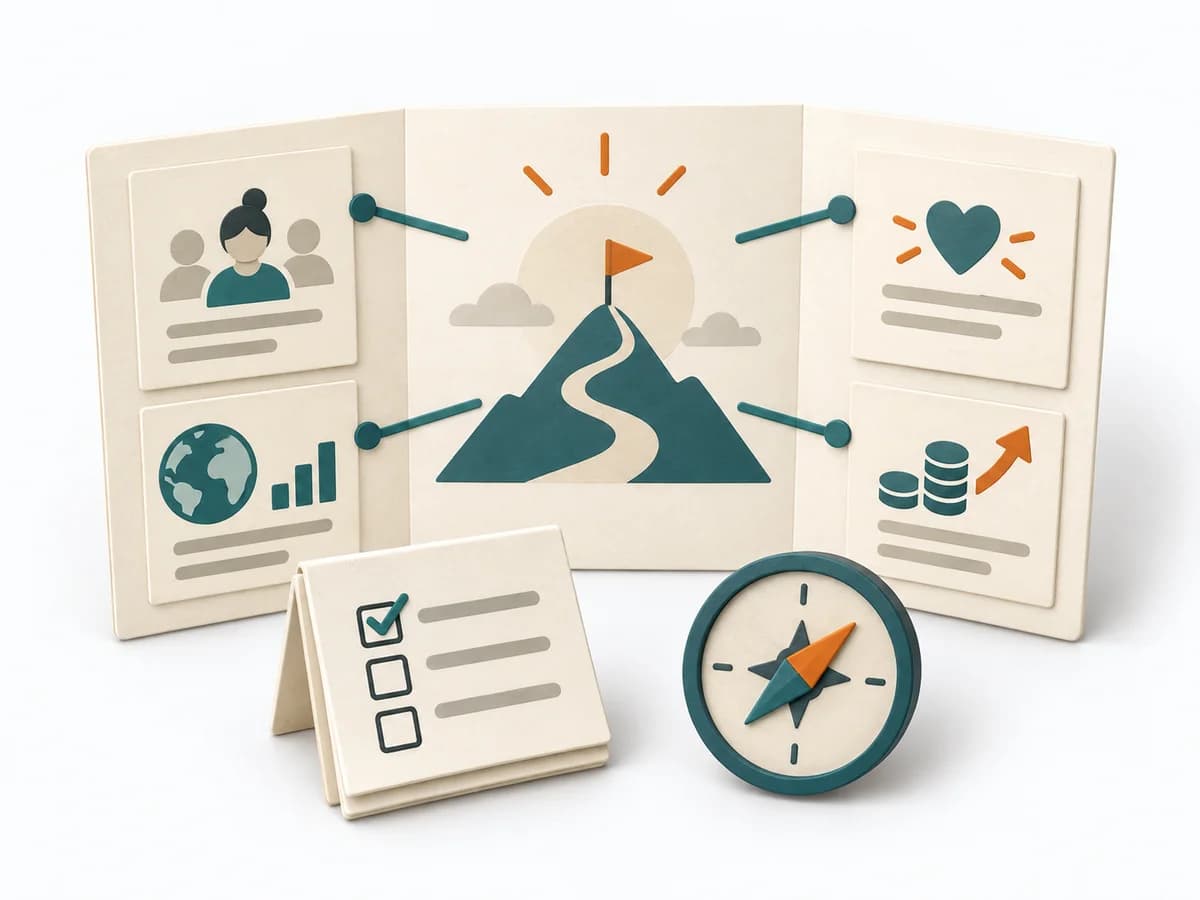 Product Strategy Product Vision Board |  Facilitation Alignment Mapping |
|---|---|---|---|---|
Purposedifferent | DIBB helps clarify target groups, value, goals, and priorities by making the logic behind a decision explicit. It captures results as a DIBB document, belief list, bet list, and learning report. | Value Chain Analysis shows where value is created, costs accrue, and differentiation becomes possible along the process. It compares strengths, risks, market logic, and courses of action. The result is captured as a value-chain map and lever list. | When a product needs a shared direction, it connects target audience, benefit, and business picture in a clear vision. It makes the envisioned future legible for the team. | When several people work toward one goal but hold different mental maps, Alignment Mapping makes the discrepancies visible. It arranges goals, assumptions, and priorities so shared direction becomes verifiable. |
Complexitydifferent | Low | High | Low | Medium |
Timedifferent | 1-2 h | Half day | 1-2 h | 1-2 h |
Participantsdifferent | 2-8 | 3-8 | 2-8 | 4-12 |
Formatdifferent | Workshop + async | Workshop | Workshop + async | Workshop |
Outputdifferent | DIBB document, Belief list, Bet list, Learning report | Value Chain Map, Lever List | Product Vision Board, Vision Statement, Assumptions and Validation Questions | Alignment Map, Open Issues, Decision Questions |
Tags1 shared | StrategyDecisionAssumptionsHypothesis | StrategyBusiness modelDiagnosisAnalysis | VisionCanvasStrategyAlignment | AlignmentStakeholdersStrategyFacilitation |