View methods side by side.
Choose up to four methods. Add them using the search and share the comparison by copying its link.
| Criterion |  Product Strategy DIBB | 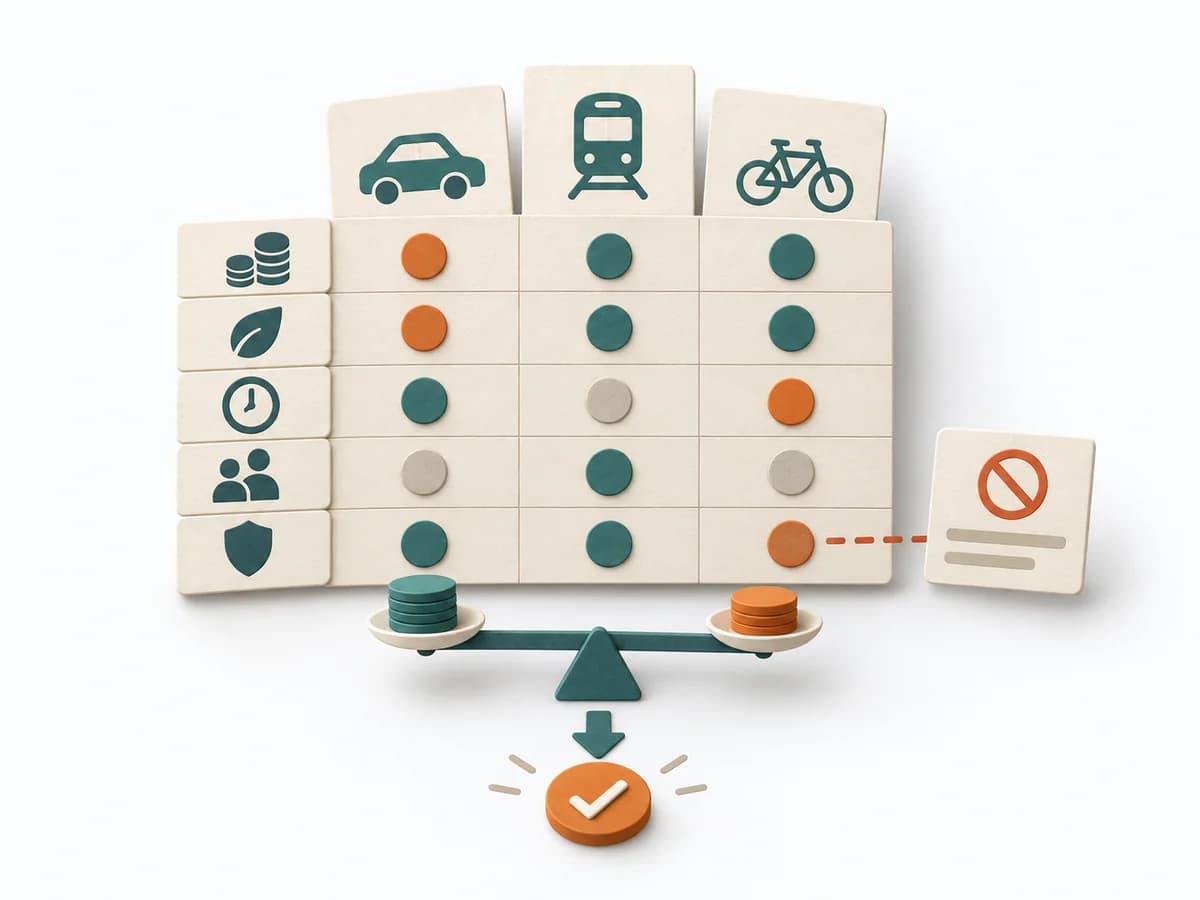 Decision Making Trade-off Analysis | 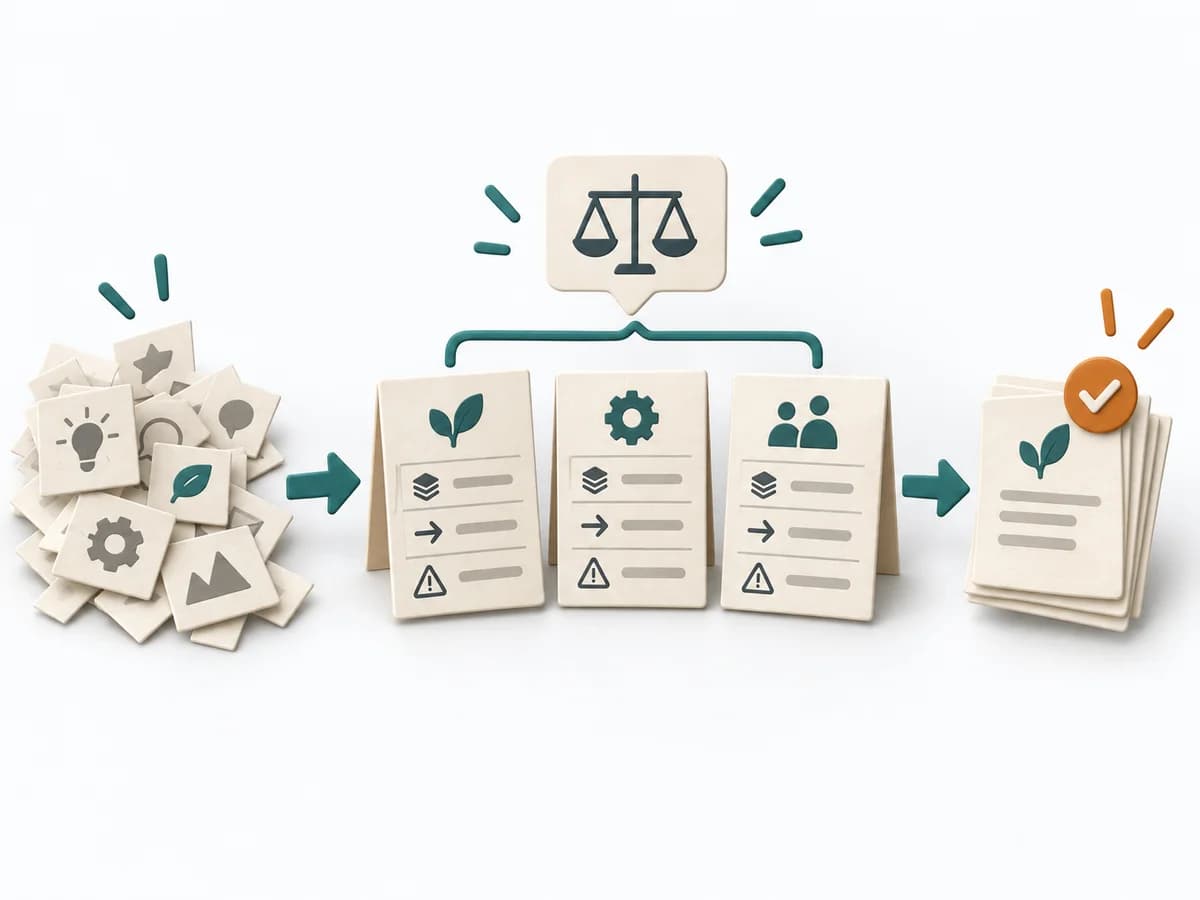 Decision Making Option Framing |  Decision Making Assumption Surfacing |
|---|---|---|---|---|
Purposedifferent | DIBB helps clarify target groups, value, goals, and priorities by making the logic behind a decision explicit. It captures results as a DIBB document, belief list, bet list, and learning report. | With limited resources, quality, speed, cost, and risk almost always compete with each other. Trade-off Analysis makes these tensions explicit and prevents decisions from producing hidden side effects. | In early decisions, alternatives are often still vague, incomplete, or blended together. Option Framing brings every possibility into a comparable form and makes visible which variant actually fits the question. | Plans often contain assumptions that were never openly stated and remain dangerous precisely because of that. Assumption Surfacing makes these silent premises visible and prioritizes which of them carry the initiative or could sink it. |
Complexitydifferent | Low | Medium | Medium | Low |
Timedifferent | 1-2 h | 45-120 min | 45-120 min | 45-90 min |
Participantsdifferent | 2-8 | 2-8 | 3-8 | 2-8 |
Formatsame | Workshop + async | Workshop + async | Workshop + async | Workshop + async |
Outputdifferent | DIBB document, Belief list, Bet list, Learning report | Trade-off Matrix, Criteria List, Decision Rationale, Accepted Downsides | Option Frames, Assumption Notes, Comparable Shortlist, Decision Inputs | Assumption List, Critical Assumptions, Learning Plan |
Tagsno overlap | StrategyDecisionAssumptionsHypothesis | TradeoffsDecisionCriteriaOptions | OptionsDecision framingStrategyComparison | AssumptionsRiskDecisionDiscovery |