View methods side by side.
Choose up to four methods. Add them using the search and share the comparison by copying its link.
| Criterion |  Product Strategy DIBB | 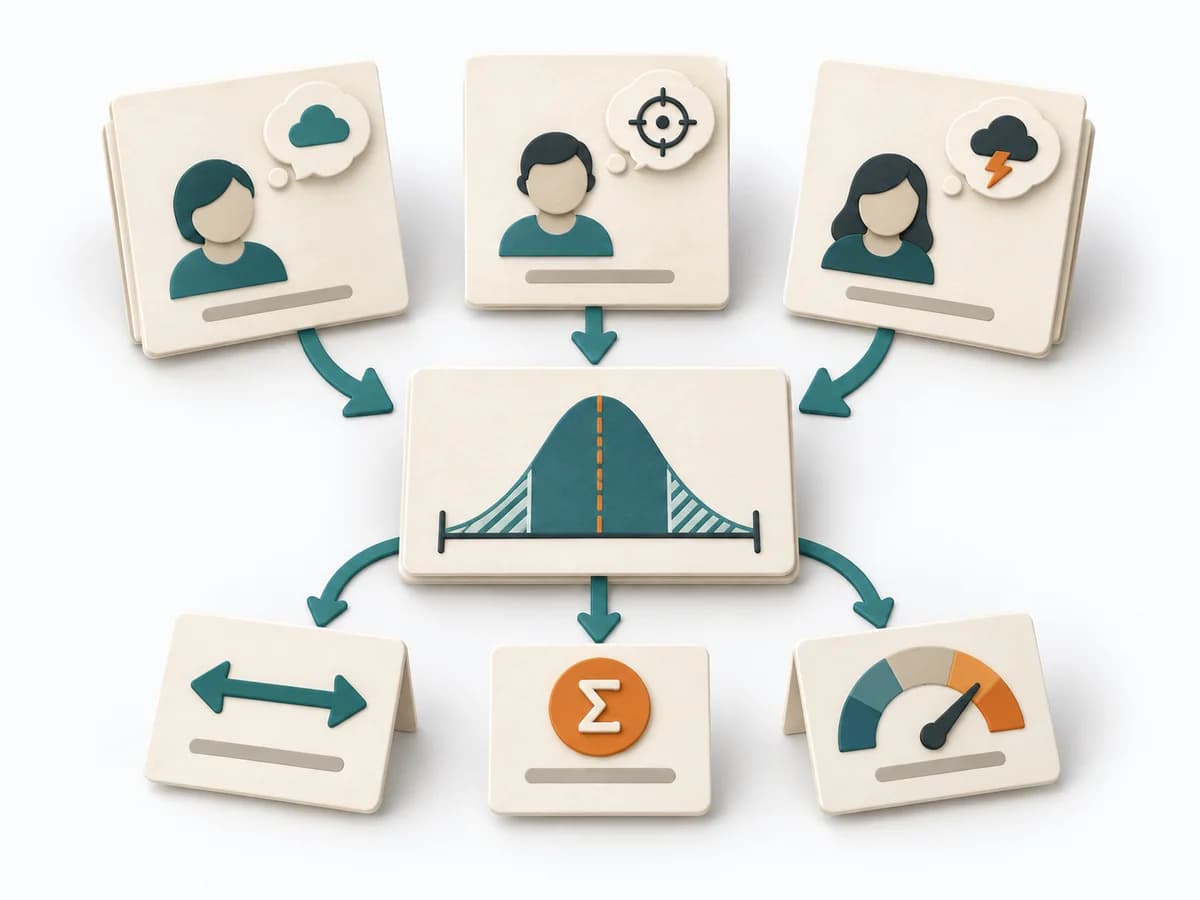 Decision Making Three-Point Estimation | 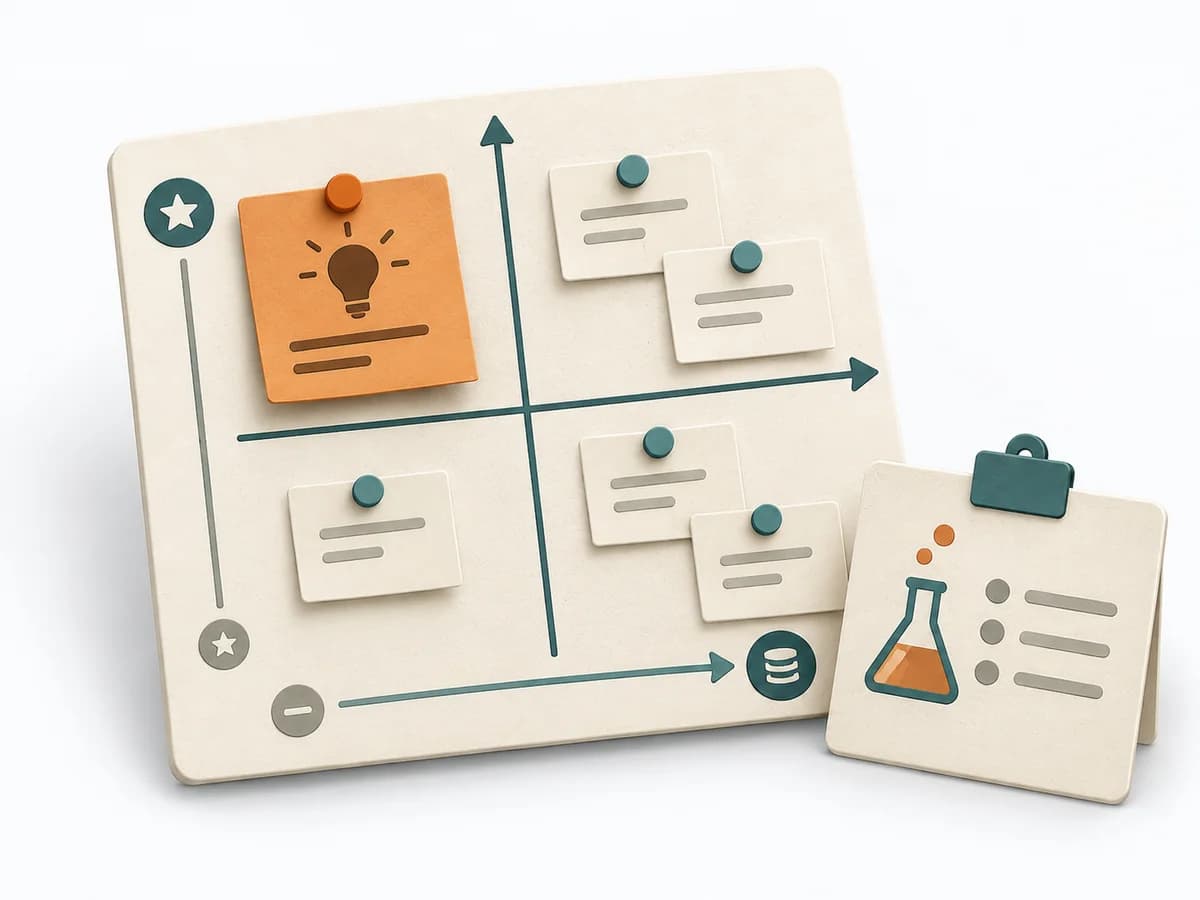 Product Discovery Assumption Mapping | 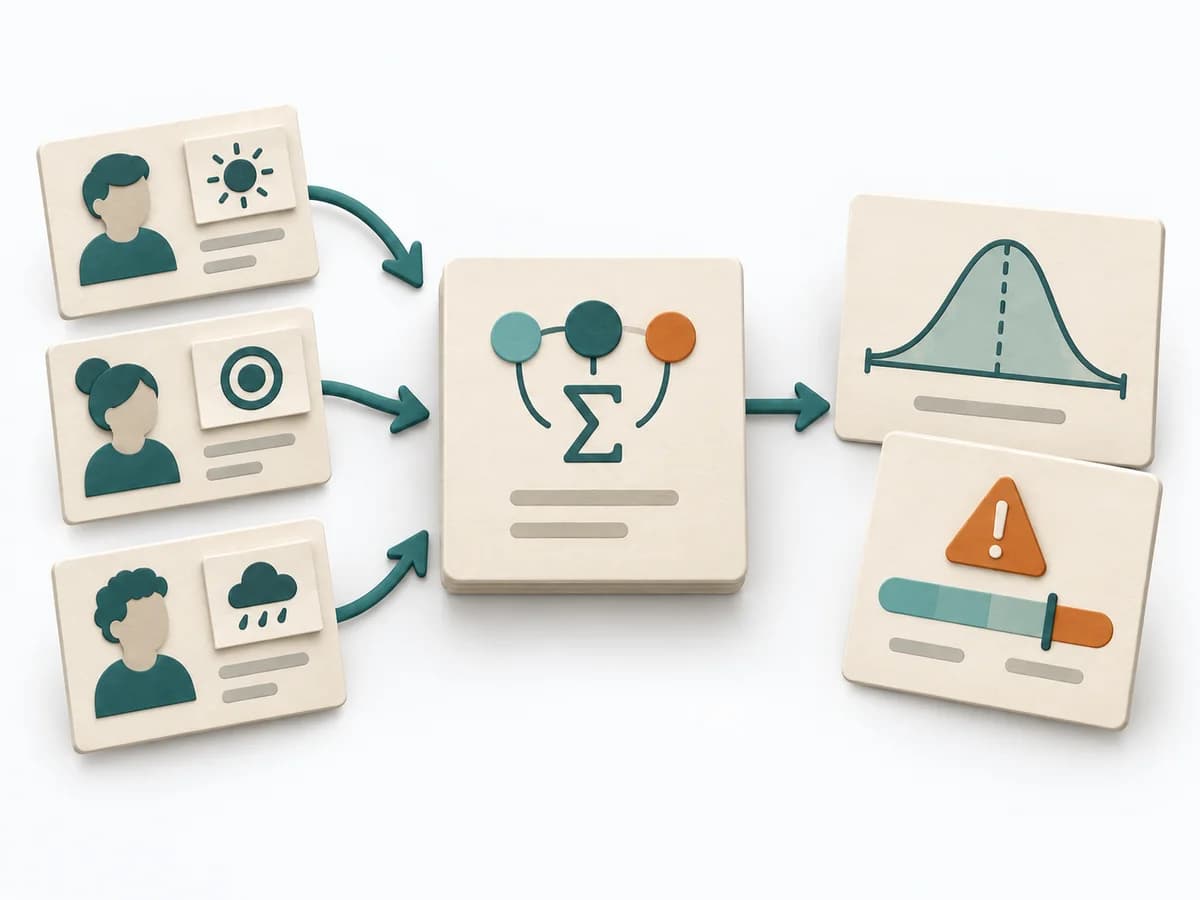 Decision Making PERT Estimation |
|---|---|---|---|---|
Purposedifferent | DIBB helps clarify target groups, value, goals, and priorities by making the logic behind a decision explicit. It captures results as a DIBB document, belief list, bet list, and learning report. | A single estimate for effort, time, or risk often looks too smooth for the real uncertainty behind it. It separates options, evaluation criteria, and open risks. The result is captured as a Three-Point Estimate, Risk Range, and Assumption Notes. | When assumptions still sit unordered in the room, it weighs uncertainty against leverage. It makes visible which hypotheses should be checked first. | On complex initiatives, a plain average tends to understate just how uncertain the outcome really is. It separates options, evaluation criteria, and open risks. The result is captured as a PERT Estimate, Expected Value, and Risk Notes. |
Complexitydifferent | Low | Medium | Medium | Medium |
Timedifferent | 1-2 h | 10-30 min je Item | 45-60 min | 15-45 min |
Participantsdifferent | 2-8 | 1-8 | 2-8 | 1-8 |
Formatsame | Workshop + async | Workshop + async | Workshop + async | Workshop + async |
Outputdifferent | DIBB document, Belief list, Bet list, Learning report | Three-Point Estimate, Risk Range, Assumption Notes | Assumption map, Test backlog, Risk ranking | PERT Estimate, Expected Value, Risk Notes |
Tagsno overlap | StrategyDecisionAssumptionsHypothesis | EstimationUncertaintyForecasting | AssumptionsRiskExperimentsValidation | EstimationUncertaintyRisk |